Colosseum

Italy / Rome / Essential/Main Attractions

6-Day Rome Essential Itinerary 2026: Colosseum and Roman Forum, Palatine Hill and Capitoline Museums, Monti Neighborhood and Trajan's Column Stroll, Pantheon and Piazza Navona

Experiencing Rome efficiently requires balancing monumental historical sites with the slow, observational pace of daily Italian life across its layered historic neighborhoods. This essential four-day master route groups iconic landmarks by geographic proximity to minimize unnecessary transit across cobbles and maximize quiet atmospheric moments. By scheduling heavy archaeological sites and high-demand museums during morning hours, travelers protect their energy for relaxed afternoon walking and traditional evening dining.

6 daysEssential/Main Attractions6 editorial days
Open city guide
Before booking, recheck opening hours, seasonal closures, timed entry rules, and ticket availability with the official venue.

Day 1

Ancient Imperial Foundations and Hilltop Panoramas

Colosseum and Roman Forum

Ancient Imperial Foundations and Hilltop Panoramas

Colosseum and Roman Forum & Palatine Hill and Capitoline Museums

3 stops

Begin your journey at the ancient epicenter of Roman civic life before ascending toward scenic elevated plazas. Traversing the monumental valley connects legendary gladiatorial arenas with imperial palace ruins and marble municipal squares. Sunset over the Forum offers an unhurried vantage point as evening light settles across the surrounding neighborhood trattorias.

Daily pro tip: Arrive at the Colosseum security check fifteen minutes before your ticketed slot with physical identification to ensure swift entry into the monument.
9 am

Morning

Colosseum and Roman Forum
Half day
Moderate
Colosseum and Roman Forum

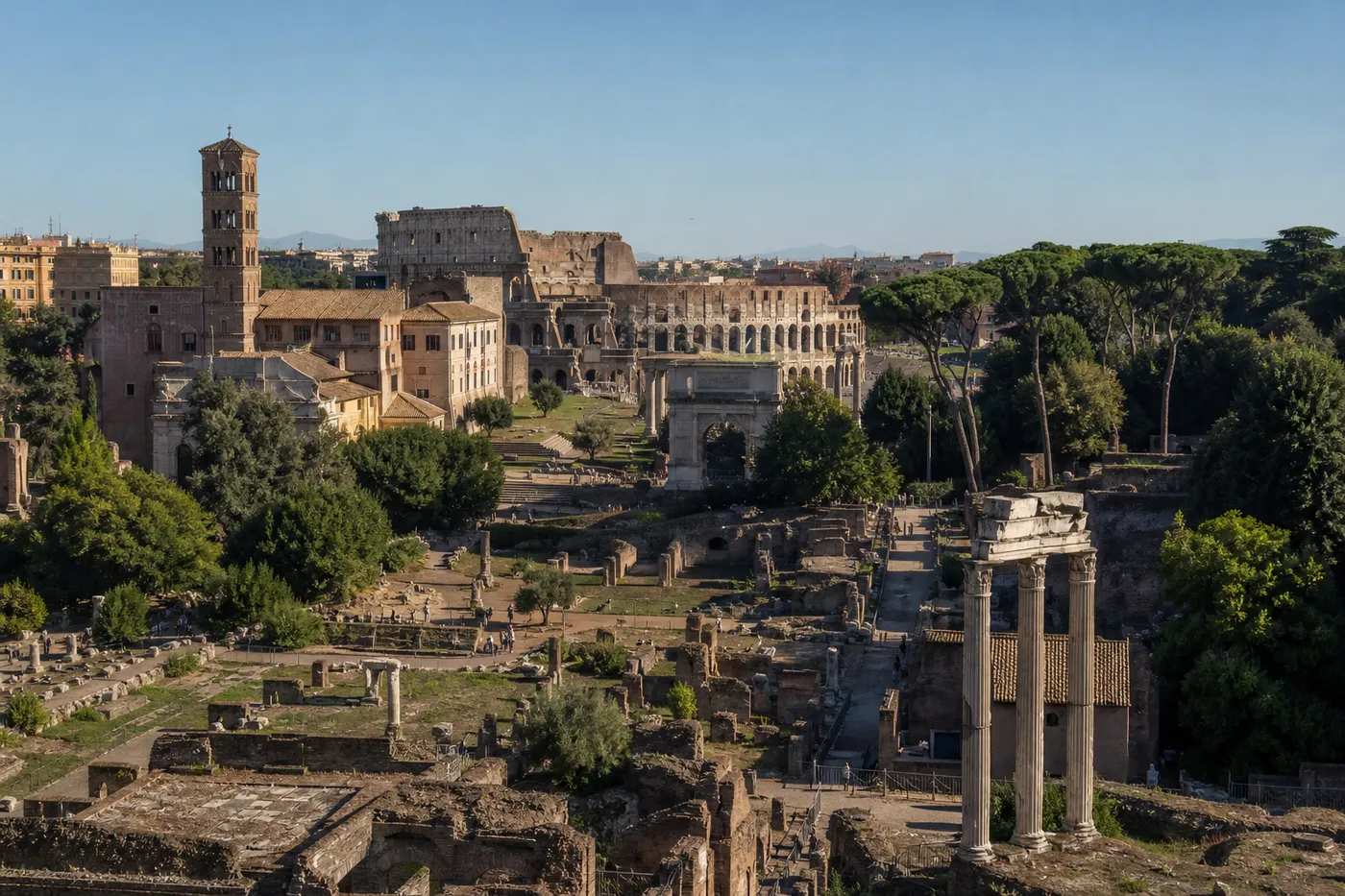
The monumental silhouette of the Colosseum stands as Rome's definitive historic anchor, capturing centuries of engineering brilliance and cultural drama. Stepping inside the massive travertine arches reveals a layered stadium architecture designed to seat tens of thousands of Roman citizens. Looking down onto the exposed hypogeum subterranean passages provides immediate insight into the sophisticated machinery powering ancient arena spectacles. Continuing into the neighboring Roman Forum, ruined temples and basilicas line the Sacred Way where triumphant processions once marched. Walking past the Arch of Titus toward the ancient Senate House reveals how political, religious, and economic life intersected. The sheer physical scale of these stone ruins creates a captivating bridge between ancient history and modern city life.

Morning

Timing

9 am - 12 pm

Budget

EUR 35

Transit

Walk uphill along the shaded stone path toward the Palatine Hill entrance gates near Via di San Gregorio.

Insider tip

Use the Stern entrance gate if specified on your reservation to bypass main tourist queue gathering points.

Planning notes

Live check

How to move

  1. 1.Exit Colosseo Metro Line B station directly onto the upper level plaza overlooking the arena.
  2. 2.Walk south along Via Nicola Salvi toward the Arch of Constantine pedestrian walkway.
  3. 3.Enter the main archaeological checkpoint adjacent to the Arch of Titus.

Why it fits

Ideal for history enthusiasts, architecture lovers, and first-time travelers seeking essential imperial monuments.

Quick food plan

Grab fresh espresso and cornetti at a quiet espresso bar tucked away on nearby Via Celimontana.

Nearby reset

Sit beneath shady pine trees inside the small park overlooking the Arch of Constantine along Via San Gregorio.

Weather fallback

Move under the covered stone corridors of the Colosseum's outer ring or visit the sheltered upper floor museum exhibition.

Cost cue

moderate

Live check

Verify current access, ticketing, and transit details close to travel.
Official site
1 pm

Afternoon

Palatine Hill and Capitoline Museums

Half day
Moderate
Palatine Hill and Capitoline Museums

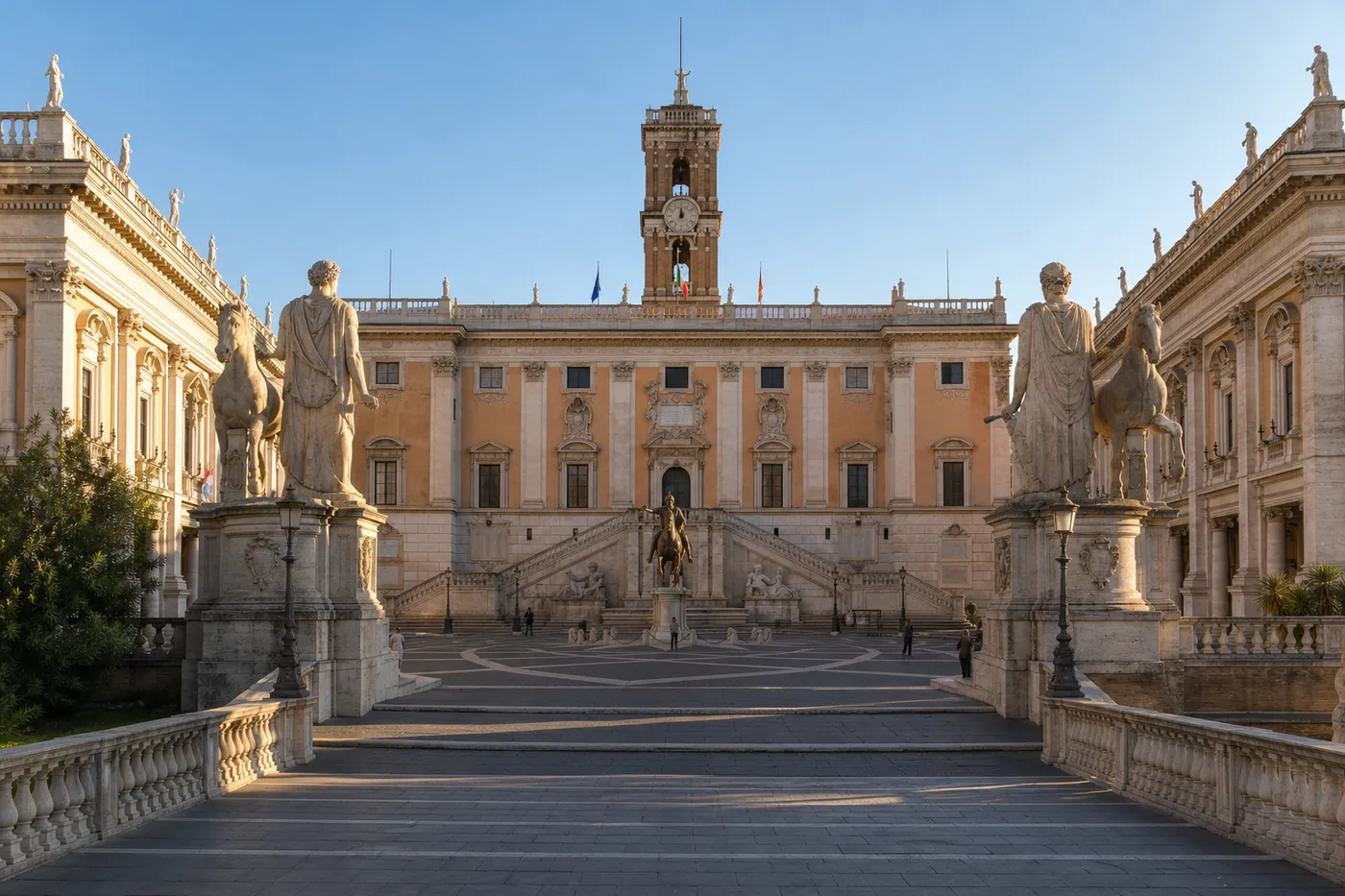
Ascending the pine-shaded slopes of the Palatine Hill shifts your perspective from public civic spaces to imperial private residential palaces. Ancient brick ruins of the Domus Augustana merge with Renaissance garden terraces, framing expansive views over the Circus Maximus racetrack below. Transitioning north toward the Capitoline Hill leads to Michelangelo's harmonious trapezoidal Piazza del Campidoglio. Inside the twin palaces of the Capitoline Museums, world-renowned bronzes and marble statues illustrate the artistic height of antiquity. The iconic bronze equestrian statue of Marcus Aurelius commands attention alongside the legendary Capitoline Wolf sculpture. Sweeping views from the Tabularium gallery provide a magnificent structural overview connecting the twin hills of ancient power.

Afternoon

Timing

1 pm - 4 pm

Budget

EUR 35

Transit

Walk down Michelangelo's Cordonata staircase into Piazza Venezia, then follow Via IV Novembre into Monti.

Insider tip

Walk through the Underground Tabularium tunnel for an exceptional framed panoramic view over the entire Roman Forum.

Planning notes

Live check

How to move

  1. 1.Exit the Capitoline Museums into Michelangelo's Piazza del Campidoglio.
  2. 2.Descend the shallow Cordonata staircase past the colossal marble statues of Castor and Pollux.
  3. 3.Cross Piazza Venezia at the pedestrian signal toward Via dei Fori Imperiali.

Why it fits

Suited for art history admirers, photography enthusiasts, and travelers interested in classical Antiquity masterpieces.

Quick food plan

Enjoy light panini or tramezzini at the museum rooftop cafe while admiring panoramic skyline vistas.

Nearby reset

Rest on stone benches in the shaded gardens of Villa Aldobrandini near Via Nazionale.

Weather fallback

Explore the climate-controlled indoor sculpture galleries and subterranean Tabularium connection corridor.

Cost cue

moderate

Live check

Verify current access, ticketing, and transit details close to travel.
Official site
6 pm

Evening

Monti Neighborhood and Trajan's Column Stroll

Half day
Low
Monti Neighborhood and Trajan's Column Stroll

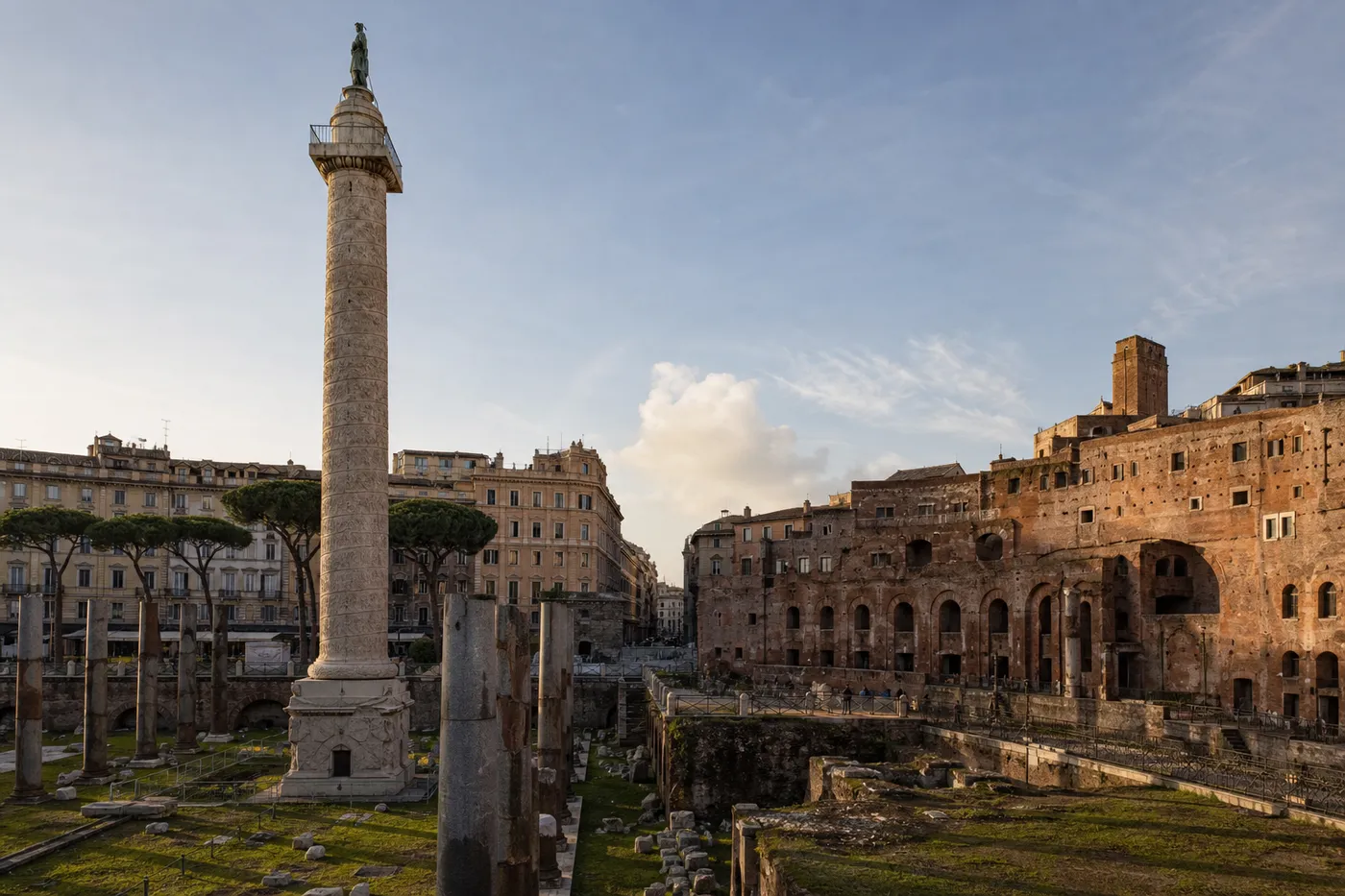
As evening approaches, the atmospheric residential quarter of Monti offers a charming contrast to the monumental scale of imperial ruins. Cobblestone lanes like Via Urbana and Via del Boschetto are lined with ivy-draped artisan shops, craft bakeries, and vibrant wine bars. Neighborhood life centers around Piazza Madonna dei Monti, where locals gather around the sixteenth-century fountain as shadows lengthen. Walking toward the edge of the district reveals Trajan’s Column rising elegantly beside the ruined halls of Trajan’s Market. The intricate spiral relief carvings detail ancient military campaigns with extraordinary artistic clarity. Ending your day here allows you to experience Rome’s historic continuity while enjoying authentic culinary traditions in a relaxed setting.

Evening

Timing

6 pm - 9 pm

Budget

EUR 12

Transit

Walk three minutes to Cavour Metro Line B station or board local buses on Via Nazionale for hotel returns.

Insider tip

Visit Trajan's Column at dusk when subtle exterior spotlights highlight the detailed helical marble relief carvings.

Planning notes

How to move

  1. 1.Stroll down Via dei Serpenti toward the central square of Piazza Madonna dei Monti.
  2. 2.Follow Via Tor de' Conti west toward the archaeological viewing railing of Trajan's Forum.
  3. 3.Walk two blocks north up Via Cavour to reach Cavour Metro B station.

Why it fits

Perfect for evening strollers, food lovers, and travelers seeking authentic local atmospheric neighborhoods.

Quick food plan

Savor wood-fired pizza by the slice or traditional Roman pasta dishes at neighborhood trattorias on Via del Boschetto.

Nearby reset

Sit around the central stone fountain in Piazza Madonna dei Monti alongside local residents.

Weather fallback

Step inside cozy neighborhood wine bars or indoor trattorias along Via Urbana.

Cost cue

low

Official site

Day 2

Baroque Squares, Fountains, and Historic Alleyways

Pantheon and Piazza Navona

Baroque Squares, Fountains, and Historic Alleyways

Pantheon and Piazza Navona & Trevi Fountain and Spanish Steps

3 stops

Spend the day discovering Rome's magnificent Baroque heart where dramatic stone fountains and historic plazas line narrow pedestrian lanes. Morning architectural marvels give way to afternoon strolls past famous marble monuments and vibrant shopping streets. As dusk arrives, cross historic bridges toward atmospheric market squares offering classic regional dining options.

Daily pro tip: Keep small euro coins handy if you plan to toss a coin into the Trevi Fountain or make small market purchases.
9 am

Morning

Pantheon and Piazza Navona

Half day
Low
Pantheon and Piazza Navona

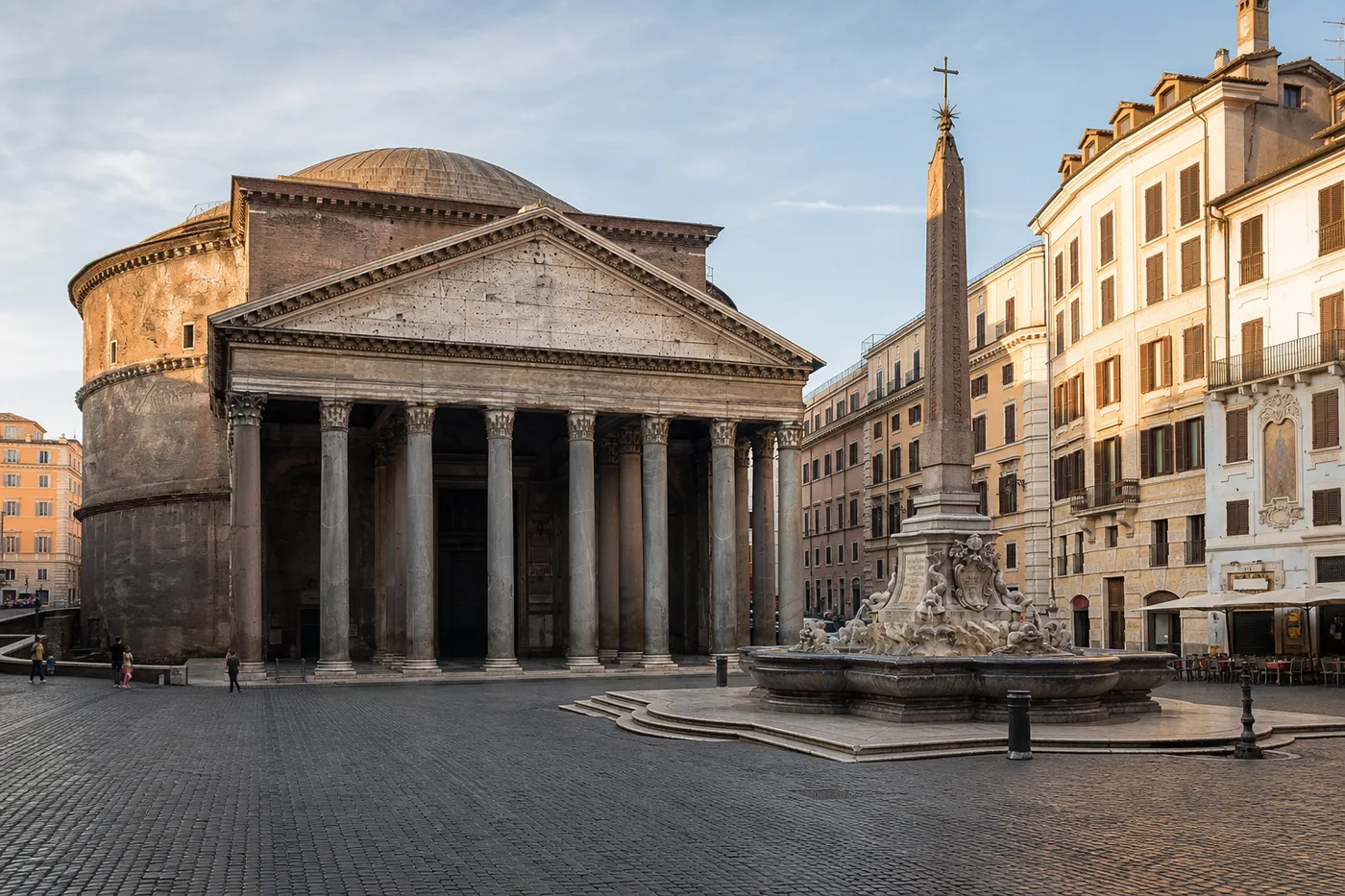
The Pantheon remains one of the best-preserved monuments of the ancient world, renowned for its colossal coffered concrete dome. Stepping through massive bronze doors into the circular interior highlights the architectural harmony of its perfect proportions. Light streams through the nine-meter open oculus, illuminating marble floors and tombs of Italian monarchs and Renaissance master Raphael. A short walk through narrow cobblestone alleys leads to Piazza Navona, built upon the ancient stadium of Domitian. Bernini's centerpiece Fountain of the Four Rivers features dynamic marble sculptures representing major world rivers surrounding an Egyptian obelisk. Outdoor café seating and street artists add lively character to this famous Baroque public plaza.

Morning

Timing

9 am - 12 pm

Budget

EUR 12

Transit

Walk east along Via del Seminario and Via delle Muratte toward the Trevi Fountain.

Insider tip

Look up through the central oculus around midday when sunlight creates a dramatic beam across interior marble floors.

Planning notes

Live check

How to move

  1. 1.Exit Piazza della Rotonda on the east side via Via del Seminario.
  2. 2.Cross Via del Corso at the marked pedestrian zebra crossing.
  3. 3.Follow the pedestrian signs down Via delle Muratte directly to Trevi Fountain.

Why it fits

Essential for architectural historians, first-time visitors, and fans of Roman engineering masterworks.

Quick food plan

Enjoy a world-famous granita di caffe topped with whipped cream at a café near Piazza Sant'Eustachio.

Nearby reset

Relax inside the quiet, cool interior of the nearby Church of Saint Louis of the French.

Weather fallback

Retain indoor shelter beneath the massive concrete ceiling of the Pantheon during rain showers.

Cost cue

low

Live check

Verify current access, ticketing, and transit details close to travel.

Official site
1 pm

Afternoon

Trevi Fountain and Spanish Steps

Half day
Free
Trevi Fountain and Spanish Steps

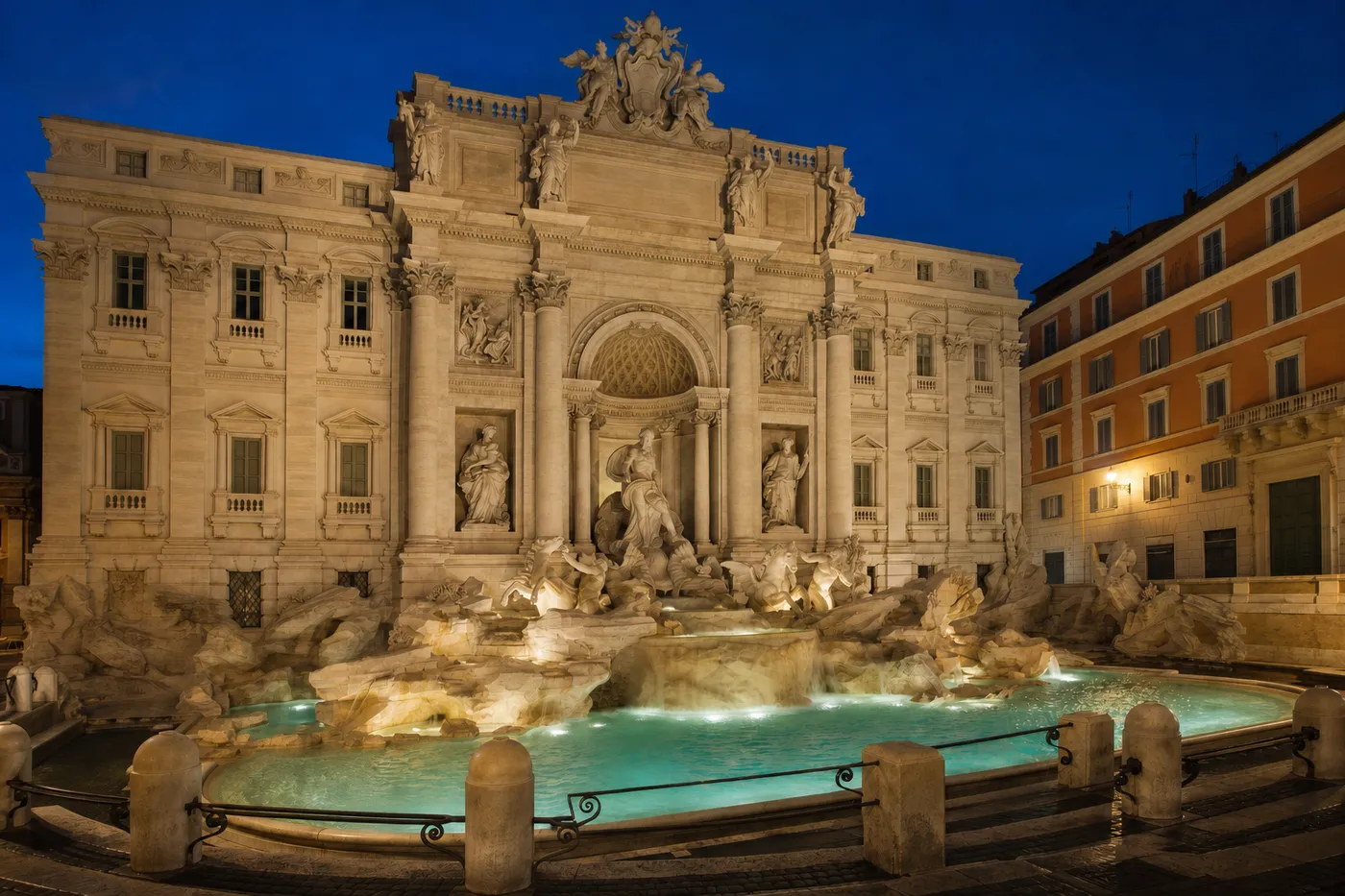
The dramatic spectacle of Trevi Fountain captures the grandeur of Baroque Rome, with water rushing over travertine rocks into a crystal-blue basin. Sculpted figures of Oceanus, Tritons, and sea horses create a theatrical monument built against the facade of Palazzo Poli. Following traditional custom, travelers toss a coin over their shoulder to ensure a future return to the Eternal City. Continuing north along fashion-filled Via Condotti brings you to Piazza di Spagna and the majestic Spanish Steps. This monumental 135-step staircase ascends toward the twin towers of Trinità dei Monti church. At the base, Bernini's boat-shaped Barcaccia fountain provides continuous mountain spring water to passing travelers.

Afternoon

Timing

1 pm - 4 pm

Budget

EUR 0

Transit

Walk south along Via di Santa Maria in Via toward Corso Vittorio Emanuele II and Campo de' Fiori.

Insider tip

Stand near the center railing of Trevi Fountain to throw your coin over your left shoulder for good luck.

Planning notes

How to move

  1. 1.Walk south from Piazza di Spagna down Via del Babuino toward Piazza del Popolo or south along Via del Corso.
  2. 2.Turn west onto Via del Plebiscito near Piazza Venezia.
  3. 3.Follow Via dei Baullari south directly into Campo de' Fiori.

Why it fits

Wonderful for photographers, sightseers, and couples exploring iconic city monuments.

Quick food plan

Treat yourself to artisanal gelato from historic gelaterias situated along Via delle Muratte.

Nearby reset

Sit quietly on stone ledges near the Fountain of the Baboon along Via del Babuino.

Weather fallback

Browse luxury boutiques and covered art galleries along nearby Via dei Condotti.

Cost cue

free

Official site
6 pm

Evening

Campo de' Fiori and Jewish Ghetto

Half day
Low
Campo de' Fiori and Jewish Ghetto

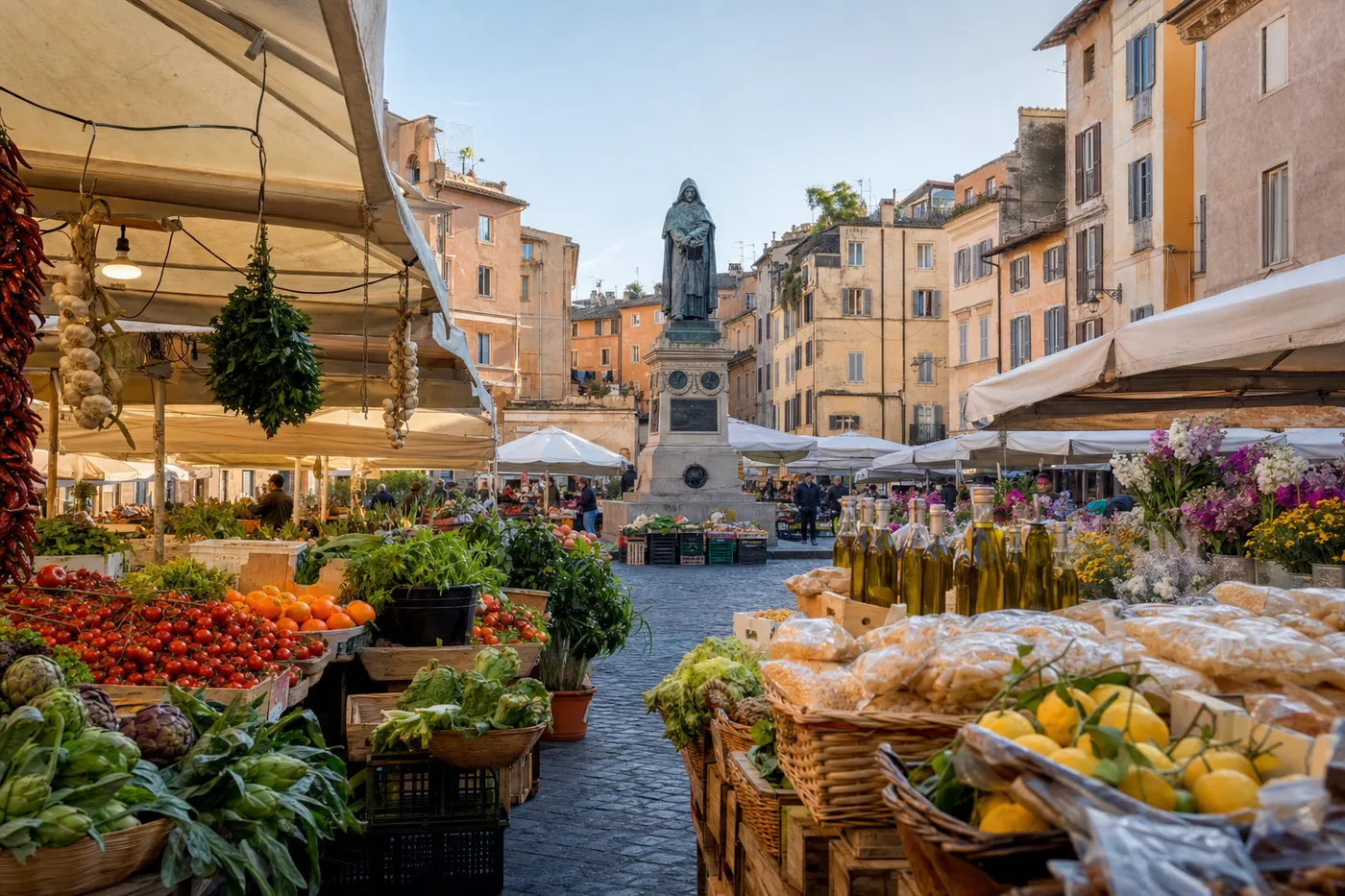
Campo de' Fiori transitions from a bustling morning produce market into a lively evening gathering space anchored by the bronze statue of philosopher Giordano Bruno. Outdoor trattoria tables spill across the cobblestone square under warm evening lighting. Walking south across Via dei Giubbonari brings you into the historic Jewish Ghetto, one of Europe's oldest Jewish quarters. The area is filled with immense historic character, featuring narrow alleys, ancient stone ruins, and Renaissance palaces. The Portico d'Ottavia ruins stand proudly beside the Great Synagogue along the Tiber riverbank. Culinary traditions here are famous worldwide, offering unique dishes like fried artichokes and sweet ricotta sour cherry tarts.

Evening

Timing

6 pm - 9 pm

Budget

EUR 12

Transit

Walk two blocks south to the Arenula/Cairoli tram stop for Tram 8 connections or walk toward Tiber bridges.

Insider tip

Look for small brass stumbling stones (Pietre d'Inciampo) embedded in cobblestones honoring historic residents.

Planning notes

Live check

How to move

  1. 1.Head south from Campo de' Fiori along Via dei Baullari.
  2. 2.Cross Via Arenula near the Largo di Torre Argentina transit corridor.
  3. 3.Walk east down Via del Portico d'Ottavia to reach the heart of the Jewish Ghetto.

Why it fits

Ideal for food lovers, culture enthusiasts, and evening strollers seeking rich local culinary history.

Quick food plan

Sample traditional carciofi alla giudia (crispy fried artichokes) at historic bakeries or trattorias.

Nearby reset

Enjoy a quiet moment near the Turtle Fountain (Fontana delle Tartarughe) in Piazza Mattei.

Weather fallback

Dine inside warm, family-run kosher trattorias along Via del Portico d'Ottavia.

Cost cue

low

Live check

Verify current access, ticketing, and transit details close to travel.

Official site

Day 3

Vatican State Treasures and Riverbank Fortresses

Vatican Museums and Sistine Chapel

Vatican State Treasures and Riverbank Fortresses

Vatican Museums and Sistine Chapel & St. Peter's Basilica and Square

3 stops

Cross the Tiber River into Vatican City to explore world-famous papal museum galleries and Saint Peter's Basilica. Afternoon spiritual and artistic discoveries are followed by a riverside walk along papal fortress battlements. Conclude your day with elegant dining along the tree-lined avenues of the Prati neighborhood.

Daily pro tip: Dress appropriately with covered shoulders and knees to clear Vatican security checkpoints without delay.
9 am

Morning

Vatican Museums and Sistine Chapel

Half day
High
Vatican Museums and Sistine Chapel

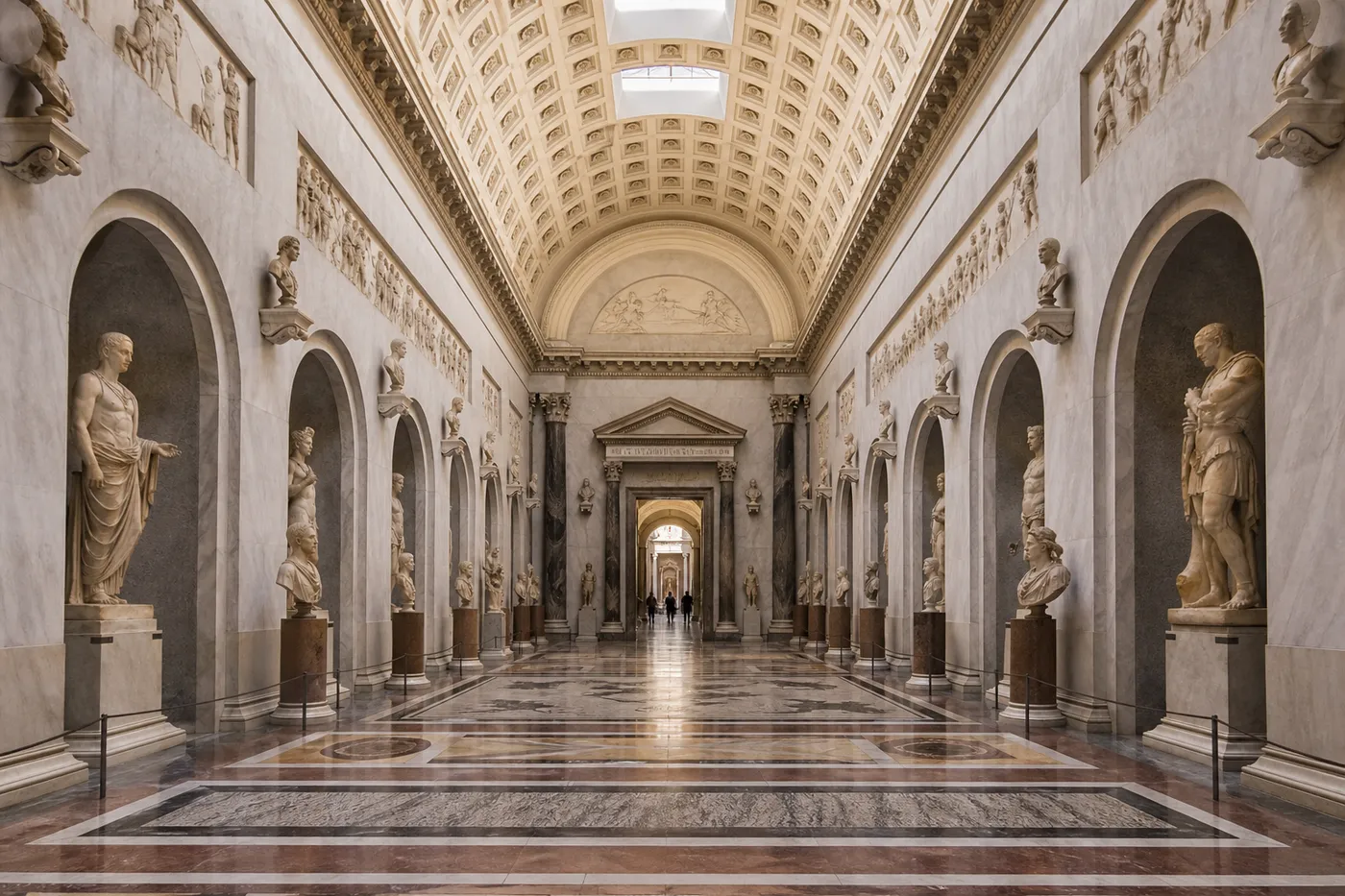
The Vatican Museums contain one of the world's most impressive art collections, amassed by popes over centuries. Walking through miles of ornate corridors reveals ancient Greek and Roman sculptures like the Laocoön and Apollo Belvedere. The Gallery of Maps displays stunning sixteenth-century topographical frescoes under a golden barrel-vaulted ceiling. Continuing through the papal apartments leads to the Raphael Rooms, where Renaissance frescoes capture philosophical and theological ideals. The museum journey culminates inside the Sistine Chapel, where Michelangelo’s masterpiece ceiling frescoes depict Biblical creation scenes. Wall frescoes and The Last Judgement behind the altar showcase breathtaking artistic power, making this an unforgettable cultural experience.

Morning

Timing

9 am - 12 pm

Budget

EUR 60

Transit

Walk fifteen minutes around the Vatican fortress walls south toward Saint Peter's Square.

Insider tip

Head directly to the Raphael Rooms upon opening to experience the famous School of Athens fresco with minimal crowd density.

Planning notes

Live check

How to move

  1. 1.Exit the main Vatican Museums gate onto Viale Vaticano.
  2. 2.Turn right and follow the brick perimeter walls south along Via Leone IV.
  3. 3.Enter Saint Peter's Square through the marble colonnade under the right arm of Bernini's piazza.

Why it fits

Essential for art lovers, religious history scholars, and visitors seeking iconic world cultural heritage.

Quick food plan

Grab fresh panini, fruit cups, or espresso at the museum courtyard cafeteria before exploring galleries.

Nearby reset

Sit quietly in the expansive Pinecone Courtyard (Cortile del Belvedere) amidst classical statues.

Weather fallback

Enjoy complete climate-controlled protection across miles of indoor museum corridors and gallery halls.

Cost cue

high

Live check

Verify current access, ticketing, and transit details close to travel.

Official site
1 pm

Afternoon

St. Peter's Basilica and Square

Half day
Free
St. Peter's Basilica and Square

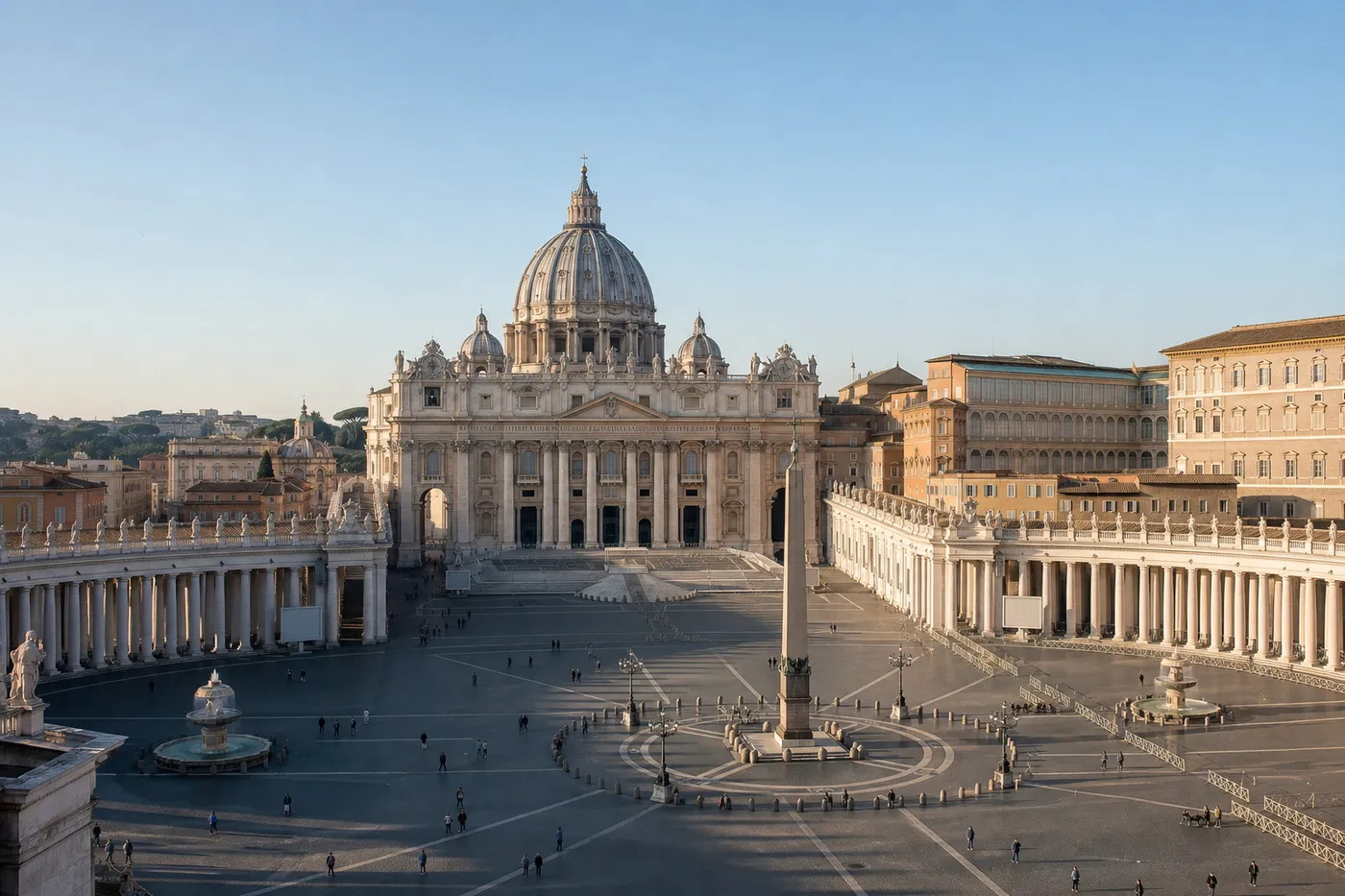
Saint Peter's Basilica stands as the spiritual heart of the Catholic world, framed by Bernini’s sweeping elliptical colonnade in Saint Peter's Square. Stepping inside the vast nave reveals awe-inspiring proportions, golden coffered ceilings, and polished marble floors. Near the entrance, Michelangelo’s delicate marble Pietà captures profound grief and beauty with extraordinary sculptural skill. At the central crossing, Bernini’s monumental bronze Baldacchino towers over the high altar beneath Michelangelo’s immense dome. Light filters down through soaring clerestory windows, illuminating papally commissioned mosaics and monuments. Climbing to the dome balcony provides breathtaking views looking down onto the main altar and across the city skyline.

Afternoon

Timing

1 pm - 4 pm

Budget

EUR 0

Transit

Walk straight east along Via della Conciliazione toward the Tiber River and Castel Sant'Angelo.

Insider tip

Climb the dome elevator and steps for an extraordinary panoramic view across Vatican Gardens and all of Rome.

Planning notes

Live check

How to move

  1. 1.Exit Saint Peter's Square into the broad boulevard of Via della Conciliazione.
  2. 2.Walk east for eight blocks past embassy buildings and marble fountains.
  3. 3.Arrive at the moat gardens surrounding the circular stone walls of Castel Sant'Angelo.

Why it fits

Suitable for pilgrims, architectural enthusiasts, and travelers appreciating monumental Renaissance construction.

Quick food plan

Enjoy wood-fired pizza slices or espresso at coffee shops lining nearby Via di Porta Angelica.

Nearby reset

Sit in the shade beneath Bernini's massive marble colonnade pillars bordering the oval square.

Weather fallback

Seek shelter inside the vast, protected marble interior of the Basilica nave.

Cost cue

free

Live check

Verify current access, ticketing, and transit details close to travel.

Official site
6 pm

Evening

Castel Sant'Angelo and Prati Riverbanks

Half day
Moderate
Castel Sant'Angelo and Prati Riverbanks

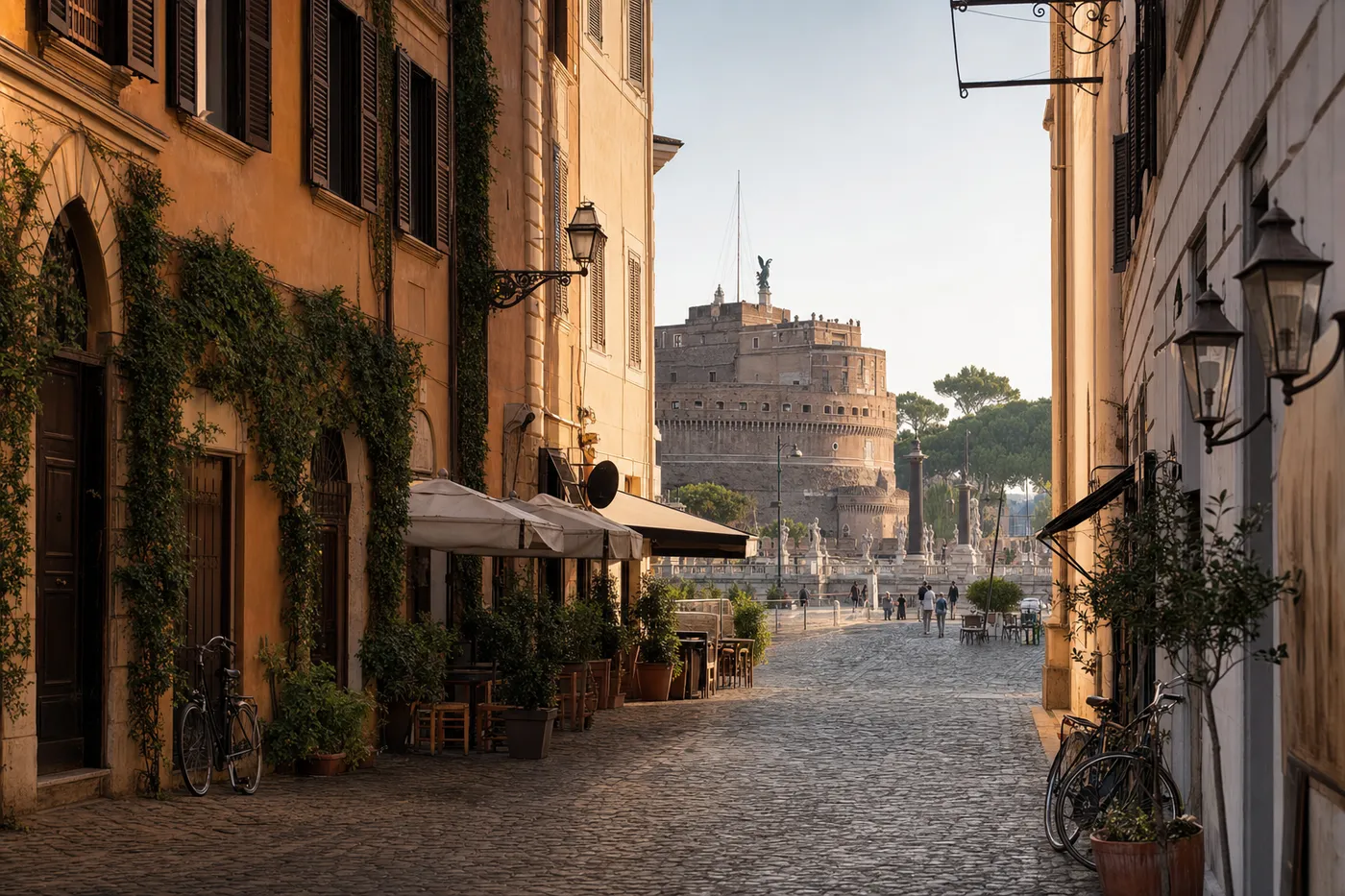
Castel Sant'Angelo offers a fascinating glimpse into Rome's layered history, originally built as Emperor Hadrian's mausoleum in the second century. Converted into a formidable papal fortress and castle during the Middle Ages, the massive cylindrical stone structure features a secret fortified corridor connecting to the Vatican. Ascending interior ramp passages leads past historical armories to luxurious Renaissance papal apartments decorated with vibrant frescoes. The upper terrace, crowned by the bronze statue of Archangel Michael, provides spectacular views across the Tiber River toward Saint Peter's dome. Crossing the pedestrian Ponte Sant'Angelo past Bernini’s marble angel statues leads into the elegant Prati neighborhood, perfect for quiet evening dining.

Evening

Timing

6 pm - 9 pm

Budget

EUR 35

Transit

Walk ten minutes north to Lepanto or Ottaviano Metro Line A stations or take local buses across the Tiber.

Insider tip

Walk across the pedestrian Ponte Sant'Angelo at dusk to photograph Bernini's angel statues against the setting sun.

Planning notes

Live check

How to move

  1. 1.Cross the pedestrian Ponte Sant'Angelo bridge south over the Tiber River.
  2. 2.Follow Lungotevere Castello east past Parco Adriano.
  3. 3.Walk three blocks north along Via Stefano Porcari into the main Prati shopping and dining zone.

Why it fits

Great for history buffs, sunset photography seekers, and evening diners desiring refined neighborhood ambiance.

Quick food plan

Savor gourmet gelato or classic Roman pasta dishes along the residential dining corridors of Via Crescenzio.

Nearby reset

Walk through the green park trees of Parco Adriano surrounding the fortress moat walls.

Weather fallback

Explore the covered brick ramparts, interior papal apartments, and historical armory displays inside the castle.

Cost cue

moderate

Live check

Verify current access, ticketing, and transit details close to travel.
Official site

Day 4

Parkland Masterpieces, Hilltop Views, and Trastevere Nights

Galleria Borghese and Villa Borghese Gardens

Parkland Masterpieces, Hilltop Views, and Trastevere Nights

Galleria Borghese and Villa Borghese Gardens & Aventine Hill and Orange Garden

3 stops

Spend your final day immersing yourself in masterwork art collections framed by tranquil parklands before discovering quiet hilltop vistas. Afternoon walks lead past secret garden overlooks offering sweeping panoramas over the city's dome-filled horizon. Finish your journey across the Tiber River in Trastevere's lively dining lanes under glowing street lamps.

Daily pro tip: Reserve Galleria Borghese entry tickets far in advance as strict two-hour visiting slots are enforced without exception.
9 am

Morning

Galleria Borghese and Villa Borghese Gardens

Half day
Premium
Galleria Borghese and Villa Borghese Gardens

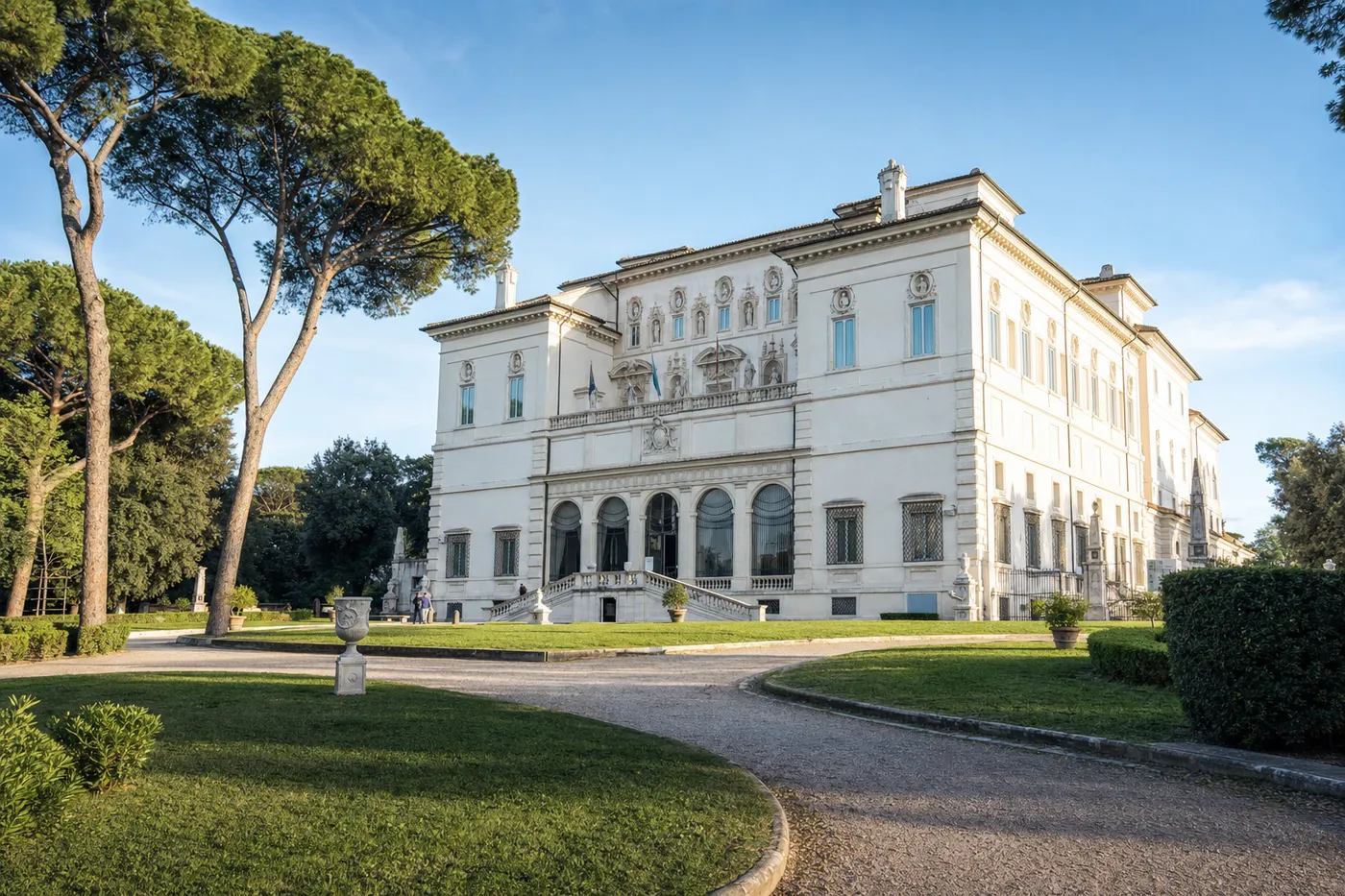
Housed within a stunning seventeenth-century villa, Galleria Borghese contains one of the world’s finest private art collections. Cardinal Scipione Borghese commissioned masterworks that define Baroque dynamic art, most notably Gian Lorenzo Bernini's marble sculptures. Marveling at Apollo and Daphne captures the miraculous transformation of flesh into marble leaves with incredible realism. The collection also features Bernini's David and The Rape of Proserpina, alongside an extraordinary room dedicated to Caravaggio's dramatic chiaroscuro paintings. Surrounding the villa, the vast Villa Borghese gardens feature shaded walking paths, quiet fountains, and landscaped lawns. A stroll through the park toward the Pincio Terrace yields sweeping views overlooking Piazza del Popolo.

Morning

Timing

9 am - 12 pm

Budget

EUR 100

Transit

Walk through Villa Borghese gardens west toward the Pincio Terrace or take bus 160 south toward the Aventine Hill.

Insider tip

Focus your first hour on Bernini's groundbreaking sculptures on the ground floor before exploring upper gallery paintings.

Planning notes

Live check

How to move

  1. 1.Exit Galleria Borghese into Piazzale Scipione Borghese.
  2. 2.Follow Viale del Museo Borghese west through the shaded pine trees.
  3. 3.Walk down the Pincio Terrace steps into Piazza del Popolo to access Metro Line A Flaminio station.

Why it fits

Essential for art connoisseurs, sculpture enthusiasts, and travelers looking for serene parkland settings.

Quick food plan

Pick up fresh espresso and pastries at the museum basement café or enjoy a park kiosk sandwich.

Nearby reset

Rent a small wooden rowboat at the tranquil Villa Borghese lake near the Temple of Aesculapius.

Weather fallback

Enjoy the climate-controlled indoor gallery rooms housing world-renowned oil paintings and marble masterworks.

Cost cue

premium

Live check

Verify current access, ticketing, and transit details close to travel.

Official site
1 pm

Afternoon

Aventine Hill and Orange Garden

Half day
Free
Aventine Hill and Orange Garden

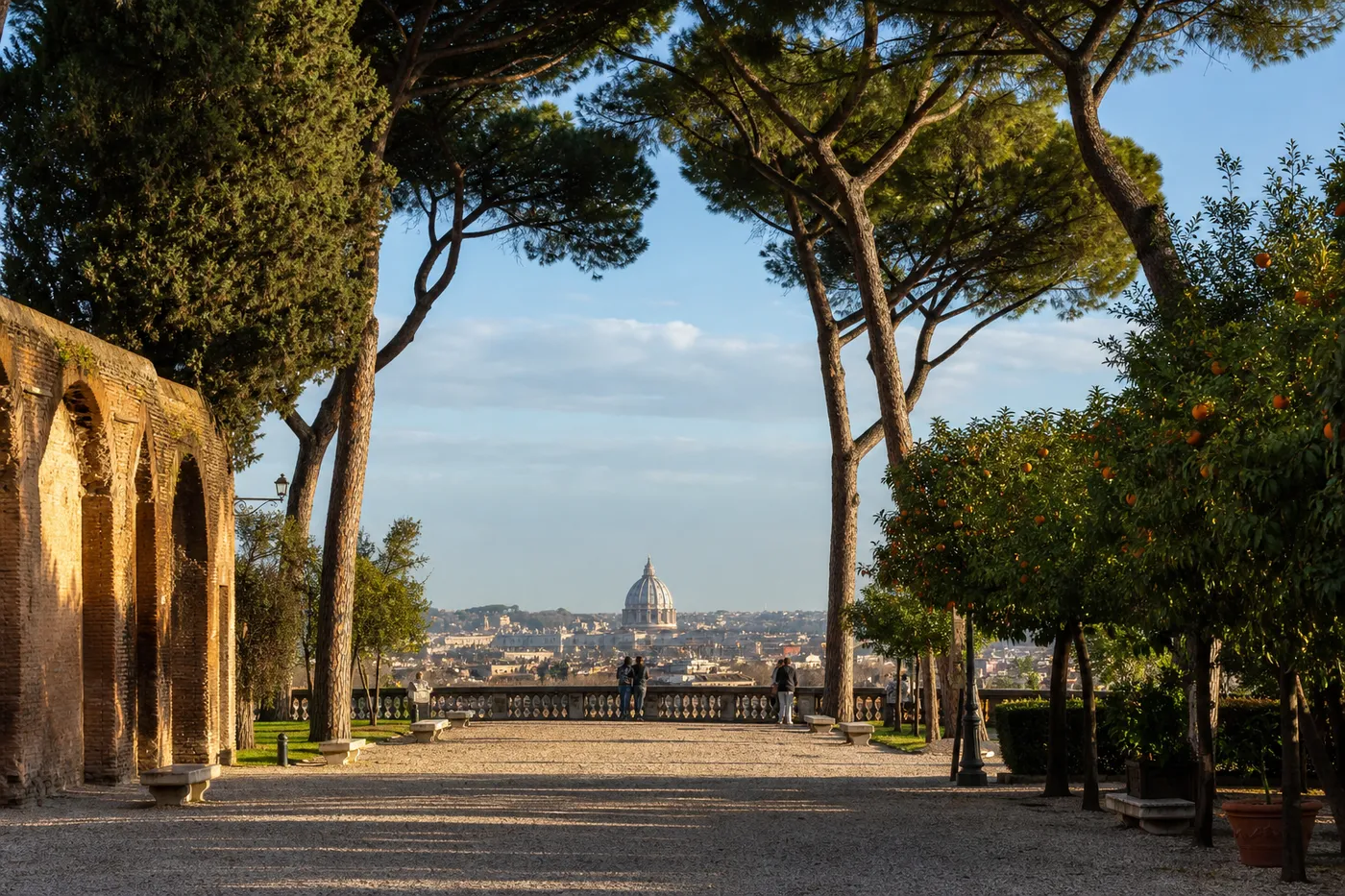
The Aventine Hill offers an elegant, tranquil refuge above the bustling city, famous for its romantic gardens and unique vistas. At Piazza dei Cavalieri di Malta, visitors line up to peer through the small brass keyhole of the Priory gate. The view presents a perfectly framed optical alignment where manicured garden hedges frame Saint Peter’s Basilica dome in the distance. A short walk leads to the Giardino degli Aranci, or Orange Garden, where sweet-smelling citrus trees shade stone pathways. The terrace at the garden’s edge provides an exceptional panoramic viewpoint over the Tiber River, Santa Maria in Cosmedin, and the distant skyline of central Rome.

Afternoon

Timing

1 pm - 4 pm

Budget

EUR 0

Transit

Descend the hill toward the Tiber River bank, cross Ponte Sublicio, and enter Trastevere.

Insider tip

Look through the brass keyhole of the Priory of the Knights of Malta to see Saint Peter's dome framed perfectly by hedges.

Planning notes

Live check

How to move

  1. 1.Walk down Via di Santa Sabina toward the Clivo dei Publicii exit path.
  2. 2.Cross Via dei Cerchi near the western tip of Circus Maximus.
  3. 3.Cross the Tiber River via Ponte Sublicio to reach the edge of Trastevere.

Why it fits

Wonderful for romantic couples, view seekers, and travelers desiring a tranquil escape from busy central streets.

Quick food plan

Enjoy light sandwiches or seasonal gelato at neighborhood cafes near Circo Massimo.

Nearby reset

Sit on stone benches under fragrant citrus trees inside the Orange Garden (Giardino degli Aranci).

Weather fallback

Visit the ancient stone interior of the Fifth Century Basilica of Santa Sabina adjacent to the garden.

Cost cue

free

Live check

Verify current access, ticketing, and transit details close to travel.

Official site
6 pm

Evening

Trastevere and Santa Maria in Trastevere

Half day
Low
Trastevere and Santa Maria in Trastevere

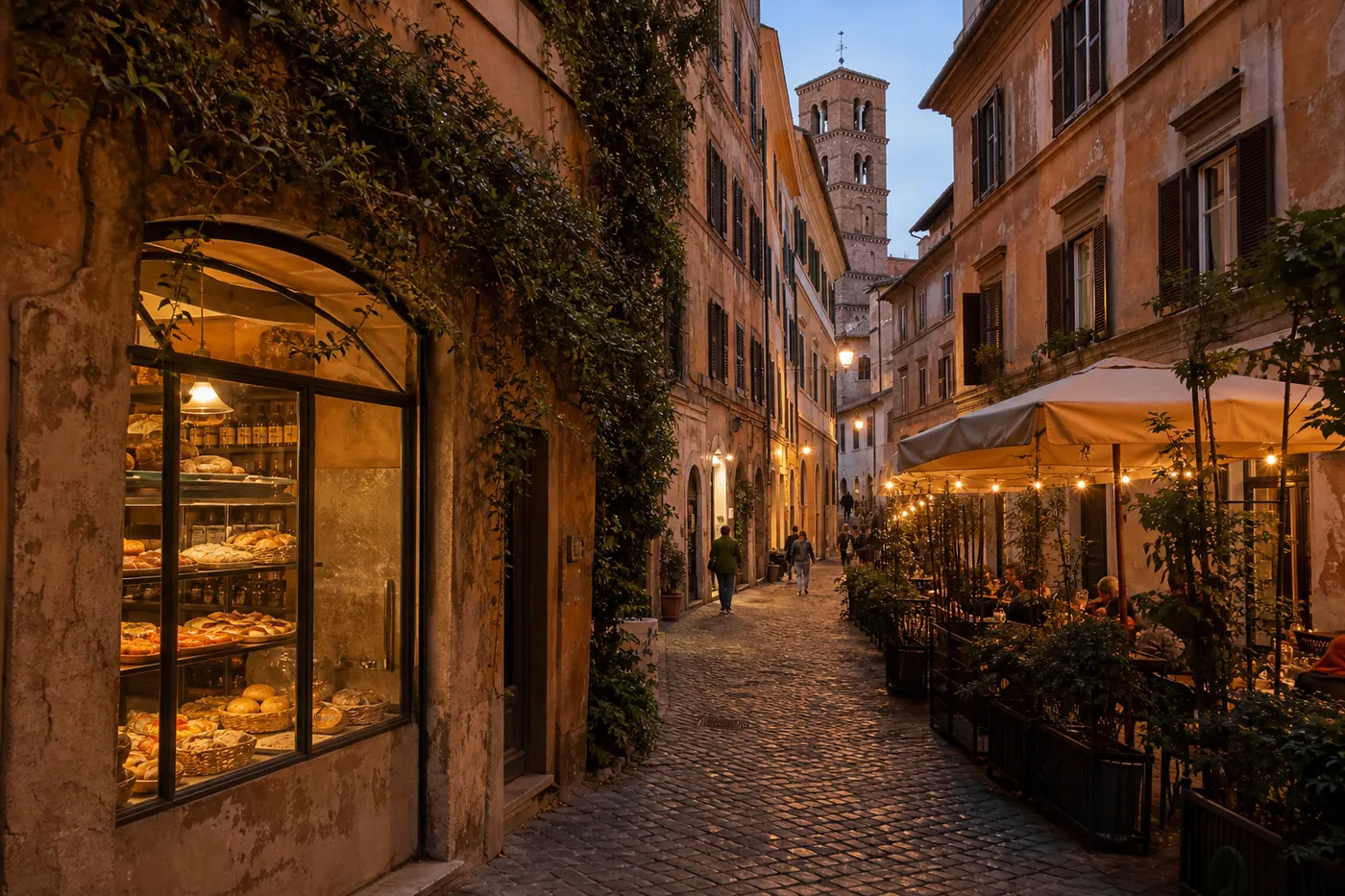
Crossing the Tiber into Trastevere brings you into a bohemian neighborhood characterized by narrow cobblestone alleys, ochre-painted buildings, and climbing ivy. As twilight falls, street lamps cast a warm glow across lively plazas filled with street musicians and diners. The historic center of the neighborhood is Piazza di Santa Maria in Trastevere, dominated by one of Rome's oldest churches. Inside the basilica, stunning twelfth-century golden mosaics by Pietro Cavallini shimmer above the altar. The surrounding streets, such as Via del Moro and Vicolo del Cinque, are packed with traditional trattorias, bakeries, and craft beer bars. Ending your trip here captures the warm, timeless spirit of Roman hospitality.

Evening

Timing

6 pm - 9 pm

Budget

EUR 12

Transit

Board Tram 8 along Viale di Trastevere for direct service across the Tiber toward Largo di Torre Argentina.

Insider tip

Step inside the Basilica of Santa Maria in Trastevere at dusk when golden 12th-century apse mosaics glow under soft interior lighting.

Planning notes

Live check

How to move

  1. 1.Walk east from Piazza di Santa Maria in Trastevere along Via della Lungaretta.
  2. 2.Reach Viale di Trastevere at the marked pedestrian crosswalk.
  3. 3.Board Tram 8 north bound toward Largo di Torre Argentina or Piazza Venezia.

Why it fits

Perfect for food lovers, evening strollers, and travelers wanting to celebrate their final night in authentic style.

Quick food plan

Savor wood-fired Roman pizza, supplì fried rice balls, or handmade tonnarelli pasta at bustling trattorias.

Nearby reset

Sit on the steps of the central octagonal fountain in Piazza di Santa Maria in Trastevere.

Weather fallback

Dine inside cozy vaulted brick cellars of family-run trattorias along Via del Moro.

Cost cue

low

Live check

Verify current access, ticketing, and transit details close to travel.

Official site

Day 5

Imperial Baths, Industrial Masterpieces, and Testaccio Culinary Heritage

Baths of Caracalla and Circus Maximus Grounds

Imperial Baths, Industrial Masterpieces, and Testaccio Culinary Heritage

Baths of Caracalla and Circus Maximus Grounds & Centrale Montemartini Museum and Ostiense Industrial Heritage

3 stops

Traveling southward along the ancient Aventine slopes reveals Rome's massive imperial engineering alongside its turn-of-the-century industrial rebirth. Morning hours open among the soaring brick vaults of Caracalla, followed by an afternoon inside a converted power station where classical marble statuary stands against diesel engines. As dusk settles, Testaccio welcomes travelers into the heart of historic Roman cooking with neighborhood trattorias and quiet piazza life.

Daily pro tip: Purchase the combined ticket or Roma Pass when visiting municipal museums like Centrale Montemartini, and use Metro Line B at Circo Massimo or Garbatella to skip surface traffic between southern stops.
9 am

Morning

Baths of Caracalla and Circus Maximus Grounds

Half day
Moderate
Baths of Caracalla and Circus Maximus Grounds

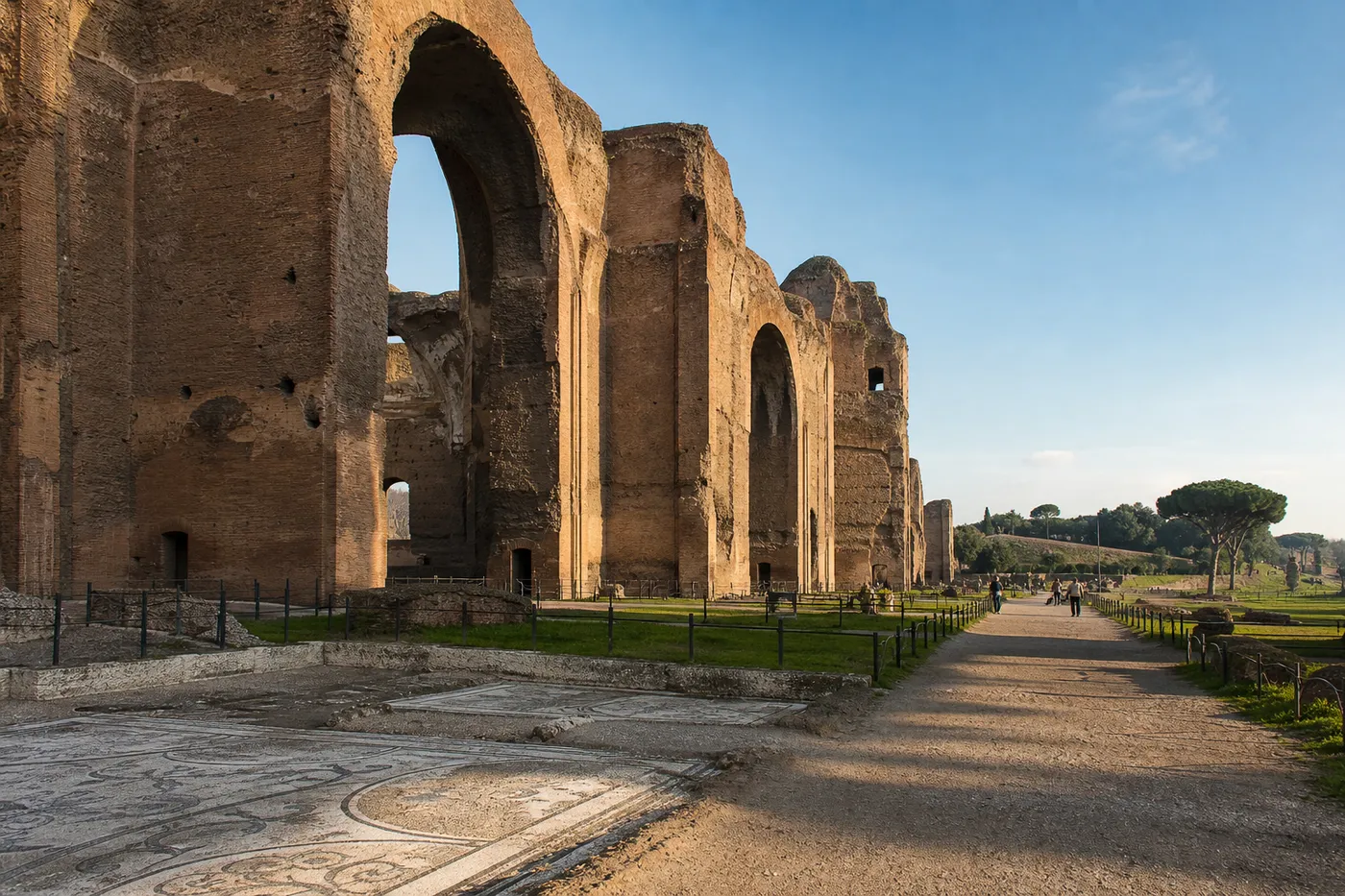
The colossal imperial bath complex built under Emperor Caracalla stands as one of antiquity's most breathtaking architectural feats. Walking beneath brick arches that once rose over one hundred feet high allows visitors to appreciate the sheer scale of ancient Roman public engineering. Sunlight filters through open vaulting onto intact floor mosaics featuring gladiators, marine creatures, and intricate geometric patterns. Nearby, the sweeping green basin of the Circus Maximus stretches out toward the Palatine Hill, offering an incredible perspective on ancient public spectator sports. The surrounding pine trees provide cooling shade and create a serene green corridor right on the edge of the historic center. Spending morning hours here gives travelers space to absorb imperial history at an unhurried pace before urban heat builds.

Morning

Timing

9 am - 12 pm

Budget

EUR 35

Transit

Metro Line B Circo Massimo Station

Insider tip

Rent the audio guide or augmented reality headset at the entrance to visualize the original polychrome marble walls and soaring vaulted ceilings above the bare brick structures.

Planning notes

Live check

How to move

  1. 1.Exit Circo Massimo station on Metro Line B and walk east along Viale delle Terme di Caracalla.
  2. 2.Follow the pedestrian avenue shaded by umbrella pines for six hundred meters toward the central bath enclosure.
  3. 3.Enter through the main ticket gateway on Viale delle Terme di Caracalla opposite the park gardens.

Why it fits

History enthusiasts, architecture photography buffs, and active walkers seeking expansive archaeological sites with open space.

Quick food plan

Small coffee kiosks line Viale delle Terme di Caracalla, while bakeries near Circo Massimo serve fresh cornetti and espresso.

Nearby reset

Shaded benches under maritime pines inside the Baths of Caracalla park perimeter offer quiet rest away from main roads.

Weather fallback

Transition into the subterranean heating chambers and restored underground vaults beneath the bath complex during sudden rain showers or high midday heat.

Cost cue

moderate

Live check

Verify current access, ticketing, and transit details close to travel.
Official site
1 pm

Afternoon

Centrale Montemartini Museum and Ostiense Industrial Heritage

Half day
Moderate
Centrale Montemartini Museum and Ostiense Industrial Heritage

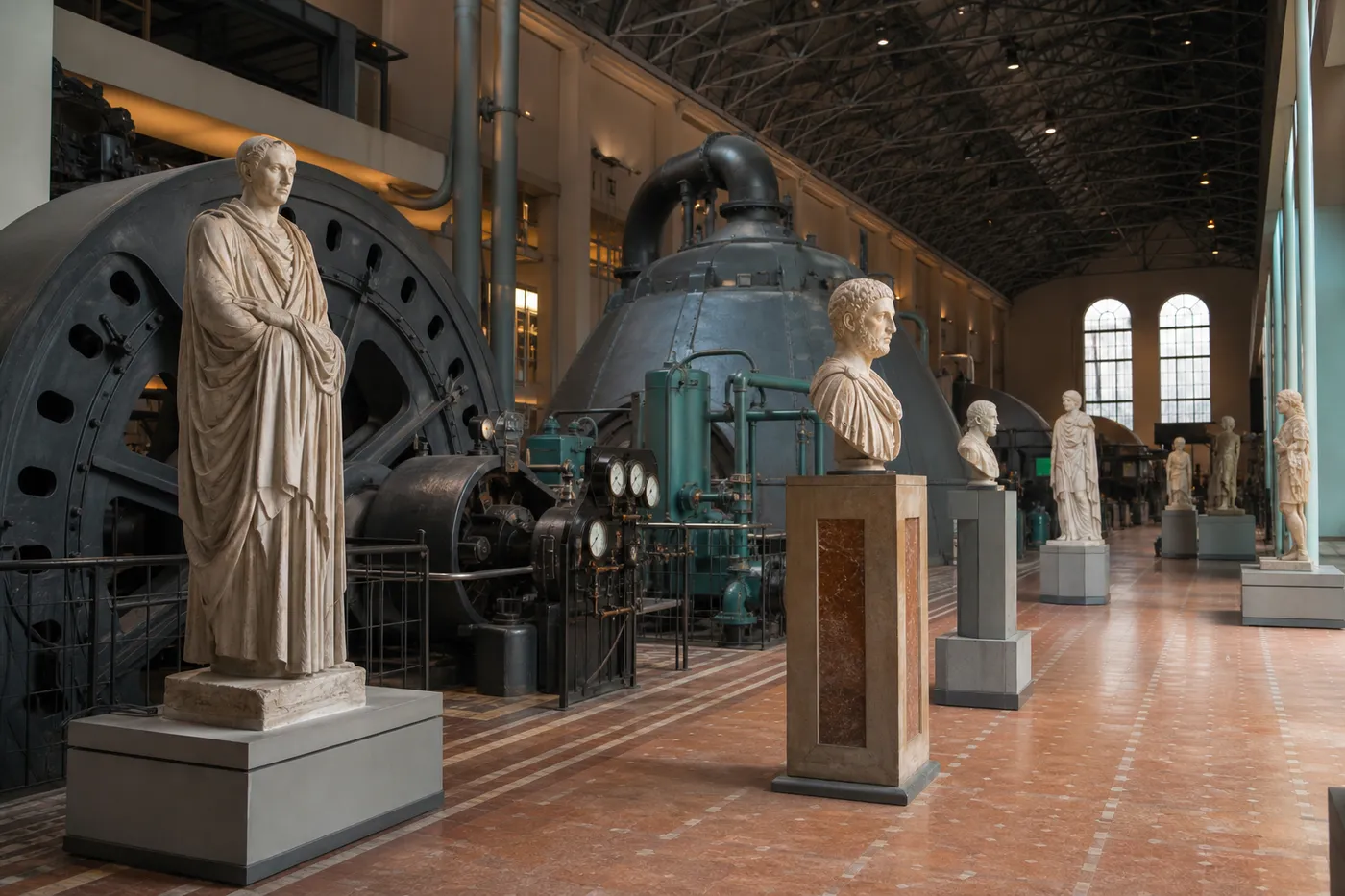
Centrale Montemartini represents one of Europe's most visually intriguing museum concepts, housing classical antiquities inside Rome's first public electricity plant. Pristine white marble statues of Greek and Roman deities, mythical heroes, and Republican busts stand positioned directly in front of massive diesel generators and steam turbines. This dramatic juxtaposition of ancient aesthetics and early industrial engineering creates an unforgettable spatial experience. The vast machine halls benefit from large industrial windows that flood the exhibition galleries with natural light, highlighting fine details in marble drapery and mosaic tiles. Away from the congested tour routes of central Rome, visitors can stroll through spacious rooms in peaceful solitude. The surrounding Ostiense district adds extra context with its historic street art, repurposed warehouses, and authentic neighborhood vibe.

Afternoon

Timing

1 pm - 4 pm

Budget

EUR 35

Transit

Metro Line B Garbatella or Piramide Station

Insider tip

Look closely at the giant diesel engines in the Engine Room to observe how pristine white marble statues of Roman gods are mounted alongside dark cast-iron machinery.

Planning notes

Live check

How to move

  1. 1.Walk south from Circo Massimo along Via Ostiense or take Metro Line B to Garbatella station.
  2. 2.Head west along Via Ostiense past the former gasometers and industrial railway bridges.
  3. 3.Enter the Centrale Montemartini museum gates on the right side of Via Ostiense.

Why it fits

Art historians, industrial architecture admirers, and travelers looking for world-class collections away from crowd pressure.

Quick food plan

Nearby Via Ostiense features modern espresso bars, paninoteche, and casual pizza al taglio shops.

Nearby reset

Air-conditioned ground floor cafe and courtyard garden within the museum offer relaxing seating options.

Weather fallback

The entire collection resides inside climate-controlled industrial halls, making it an ideal retreat during heavy summer rain or extreme heat.

Cost cue

moderate

Live check

Verify current access, ticketing, and transit details close to travel.
Official site
6 pm

Evening

Testaccio Neighborhood Culture and Historic Market District

Half day
Mixed
Testaccio Neighborhood Culture and Historic Market District

Testaccio is celebrated as the undisputed birthplace of traditional Roman working-class cuisine and culinary culture. Formed around Monte Testaccio, an artificial hill composed of millions of discarded ancient terra-cotta olive oil amphorae, this working-class quarter retains a proud community identity. As twilight arrives, the central square of Piazza Santa Maria Liberatrice fills with local families, playing children, and seniors relaxing on wooden benches. Surrounding streets host some of the city's most respected traditional eateries, where recipes centered on offal, pecorino cheese, and handmade pasta have been perfected over generations. Walking along the perimeter of the former Mattatoio slaughterhouse complex reveals how historic red-brick industrial spaces have transitioned into contemporary art spaces and performance venues, adding modern creative energy to timeless culinary traditions.

Evening

Timing

6 pm - 9 pm

Budget

EUR 25

Transit

Metro Line B Piramide Station / Bus Line 83

Insider tip

Visit the base of Monte Testaccio to see how ancient Roman wine jar shards created an artificial hill that now houses historic wine cellars and modern eateries.

Planning notes

How to move

  1. 1.Walk ten minutes west from Via Ostiense across Via Marmorata into the heart of Testaccio.
  2. 2.Cross Piazza Santa Maria Liberatrice toward the historic covered market building.
  3. 3.Stroll down Via di Testaccio toward the ancient amphora hill and neighborhood trattorias.

Why it fits

Culinary travelers, food lovers, neighborhood explorers, and anyone seeking genuine evening Roman street life.

Quick food plan

Trattorias serve traditional Roman classics like tonnarello cacio e pepe, rigatoni con la pajata, and supplì alla romana.

Nearby reset

Benches surrounding the central fountain in Piazza Santa Maria Liberatrice provide great people-watching under leafy trees.

Weather fallback

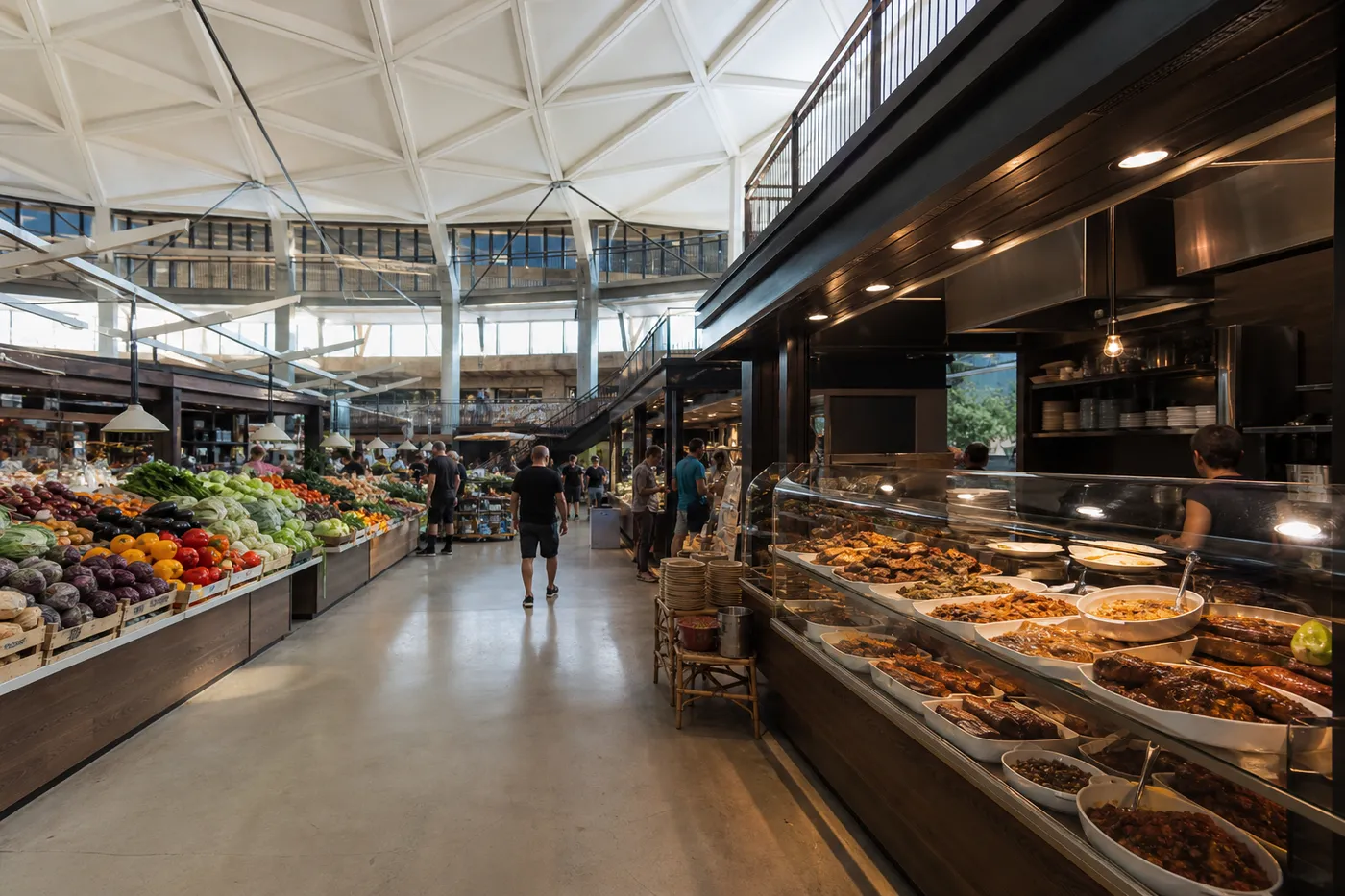
Covered arcade dining areas, enclosed market halls, and cozy subterranean wine cellars afford reliable shelter during evening rain.

Cost cue

mixed

Official site

Day 6

Ancient Appian Way, Catacomb Vaults, and San Clemente Subterranean Strata

Via Appia Antica and Catacombs of San Callisto

Ancient Appian Way, Catacomb Vaults, and San Clemente Subterranean Strata

Via Appia Antica and Catacombs of San Callisto & Basilica of San Clemente Underground Complex and Lateran Area

3 stops

Venturing along the Queen of Roads introduces travelers to basalt cobblestones, ancient tomb towers, and subterranean early Christian burial chambers beneath countryside pine canopies. The afternoon returns urbanward to explore the extraordinary multi-layered basilica complex of San Clemente, descending through centuries of Roman history. The journey concludes with a serene sunset stroll through the lush hilltop gardens of Villa Celimontana.

Daily pro tip: Wear sturdy walking shoes for the uneven ancient basalt paving stones of the Appian Way, and take Bus 118 or 218 from Metro Line A San Giovanni for efficient transport to the catacomb gates.
9 am

Morning

Via Appia Antica and Catacombs of San Callisto

Half day
Moderate
Via Appia Antica and Catacombs of San Callisto

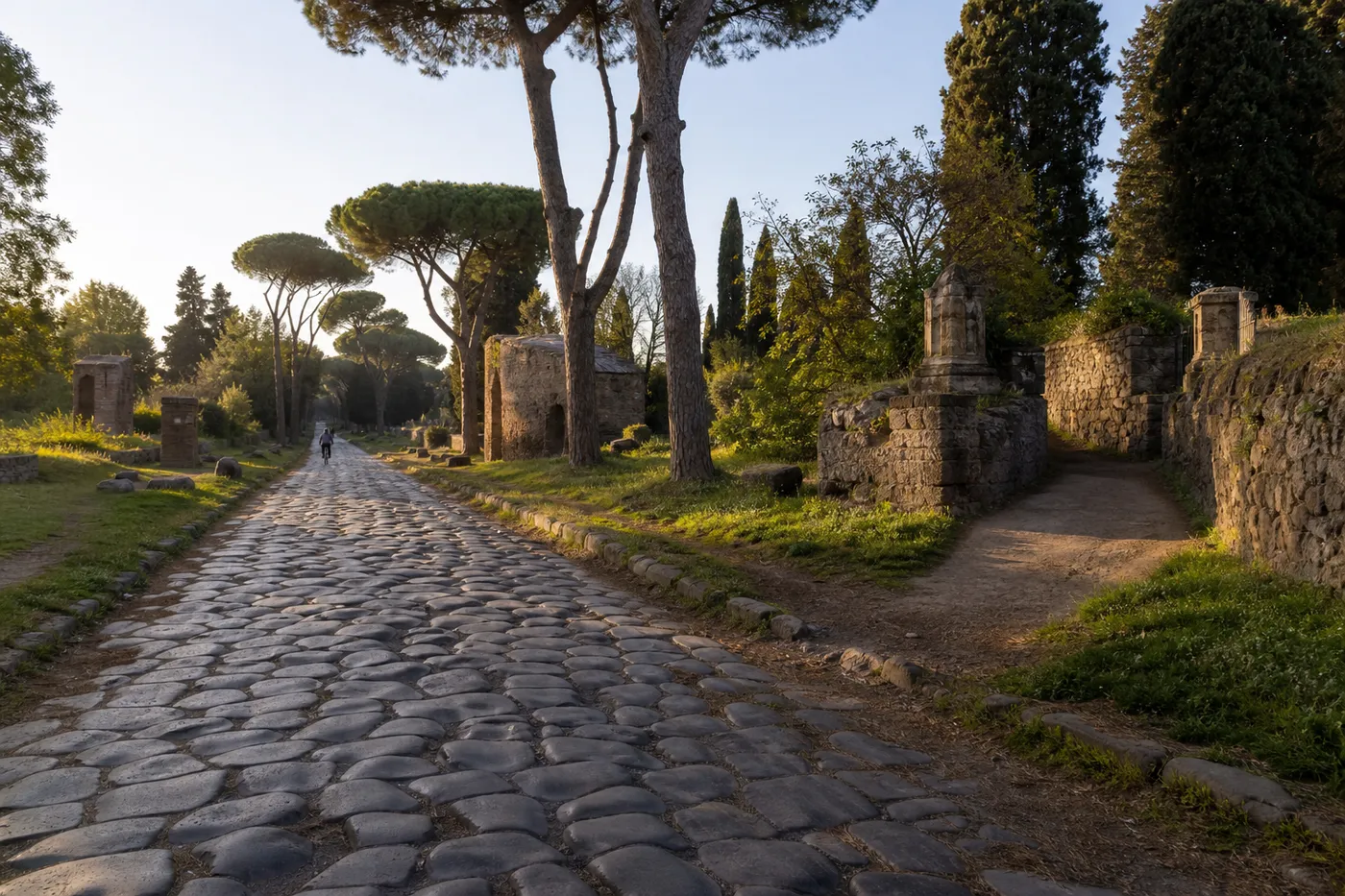
The Via Appia Antica ranks among the most evocative ancient monuments of the Roman Republic, engineered in 312 BC to connect Rome with southern Italy. Walking along original basalt paving stones worn smooth by centuries of chariot wheels offers a profound connection to ancient travelers. Soaring umbrella pines, ancient cypress trees, and ruined family tombs line the grassy shoulders of the roadway. Beneath the surface lie the Catacombs of San Callisto, the official cemetery of the third-century Church of Rome, spanning over twenty kilometers of subterranean galleries. Guided underground tours lead visitors through multi-tiered burial corridors, early Christian symbol carvings, and the Crypt of the Popes. The peaceful rural atmosphere creates a refreshing contrast to the bustling traffic of central Rome.

Morning

Timing

9 am - 12 pm

Budget

EUR 35

Transit

Bus Line 118 from Metro A San Giovanni or Metro B Circo Massimo

Insider tip

Carry a light jacket or sweater even during summer months, as the subterranean burial chambers remain distinctly cool year-round.

Planning notes

Live check

How to move

  1. 1.Take Metro Line A to San Giovanni station and exit toward Piazza San Giovanni in Laterano.
  2. 2.Board Bus Line 118 heading south and ride for fifteen minutes to the Catacombe di San Callisto stop.
  3. 3.Walk through the olive grove entrance path to reach the central ticket office and catacomb entrance.

Why it fits

Outdoor enthusiasts, ancient history enthusiasts, spiritual pilgrims, and walkers seeking scenic countryside landscapes.

Quick food plan

Small rustic trattorias and park kiosks near the catacomb gates serve paninis, espresso, and chilled drinks.

Nearby reset

Shaded grass lawns and wooden picnic benches beneath ancient olive trees surround the catacomb visitor center.

Weather fallback

The underground catacomb galleries maintain a constant cool temperature of around 15°C (59°F), offering perfect shelter from rain or summer heat.

Cost cue

moderate

Live check

Verify current access, ticketing, and transit details close to travel.
Official site
1 pm

Afternoon

Basilica of San Clemente Underground Complex and Lateran Area

Half day
Moderate
Basilica of San Clemente Underground Complex and Lateran Area

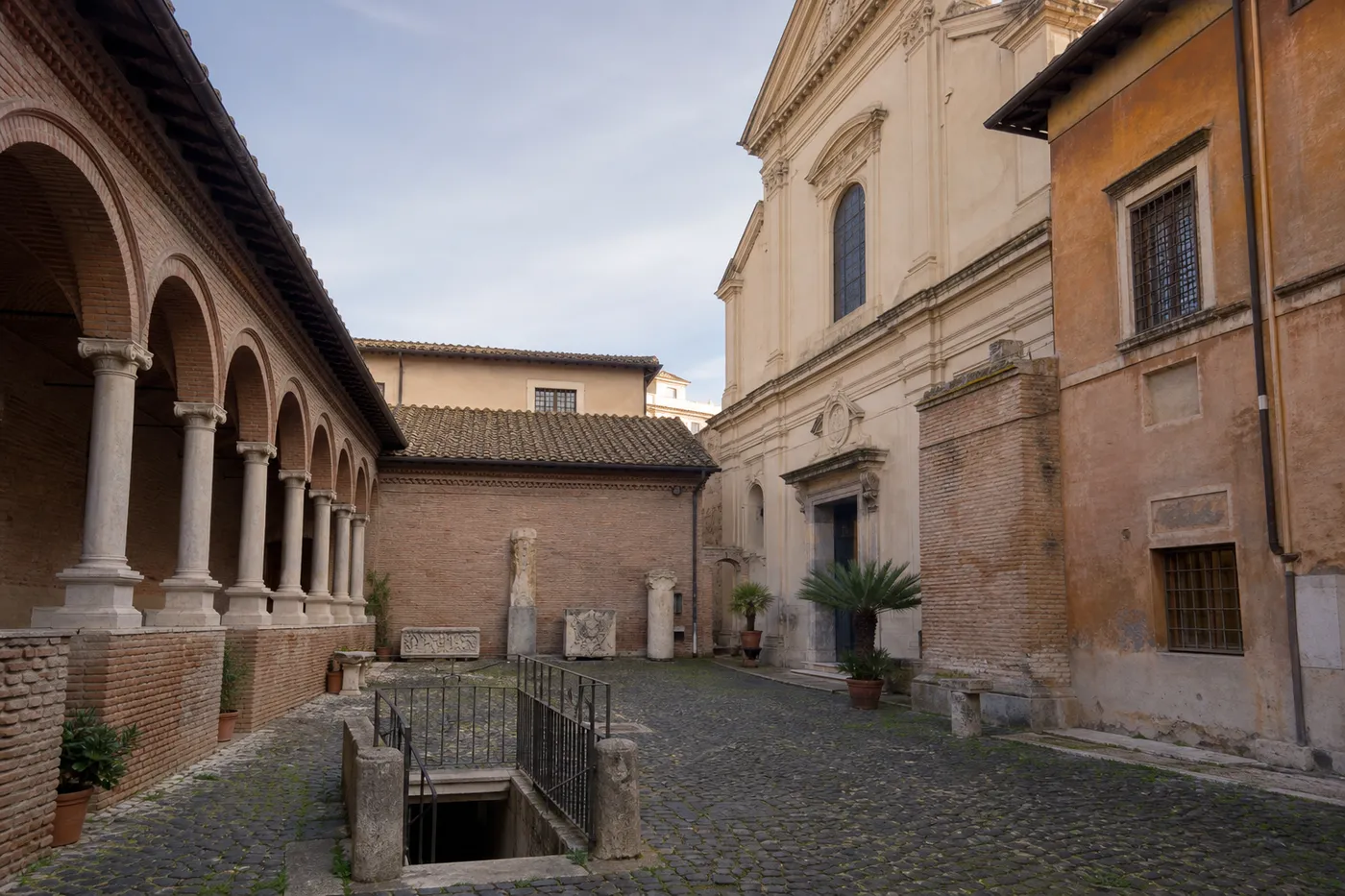
The Basilica of San Clemente offers one of Rome's most remarkable time-travel experiences, literalizing the city's layered historical foundation. At ground level, visitors enter a beautiful twelfth-century basilica adorned with shimmering gold mosaics, intricate Cosmati marble floors, and an elegant atrium courtyard. Descending a flight of stairs reveals an earlier fourth-century Christian basilica buried underneath, featuring faded early medieval frescoes depicting the life of Saint Clement. A further descent leads down to first-century Roman structures, including a pagan Mithraic temple with its stone altar and an ancient Roman apartment building. Standing in these deep stone chambers while hearing an underground mountain stream rush through ancient channels brings Rome's complex physical evolution vividly to life in a single location.

Afternoon

Timing

1 pm - 4 pm

Budget

EUR 35

Transit

Metro Line B Colosseo / Metro Line A San Giovanni

Insider tip

Listen carefully as you reach the lowest archaeological level to hear the rushing waters of an ancient underground spring flowing through Roman drainage pipes.

Planning notes

Live check

How to move

  1. 1.Take Bus Line 118 north from Via Appia Antica back toward Piazza San Giovanni in Laterano.
  2. 2.Walk five hundred meters down Via San Giovanni in Laterano toward the Colosseum.
  3. 3.Enter Basilica di San Clemente on Via Labicana near the corner of Piazza San Clemente.

Why it fits

Archaeology buffs, history lovers, religious art scholars, and travelers curious about Rome's physical layers of history.

Quick food plan

Via San Giovanni in Laterano offers casual sandwich bars, gelaterias, and family-run pasta spots.

Nearby reset

Quiet interior atrium courtyard with a central fountain provides peaceful seating before descending into the excavations.

Weather fallback

The deep subterranean levels remain completely sheltered from surface weather conditions, making it an excellent rainy or hot afternoon option.

Cost cue

moderate

Live check

Verify current access, ticketing, and transit details close to travel.
Official site
6 pm

Evening

Celian Hill Gardens and Villa Celimontana Evening Stroll

Half day
Free
Celian Hill Gardens and Villa Celimontana Evening Stroll

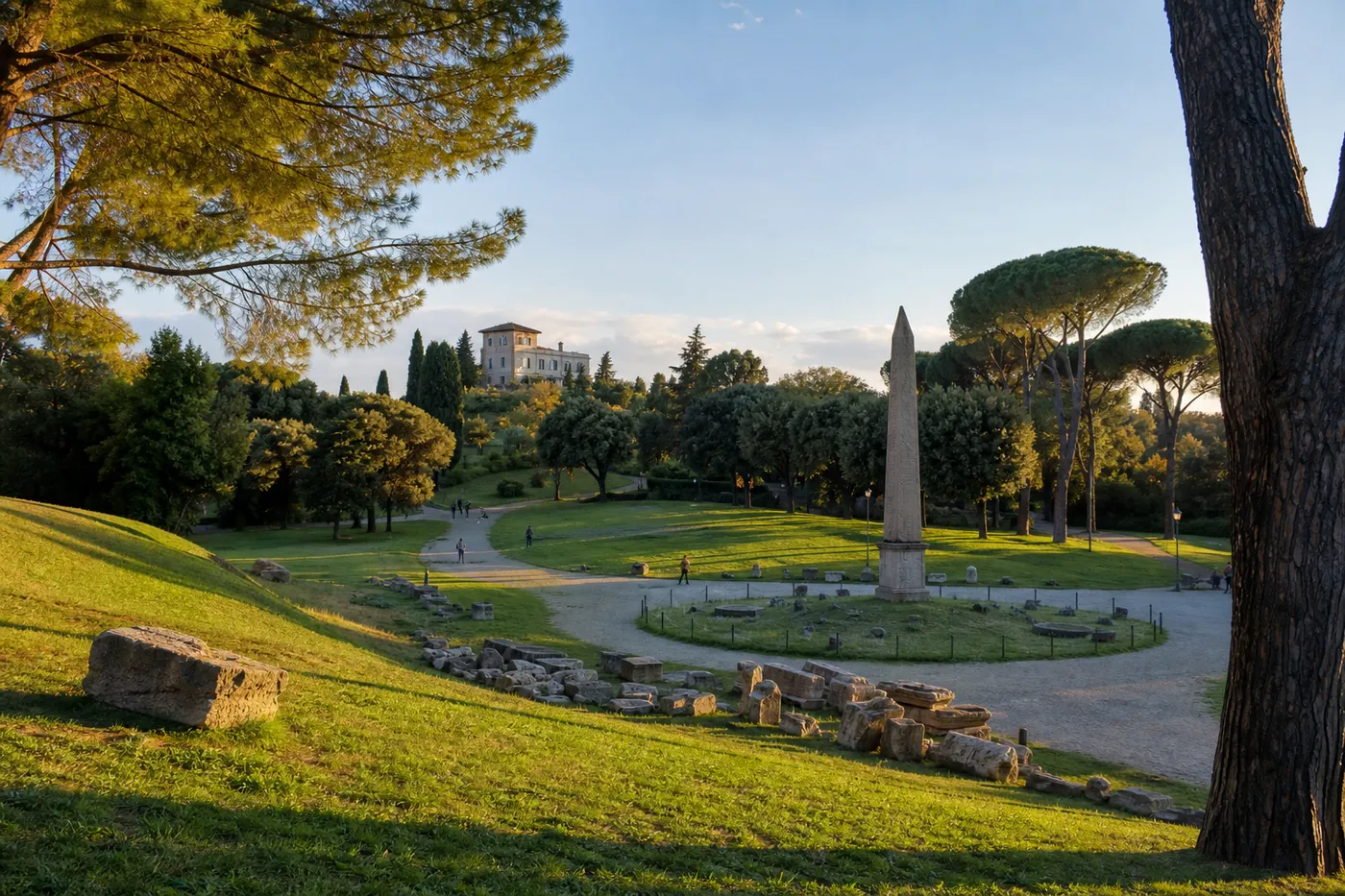
Perched atop the tranquil Celian Hill, Villa Celimontana provides an enchanting green sanctuary just steps away from the heavy tourist traffic surrounding the Colosseum. Originally landscaped in the sixteenth century for the noble Mattei family, this public park retains its Renaissance charm with gravel pathways, marble busts, citrus trees, and soaring palms. In the gentle light of early evening, local residents walk dogs, practice music, and relax near historic fountains. The park's elevated position catches cool evening breezes and offers picturesque filtered views across the southern valleys of Rome. Discovering scattered ancient inscriptions and an authentic Egyptian obelisk hidden among lush Mediterranean foliage creates an atmosphere of quiet discovery, making it a perfect spot to wind down after exploring underground sites.

Evening

Timing

6 pm - 9 pm

Budget

EUR 0

Transit

Bus Line 81 / Metro Line B Colosseo

Insider tip

Look for the small Mattei Egyptian obelisk near the central garden path, which features ancient hieroglyphs re-erected during the Renaissance.

Planning notes

How to move

  1. 1.Walk south up the gentle incline of Via Claudia from Basilica di San Clemente.
  2. 2.Turn left onto Via della Navicella opposite the ancient marble boat fountain.
  3. 3.Enter the main gates of Villa Celimontana adjacent to the Palazzetto Mattei.

Why it fits

Couples, nature lovers, photography enthusiasts, and travelers looking for a peaceful evening retreat near central landmarks.

Quick food plan

Neighborhood enoteche near Piazza della Navicella serve wine, cured meat platters, and seasonal Roman crostini.

Nearby reset

Numerous park benches along gravel garden avenues offer calm spots to unwind under palm trees and maritime pines.

Weather fallback

The sixteenth-century Palazzetto Mattei housed within the park features covered porticos for shelter during unexpected evening showers.

Cost cue

free

Official site