
CN / Macau / Essential/Main Attractions

2-Day Macau Essential Itinerary 2026: Senado Square, Ruins of Saint Paul's, Monte Fort Corridor, A-Ma Temple

Experience the best of Macau through this four-day essential guide, taking you from the cobblestone plazas of the historic peninsula to the glittering resorts of Cotai. Discover the deep maritime heritage, historic temples, and preserved island villages that define this unique cultural crossroads.

2 days
Essential/Main Attractions
6 planned stops

Day 1

UNESCO Historic Core of Macau

7 hr plan

Wear supportive, slip-resistant walking shoes as the Portuguese wave-patterned cobblestones can become remarkably slick when damp or polished by high foot traffic.

This entire day is designed as a contiguous walking route, requiring no vehicles once you arrive at the central starting plaza of Senado Square.
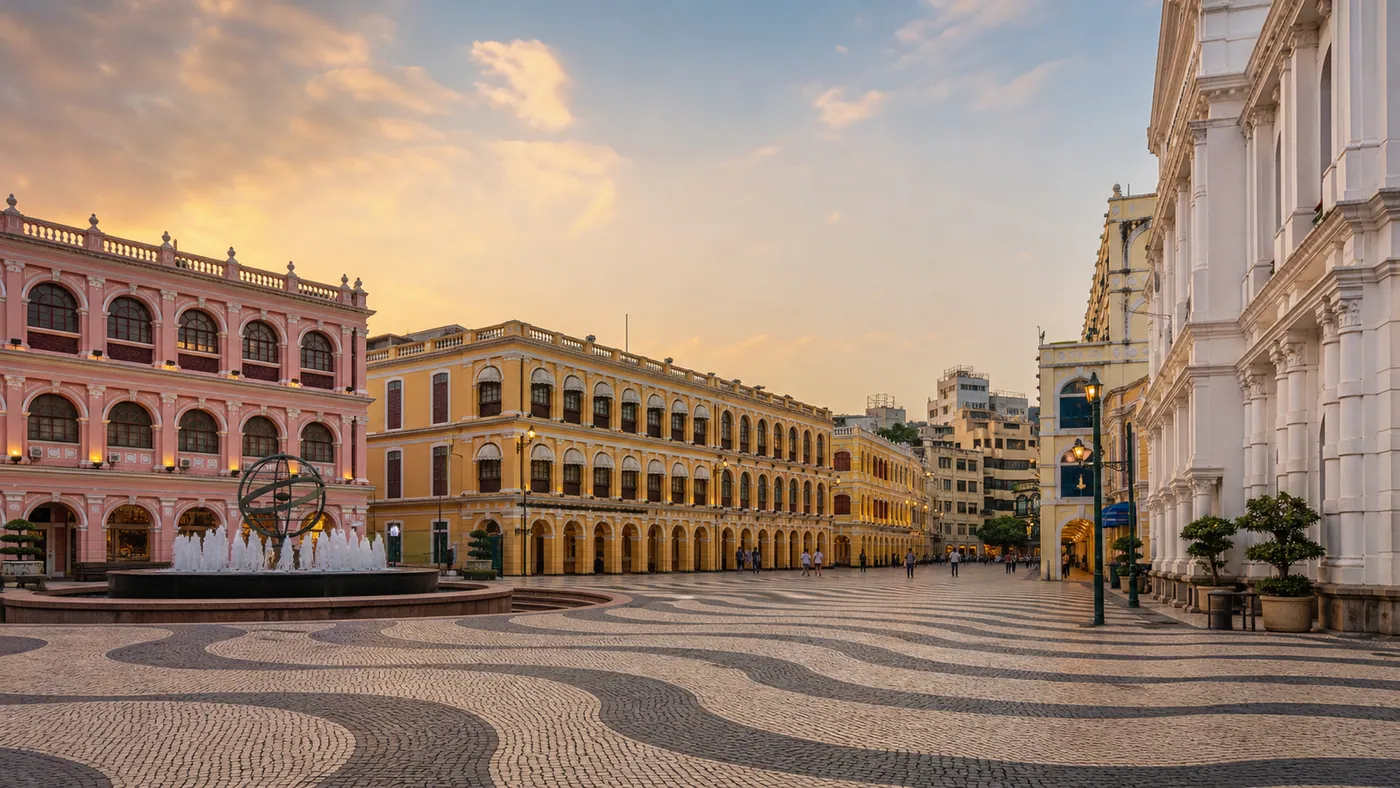
Senado Square
09:00Largo do Senado, Macau Peninsula

Senado Square

Walking into this historic plaza feels like entering a Mediterranean town, defined by the beautiful wave-like patterns of the black-and-white stone mosaics underfoot. Elegant neoclassical buildings painted in soft pastel yellows and pinks flank the pedestrian zone, housing long-standing civic institutions like the Leal Senado. The square serves as the peninsula's traditional civic center, where the colonial heritage of Portugal meets the bustling daily commerce of local shops and traditional pharmacies. It offers an open-air introduction to Macau's unique cultural fusion, showing how European architecture adapted to the climate and culture of South China.

Tip: Walk to the back of the Leal Senado building to discover a hidden, peaceful courtyard garden decorated with traditional blue Portuguese glazed tiles.

Next move: Public Bus or Taxi to Senado Square bus stop

Check official site
Ruins of Saint Paul's
13:00Rua de S. Paulo, Macau Peninsula

Ruins of Saint Paul's

Standing majestically atop a monumental flight of stone steps, this towering stone facade is all that remains of the seventeenth-century Church of Mater Dei. Constructed by Jesuit priests and Japanese Christian artisans fleeing persecution, the granite wall features intricate carvings that blend biblical narratives with Asian motifs like dragons and chrysanthemums. It stands as a striking testament to early globalization and spiritual exchange in East Asia, silhouetted against the open sky. Visitors can climb the stairs to examine the details closely, appreciating how the stone carvings tell the story of a Portuguese-Chinese settlement.

Tip: A narrow pathway to the left of the facade leads down to a small, hidden alleyway known as the Love Lane, offering a unique framed view of the ruins away from the main steps.

Next move: Short pedestrian walk from Senado Square

Check official site
Monte Fort Corridor
18:00Rua do Monte, Macau Peninsula

Monte Fort Corridor

Perched high on a hill adjacent to the ruins, this ancient military stronghold offers stunning views that stretch across the old city streets and over to the glittering modern skyline of Cotai. The stone battlements are lined with historic bronze cannons, presenting a stark visual contrast to the nearby glass skyscrapers of the casinos. Walking along the grassy perimeter path provides a peaceful escape from the busy streets below, especially as the late afternoon breeze cools the hilltop. It is the perfect place to watch the city transition from daylight into a sea of neon lights.

Tip: Use the elevators inside the Macao Museum to reach the fortress peak comfortably without having to walk up the steep hillside path.

Next move: Escalator access or walking path from the Ruins of Saint Paul's

Check official site

Day 2

Maritime Roots & Southwest Peninsular Heritage

7 hr plan

Purchase a local Macau Pass card at a convenience store early in the day to enjoy seamless, discounted fares across all public bus routes.

Beginning with a light rail journey to Barra, this route transitions to a highly compact walking tour before a short bus or taxi transfer.

A-Ma Temple
09:00Barra Square, Southwest Macau Peninsula

A-Ma Temple

Tucked against the green slope of Barra Hill, this sacred temple complex pre-dates the arrival of Portuguese traders and is the origin of Macau's name. The sanctuary is dedicated to Mazu, the goddess of seafarers, featuring several small pavilions built directly into the red granite cliffs. Giant banyan trees shade the entrance, while winding stone steps lead past incense burners and colorful shrines adorned with traditional clay figures. The peaceful atmosphere and the smell of burning incense coils offer an immersive look into the maritime traditions that shaped the peninsula.

Tip: Look for the detailed red carving of a traditional Chinese sailing junk on a large boulder near the entrance, which represents the safe arrival of early sea travelers.

Next move: Macau Light Rapid Transit (LRT) or Public Bus to Barra Station

Check official site
Maritime Museum
13:001 Largo do Pagode da Barra, Macau Peninsula

Maritime Museum

Housed in a white, ship-shaped building directly on the waterfront, this museum preserves the rich sailing history of the Pearl River Delta and the early Portuguese trade routes. The exhibits display detailed scale models of traditional Chinese fishing boats, sailing junks, and historical navigation instruments. It highlights how the local fishing communities lived and worked, showing the deep connection between the sea and the growth of the colony. The air-conditioned galleries offer a comfortable space to explore the history of regional shipbuilding and ancient trade maps.

Tip: Visit the museum's small harbor-facing courtyard to see a traditional wooden fishing junk up close.

Next move: Short walking distance across Barra Square from A-Ma Temple

Check official site
Mandarin's House
18:0010 Travessa de António da Silva, Macau Peninsula

Mandarin's House

This massive residential complex is a rare example of a late Qing dynasty merchant family home, showcasing a beautiful blend of Chinese and Western design styles. The walled estate features winding corridors, circular moon gates, and quiet courtyards lined with grey-brick buildings. Intricate wood carvings and traditional Chinese lattice windows sit alongside Portuguese-style shuttered verandas, demonstrating the cultural exchange of the late nineteenth century. Walking through the quiet reading rooms and gardens offers a peaceful look into the lifestyle of the city's early elite.

Tip: Walk to the second-floor windows of the main Yu Qing Tang hall to look down at the geometric patterns of the central courtyard tiles.

Next move: Short historic walking route from the Maritime Museum

Check official site