14-Day Macau Solo Itinerary 2026: Senado Square, Ruins of Saint Paul's, Horta da Mitra Municipal Market, A-Ma Temple
Exploring Macau independently reveals a city of fascinating dualities, where Portuguese architecture merges with traditional Cantonese neighborhoods. Designed for solo travelers, this itinerary uses efficient buses, light rail, and walking paths to connect historic cores and modern attractions without the need for strict schedules.
Purchase a regional public transit card at any local convenience store to simplify bus fares and avoid needing exact change on public routes.
This route is entirely pedestrian-focused, linking three key sites within the historic peninsula core via short, charming walks through colonial streets.
09:00Largo do Senado, Macau
Senado Square
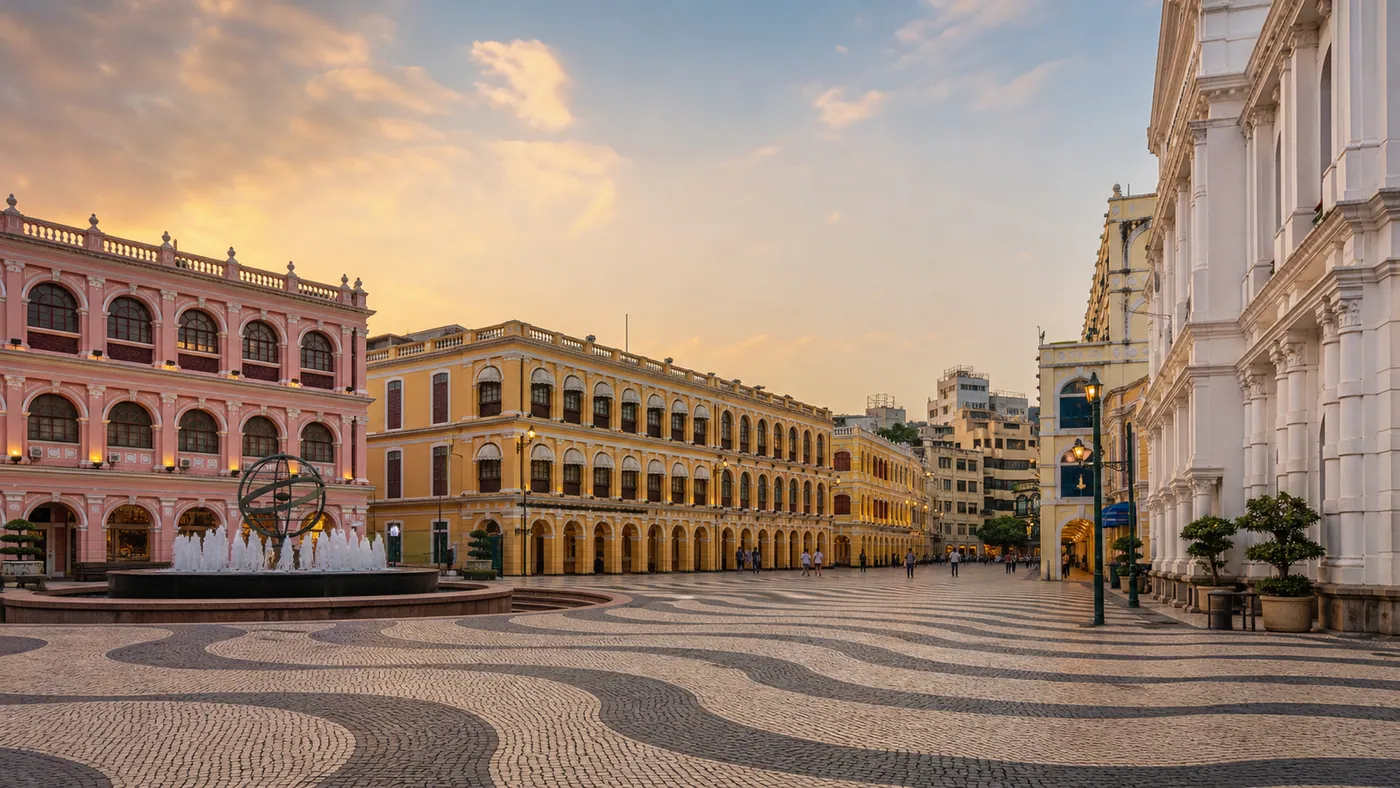
Senado Square serves as the grand entrance to old Macau, welcoming solo travelers with its wavy black-and-white stone mosaics that mimic the streets of Lisbon. Neoclassical buildings painted in pale yellow and turquoise frame the plaza, housing historic landmarks like the Holy House of Mercy and the Senado Library. Wandering here early allows you to take in the architecture without the daytime rush, letting you appreciate the details of the wrought-iron balconies and grand arched doorways. The pedestrian-only zone branches off into narrow, cobblestone alleyways, making it an excellent starting point for unstructured wandering.
Tip: Slip into the courtyard of the Holy House of Mercy to find a quiet, stone-walled alleyway that feels completely removed from the main square's bustle.
Rising dramatically at the top of a monumental stone staircase, the Ruins of Saint Paul's present a striking silhouette against the Macau sky. This massive granite facade is all that remains of the seventeenth-century Church of Mater Dei, which was destroyed by a fire in the nineteenth century. The stone carvings are a fascinating mix of European, Japanese, and Chinese motifs, depicting angels, sailing ships, and chrysanthemums. Standing at the base of the ruins, you can feel the sheer scale of what was once the largest Christian church in East Asia.
Tip: Take the narrow path to the left of the ruins, which runs along the old city wall, to capture a unique side view of the facade framed by banyan trees.
Tucked away in the slopes of the central peninsula, Horta da Mitra is a historic neighborhood built around an Art Deco market hall dating back to the 1930s. In the evening, the quiet streets surrounding the market transform into a lively dining scene where small open-air stalls serve local comfort food. The atmosphere is warm and neighborhood-focused, with residents gathering for simple, delicious meals. It is a fantastic place for solo travelers to dine informally, sitting on low stools and enjoying dishes that have been made the same way for decades.
Tip: Look for the tiny, decades-old stalls serving claypot coffee and toast slathered with condensed milk for a classic Macanese afternoon snack.
Start your day early to catch the gentle morning light at A-Ma Temple before the larger group tours begin their coastal sightseeing routes.
Begin with a short public bus ride to the southern tip of the peninsula, walk between the heritage sites, and take a short taxi or bus to the Macau Tower.
09:00Largo de Barra, Macau
A-Ma Temple
Nestled against the wooded slopes of Barra Hill, the A-Ma Temple is the oldest Taoist sanctuary in Macau, built long before the Portuguese arrived. The temple consists of several small pavilions, shrines, and halls linked by winding stone stairways and moon gates. As you walk through the complex, the scent of burning incense coils fills the air, and red prayer slips flutter from the banyan trees. The architecture is integrated beautifully with the natural rock formations, creating a peaceful and contemplative environment.
Tip: Look for the ancient boulder carved with a red-painted Chinese junk, which dates back to the seventeenth century and represents the temple's maritime links.
The Mandarin's House is a beautifully restored nineteenth-century residential compound that belonged to the reformist scholar Zheng Guanying. Spanning a vast area, this mansion combines traditional Chinese courtyard layouts with subtle Portuguese architectural elements, such as green shuttered windows and arches. The interior feels like a peaceful sanctuary, with moon gates leading to quiet courtyards filled with potted plants. It is an ideal spot for solo travelers to wander slowly, enjoying the play of light and shadow on the grey brick walls.
Tip: Examine the translucent windows in the main hall, which are made of polished oyster shells rather than glass, filtering the sunlight softly.
Dominating the southern tip of the peninsula, the Macau Tower stands at 338 meters and offers some of the most expansive views of the region. A high-speed glass elevator takes you to the observation deck, where you can look out over the Pearl River Delta, the Cotai Strip, and the mainland Chinese hills. It is a striking modern contrast to the historic districts explored earlier in the day, especially as the city lights begin to flicker on at dusk.
Tip: For a quieter view, head to the lower observation deck where most visitors overlook the outdoor views in favor of the glass-bottomed floors on the level above.
Outer Harbour Cultural Echoes and Waterfront Breeze
7 hr plan
Purchase a combined ticket online for the Grand Prix Museum and Science Center to secure optimal timed-entry slots for the racing simulators.
Walk along the scenic seaside promenade to connect the Grand Prix Museum, the Science Center, and the Fisherman's Wharf entertainment district.
09:00431 Rua de Luis Gonzaga Gomes, Macau
Macao Grand Prix Museum
Celebrating one of the world's most challenging street races, the Macao Grand Prix Museum offers a modern, interactive look at the Guia Circuit's history. Spanning four floors, the museum features slick displays of historic racing cars, motorcycles, and gear worn by legendary drivers. For solo travelers, the highlight is the array of high-tech simulators that let you experience the thrill of racing on the narrow street circuit. The museum's interactive screens and multimedia displays make it highly engaging and easy to navigate independently.
Tip: Start with the motorcycle simulators on the ground floor first, as their queues build up faster than the Formula 3 simulators on the upper levels.
Designed by the legendary architect I.M. Pei, the Macao Science Center is an eye-catching modernist structure located on a peninsula in the Outer Harbour. Its distinctive silver conical shape houses several galleries of interactive, hands-on exhibits that cover everything from space exploration to robotics. The interior features a spiral ramp that leads visitors upward through the galleries, making it a smooth and visually pleasing space to explore at your own pace.
Tip: Head to the viewing platform on the top floor of the conical tower for a clean, architectural photo of the Macau skyline through the glass panes.
Macau Fisherman's Wharf is a massive waterfront dining and leisure complex that sits along the Outer Harbour. It features eclectic, theme-park-style architecture, including a replica of a Roman Coliseum that has become a popular spot for photography. In the evening, the sea breeze makes this a pleasant and relaxing place for a solo stroll along the boardwalk. The waterfront is lined with restaurants and cafes where you can dine outdoors while looking out over the illuminated bridge.
Tip: Walk to the far end of the wooden boardwalk to find the best angle for photographing the Friendship Bridge lit up at night.
Wear comfortable walking shoes today, as you will transition from paved village alleys to massive, carpeted resort corridors.
Utilize the modern Macau Light Rapid Transit (LRT) to reach Taipa, then easily walk between the lakeside houses, the traditional village, and the Cotai resorts.
09:00Avenida da Praia, Taipa, Macau
Taipa Houses
Built in 1921, the Taipa Houses are a row of five beautifully preserved mint-green villas that once housed Portuguese civil servants and Macanese families. Today, they serve as museum spaces showing period furniture, traditional costumes, and historical photographs of Taipa. The villas sit along a cobblestone path lined with frangipani trees, overlooking a peaceful wetland lake that attracts local birdlife. The setting is exceptionally peaceful, offering a green sanctuary with the massive hotels of Cotai rising in the distance.
Tip: Walk down to the edge of the wetland lake to view the lotus blossoms, which bloom beautifully during the summer months.
Next move: Macau Light Rapid Transit (LRT) or Public Bus
Taipa Village is a historic residential neighborhood that has retained much of its traditional charm. Its narrow, pedestrian-only streets are lined with low-rise pastel-painted buildings, Chinese temples, and local bakeries. The most famous street is Rua do Cunha, a bustling food lane where the scent of almond cookies and pork chop buns fills the air. It is a lively, sensory experience where solo travelers can sample street food and explore the local shops at their own pace.
Tip: Diverge from the crowded main street of Rua do Cunha into the quiet side alleys to find small art galleries and quiet craft shops.
Located within the Venetian Macao on the Cotai Strip, teamLab SuperNature is a massive, multi-dimensional digital art museum. The space features interactive installations where light, sound, and color change in response to your presence, creating a dreamlike landscape. You can walk through rooms filled with projection-mapped flowers, floating light spheres, and digital clouds. It is a highly immersive, self-guided experience where you can lose yourself in the shifting digital patterns.
Tip: Wear white or solid light-colored clothing so the digital light projections map cleanly onto you, making you part of the artwork.
Start early at Guia Hill to catch the morning breeze, and purchase a combined ticket at the museum if you plan to visit multiple municipal heritage sites.
Walk up Guia Hill or take the short cable car, then walk downhill via Flora Garden towards Monte Fort, ending with a stroll to St. Dominic's Church.
09:00Guia Hill, Macao Peninsula
Guia Fortress and Lighthouse
Perched at the highest point of the Macau peninsula, this nineteenth-century fortress offers a panoramic gaze over the outer harbour and the Pearl River Delta. The whitewashed stone walls and yellow trim of the chapel and lighthouse stand as iconic landmarks of maritime history. Walking along the ramparts, you can observe local seniors practicing tai chi under the banyan trees. The tiny chapel inside preserves unique frescoes that blend Chinese and Portuguese artistic styles, reflecting centuries of cultural dialogue.
Tip: Walk around the back of the lighthouse to find a small exhibition room housing historical storm signals and meteorological equipment used in the early twentieth century.
13:00112 Praceta do Museu de Macau, Mount Fortress
Macao Museum
Built directly into the ancient stone foundations of Mount Fortress, this municipal museum details the complex history of Macau. Inside, the exhibition halls showcase the domestic lives, traditional trades, and religious customs of the Chinese and Portuguese communities. Moving through the galleries, you will find dioramas of traditional firecracker shops, old fishing boats, and historic street markets. The museum successfully preserves the heritage of Macau as a major international trading port.
Tip: Look for the interactive sound booth on the second level where you can listen to recordings of traditional Macau street vendors calling out their wares in the old dialect.
Next move: Escalator system from Mount Fortress to the city center
18:00Largo de São Domingos, Historic Centre of Macao
St. Dominic's Church
Standing in the center of a lively paved square, this seventeenth-century baroque church features a stunning yellow plaster facade and green shutters. Originally founded by Spanish Dominican friars, the church serves as a quiet sanctuary amidst the bustling commercial streets of the historic center. The high altar inside is highly decorated, featuring a statue of the Virgin and Child surrounded by delicate ivory carvings. The interior is characterized by soaring wooden ceilings and elegant stone pillars.
Tip: Climb to the third floor of the bell tower to see the original heavy wooden beams and the old church bells up close.
Next move: Walking routes within the pedestrian zone
Use the coastal promenade paths to walk between the museums, which offers great sea views and avoids traffic.
Walk or take a short taxi to the NAPE waterfront museum complex, then catch a public bus north to the memorial house, and return south for the evening show.
09:00Avenida Xian Xing Hai, NAPE, Macao
Macau Museum of Art
Located along the NAPE waterfront, this modern five-story museum is the largest art exhibition space in Macau. The galleries showcase a wide range of visual arts, including Chinese calligraphy, historical paintings of early trade ports, and contemporary local installations. The building features wide windows that look out over the outer harbour, providing a serene environment for viewing art. The museum regularly hosts international exhibitions in collaboration with global museums, making it a key hub for cultural exchange.
Tip: Visit the ground floor museum shop to find high-quality art monographs and prints of historical Macau scenes.
Tucked away in a quiet residential neighborhood, this unique three-story villa features striking Moorish arches and spacious verandas. The house was built as a residence for the family of Dr. Sun Yat Sen, who practiced medicine in Macau in the late nineteenth century. Inside, the rooms are preserved with original wooden furniture, personal letters, and historical photographs that document his life and revolutionary work. The quiet atmosphere of the house offers a stark contrast to the busy shopping districts nearby.
Tip: Take a close look at the wooden windows on the second-floor veranda to see the intricate brass latches and stained-glass details.
This large outdoor lagoon in the NAPE district comes alive at night with a choreographed show of water, lights, and fire. High-pressure nozzles shoot water plumes high into the night sky, moving in harmony with classical melodies and popular show tunes. The colorful lights from the surrounding resorts reflect off the water, creating a vibrant sensory experience. Solo travelers can easily find a spot along the lakeside promenade to enjoy the show without needing a reservation.
Tip: Stand near the southeast corner of the lake to get the best angle of the fire bursts reflecting against the modern hotel towers.
Next move: Hotel Shuttle Buses and Peninsula Taxis
Buy a Macau Pass card at a convenience store early in the day to make hopping on and off island buses hassle-free.
Take a southbound public bus to the Giant Panda Pavilion, then travel a short distance south to Coloane Village, and finally take a northbound bus or taxi to the Cotai Strip.
09:00Seac Pai Van Park, Coloane, Macao
Macao Giant Panda Pavilion
Situated inside the lush valley of Seac Pai Van Park, this modern conservation facility offers a rare opportunity to observe giant pandas in a carefully recreated natural habitat. The pavilion features a large indoor activity arena with climbing logs and rocky pools, as well as an outdoor yard where the pandas can roam freely. Solo visitors will enjoy the quiet, orderly atmosphere of the morning viewing sessions, when the animals are most active and feeding on fresh bamboo. The adjoining information center provides excellent educational displays detailing the global breeding and protection efforts for these iconic creatures. Surrounding the pavilion, the park's tranquil walking paths and botanical gardens offer a refreshing dose of nature, making it a peaceful and rejuvenating morning escape far removed from the high-energy resort districts.
Tip: Head straight to the indoor enclosure during the 9:30 AM feeding time when the keepers place fresh bamboo shoots around the climbing logs.
Housed inside a handsome, pastel-green administrative building dating from the early twentieth century, this local museum preserves the distinct maritime heritage of Macau’s southern islands. The galleries trace the history of the region from prehistoric archaeological discoveries to the flourishing shipbuilding and fishing industries that once dominated Coloane and Taipa. For the independent explorer, the museum offers a quiet and fascinating glimpse into the lives of traditional fishing families before the arrival of modern infrastructure. Display cases are filled with old tools, model ships, and historical documents that highlight the unique fusion of cultures on these islands. The quiet, tree-lined streets of Coloane Village just outside the museum doors add to the laid-back, nostalgic atmosphere, encouraging you to slow down and wander the peaceful waterfront paths.
Tip: Check out the archaeological exhibition on the ground floor to see stone tools and pottery fragments dating back over three thousand years.
18:00Estrada da Baía de Nossa Senhora da Esperança, Cotai, Macao
The Venetian Macao
Stepping into this monumental resort on the Cotai Strip is like entering a vibrant recreation of renaissance Venice, complete with indoor canals, arched stone bridges, and painted sky ceilings that mimic a perfect twilight. Solo travelers can easily lose track of time wandering through the grand shopping arcades, watching the singing gondoliers guide their wooden crafts along the water. The grand scale of the architecture, inspired by the Doge's Palace, is particularly striking in the evening when the exterior is brilliantly lit. Beyond the shopping, the complex features a wide array of international dining halls, indoor street performances, and entertainment arenas. It offers a spectacular, high-energy environment that perfectly represents the grand scale of Cotai’s modern developments, providing a memorable and lively venue to celebrate the final evening of your Macau journey.
Tip: Take the pedestrian bridge connecting the resort to the Taipa Houses-Museum for a scenic walk between old and new Macau.
Next move: Macao Light Rapid Transit (LRT) and Free Resort Shuttles
Try the Guia Cable Car early in the morning when it first opens to avoid weekend family crowds, and remember to keep small change or your Macau Pass card ready for the nominal fare.
Walk up from the cable car base to the hill summit, then descend the scenic back slopes directly into the creative St. Lazarus district, exploring Tap Seac Square on foot.
09:00Avenida de Sidonio Pais, Macau
Guia Hill Cable Car and Pedestrian Walkways
Begin your morning at the foot of Guia Hill, where the charming cable car offers a brief but scenic ascent over the manicured gardens of Flora Park. As the cabin glides upward, you will see a unique vantage point of the bustling northern peninsula contrasting with the lush green canopy below. Upon reaching the upper station, step onto the tranquil network of pedestrian pathways that wind around the hillside under the shade of mature banyan trees. Locals gather along these paved trails to practice tai chi or jog in the fresh morning air, offering a wonderful glimpse into the city's daily wellness routines. Take your time wandering the paths to discover historic stone walls and quiet rest spots. This is a wonderfully peaceful sanctuary that helps solo travelers escape the urban buzz and enjoy sweeping panoramic views of the coastal waters.
Tip: The cable car does not operate on Mondays, so plan to walk the paved paths up from Flora Garden if visiting on that day.
Descend the quiet slopes of Guia Hill into the heart of the historic St. Lazarus District to find this peaceful creative oasis. The enclosed courtyard of Albergue SCM is framed by two grand, century-old camphor trees whose leafy branches cast cool shadows over the stone pavement. Painted in a warm, vibrant yellow with white trim, the colonial-era buildings surrounding the space showcase beautiful European architectural details. Once serving as a refuge for the elderly and vulnerable, the complex has transformed into an active hub for local artists and designers. Wander through the small art galleries tucked inside the historic rooms to admire contemporary local installations. The quiet, introspective atmosphere makes it an absolute dream for solo travelers wishing to read, write, or simply soak in the architectural heritage of a bygone era.
Tip: Walk to the back of the courtyard to find a small Portuguese restaurant serving traditional olive oil cakes and coffee.
18:00Avenida do Conselheiro Ferreira de Almeida, Macau
Tap Seac Square Cultural Complex
Conclude your day at Tap Seac Square, one of Macau's most impressive public spaces, bordered by an elegant row of heritage buildings. The square is paved with traditional Portuguese mosaic tiles arranged in bold, sweeping geometric patterns that catch the warm glow of the evening streetlights. Built in the early twentieth century, the surrounding neoclassical structures feature stunning facades painted in deep red and mustard yellow, accented by classic European columns and wooden shutters. These buildings now host key cultural venues, including the public library, historical archives, and contemporary art galleries. As dusk settles, watch the local community gather in the spacious plaza, creating a lovely, authentic neighborhood feel. Walking past these glowing historic facades offers a peaceful, atmospheric evening stroll that showcases the artistic side of the peninsula.
Tip: Enter the Tap Seac Gallery when open to see contemporary art installations housed within a beautifully restored colonial building.
Bring mosquito repellent for the lush gardens at Camões, and check the tide or weather warnings before walking the low-lying Inner Harbour shoreline.
Start in the northern gardens, stroll down through the historic Protestant Cemetery, and take a gentle downhill walk to the bustling Inner Harbour waterfront.
09:00Praça de Luis de Camões, Macau
Camões Garden and Grotto
Spend your morning at Camões Garden, one of Macau's oldest and largest public parks, named in honor of the legendary Portuguese poet Luís de Camões. The park is built on a series of gentle hills covered in massive, leafy banyan trees whose roots wrap around rugged granite boulders. Follow the winding stone pathways to find the historic stone grotto, where a bronze bust of the poet stands nestled in a natural cleft of the rocks. In the early hours, the park is alive with local seniors practicing tai chi, playing Chinese chess, or hanging their pet songbirds in wooden cages from the tree branches. The gentle breeze and natural shade create an incredibly peaceful, reflective atmosphere for solo travelers. It is a beautiful space to observe local culture and connect with the poetic heritage of the peninsula.
Tip: Look for the groups of local seniors playing traditional Chinese chess near the park's central pavilion for a glimpse of daily life.
Located just steps from Camões Garden, this elegant heritage site offers a deep look into Macau's early international trading history. Casa Garden is a beautiful, pastel-pink villa built in 1770 as the summer residence of a wealthy Portuguese merchant, surrounded by manicured lawns and stone paths. Immediately adjacent lies the tranquil Protestant Cemetery, the final resting place for early British, American, and European traders, diplomats, and missionaries. The quiet grounds are shaded by towering trees, with mossy gravestones and ivy-covered stone walls that create a deeply peaceful, contemplative atmosphere. As you wander past the historic headstones, you will discover the resting place of Robert Morrison, the translator who published the first Chinese-English dictionary. For solo travelers, the quiet shade provides a perfect place to reflect on the global connections that shaped the territory.
Tip: Locate the headstone of George Chinnery, the famous English painter who documented nineteenth-century Macau life, situated near the back wall.
Conclude your day with an atmospheric walk along the Inner Harbour Waterfront Promenade, where Macau's maritime past meets its active working life. The promenade runs alongside the busy shipping channels, offering open views of fishing vessels, tugboats, and barges glinting in the evening light. Unlike the modern Cotai Strip, this area retains a nostalgic, rustic charm with its old piers, maritime warehouses, and historic trading storefronts. Walk south along the waterfront to enjoy the cool sea breeze and watch the lights flicker on across the water in mainland China. The gentle murmur of the waves and the distant rumble of boat engines create a soothing background sound for a solo walk. It is a fantastic way to experience the authentic maritime character of the peninsula as night falls.
Tip: Time your walk for sunset when the sky turns orange behind the hills of Hengqin across the river.
Penha Hill and Nam Van Scenic Vistas and Quiet Lakes
7 hr plan
Wear comfortable walking shoes for the steep climb up Penha Hill, and time your visit to reach the summit just before the late afternoon light turns golden.
Take a quiet bus route to the base of Penha Hill, climb to the scenic chapel, and then enjoy a gentle downhill walk to the Nam Van Lake promenade.
09:00Colina da Penha, Macau
Penha Hill and Chapel of Our Lady of Penha
Begin your morning with an inspiring walk up Penha Hill, a quiet residential enclave known for its luxury villas and leafy avenues. At the summit stands the lovely Chapel of Our Lady of Penha, originally founded in 1622 by Portuguese sailors who survived a dramatic encounter with Dutch invaders. Built from grey stone, the chapel features a striking bell tower and a courtyard adorned with a beautiful statue of the Virgin Mary facing the sea. The spacious terrace offers a truly magnificent panoramic view of the Inner Harbour, the Sai Van and Nam Van Lakes, and the soaring Macau Tower. For solo travelers, the quiet atmosphere and gentle mountain breeze make this summit an incredibly peaceful sanctuary to think and take photographs. It is a wonderful way to experience Macau's historic devotion and scenic geography away from tourist crowds.
Tip: Walk down the eastern side of the hill to find a quiet grotto dedicated to Our Lady of Lourdes, surrounded by stone steps.
Descend Penha Hill and stroll over to St. Augustine's Square to find this absolute gem of a public library. Originally built in the late nineteenth century as a private mansion, the property was purchased by the wealthy businessman Sir Robert Ho Tung, who gifted it to the public as a library. The building features an elegant, mustard-yellow facade with white arches and classic European ironwork. Behind the historic mansion lies a modern, glass-walled extension nestled within a lush courtyard garden filled with flowering trees and quiet fountains. Solo travelers can wander through the quiet reading rooms, find a seat on the outdoor terrace, or browse the collection of rare books. The combination of historic architecture, modern glass design, and peaceful gardens makes this library a truly unique and relaxing place to rest your feet.
Tip: The library garden has an outdoor cafe area where you can read under the shade of mature banyan trees.
Conclude your day with a relaxing evening stroll along the Nam Van Lake Promenade, a spacious waterfront walkway that curves around the peninsula's southern lake. As night falls, the promenade offers a wonderful front-row seat to the city's glittering skyline, with the Macau Tower and the high-tech bridges reflecting in the calm water. The wide, paved path is lined with shady trees and modern art installations, making it highly popular with local residents for evening walks. The cool breeze coming off the lake creates a refreshing environment for a solo traveler to wander. Take your time walking along the path, enjoying the serene atmosphere and the dramatic contrast between the quiet lake and the glowing modern skyline. It is a peaceful, beautiful way to experience Macau's modern side at a slower pace.
Tip: Look for the outdoor amphitheater along the promenade, which often hosts free musical performances or local festivals on weekends.
Mong-Ha and Three Lamps Northern Neighborhood Living
7 hr plan
Look for the tiny Burmese noodle joints tucked into the side alleys off Rotunda de Carlos da Maia for exceptional bowls of mohinga and coconut chicken noodles that are hard to find elsewhere in the city.
Ride a public bus to the foot of Mong-Ha Hill and walk up the garden paths to the fort. From there, head south on foot down the residential avenues to reach the Three Lamps roundabout, continuing west into the narrow lanes of San Kio.
09:00Colina de Mong Ha, Macau
Mong-Ha Fort and Hill Park
Mong-Ha Fort offers a peaceful escape from the crowded central districts, standing as a quiet green oasis on the northern peninsula. Paved walking paths wind up the hill through Mong-Ha Hill Park, where elderly residents practice tai chi under the shade of mature banyan trees. The fortress walls, constructed from local granite in the mid-nineteenth century, once served to guard the northern borderlands. Today, the ramparts provide a sweeping lookout point over the dense apartment buildings and school yards stretching toward Zhuhai. It is a fantastic spot for solo travelers to enjoy a quiet morning walk while taking in the local domestic side of Macau.
Tip: Look for the old barracks near the park entrance, which have been converted into classrooms and exhibition spaces for tourism and culinary arts students.
Three Lamps District and Rotunda de Carlos da Maia
Named after the iconic three-belled street lamp standing at the center of its circular plaza, this neighborhood is the beating heart of local retail and community life. The streets radiating from the central rotunda are packed with stalls selling fresh fruit, clothing, and everyday household goods. This area is particularly famous for its unique culinary identity, shaped by overseas Chinese who returned from Myanmar and other parts of Southeast Asia in the mid-twentieth century. Solo travelers can wander the energetic lanes, taking in the vibrant sights and rich aromas of noodle soups and spices. It is a fantastic neighborhood to get lost in, offering a glimpse of Macau's everyday multicultural tapestry.
Tip: Order a bowl of mohinga, a traditional Burmese catfish noodle soup, at one of the small shops along the narrow side alleys.
San Kio District is a historic neighborhood where old-world Cantonese heritage meets a fresh wave of local youth culture. The quiet streets are dotted with vintage clothing stores, independent coffee shops, and colorful murals that brighten the old concrete facades. At the core of this neighborhood is the Lin Kai Temple, a seventeenth-century shrine dedicated to the Taoist God of Wealth and other traditional deities. Visiting this temple offers a peaceful look at local religious practices away from the crowded heritage trails. As night falls, the surrounding alleys light up with soft lanterns, revealing a cozy atmosphere where young locals gather outside indie galleries and small eateries.
Tip: Walk past the temple to find the small flea markets and vintage boutiques that open on selected weekday evenings.
Many galleries along the NAPE waterfront are closed on Mondays, so plan your museum visits for mid-week to avoid disappointment.
Board a public bus to the cultural center complex in NAPE, walk between the adjacent museums, and stroll along the seaside promenade to the Kun Iam center.
09:00Avenida Xian Xing Hai, Macau
Handover Gifts Museum of Macao
Located next to the Macao Cultural Centre, this sleek museum stands on the very spot where the historic Sino-Portuguese handover ceremony took place in December 1999. The main exhibition hall houses the magnificent gifts presented by China's various provinces, autonomous regions, and municipalities to mark the transition. Each piece is a breathtaking display of traditional Chinese craftsmanship, ranging from massive jade sculptures and gold-plated models to delicate silk embroidery. For solo visitors, the museum provides a peaceful, air-conditioned space to appreciate the incredible detail of these masterworks without the noise of typical tourist crowds. It is an artistic and historical journey that offers a deeper understanding of Macau's modern cultural identity.
Tip: Head to the second-floor gallery to see the temporary art and photography exhibitions that often feature local Macau artists.
This innovative cultural space represents a partnership that merges historical art curation with state-of-the-art interactive technology. Located in the modern NAPE district, the museum showcases rare Chinese antiquities, including ancient bronze artifacts and fine silks, set within high-tech multimedia environments. The design aims to make history accessible through projection mapping, digital displays, and creative lighting that respond to visitors. For solo travelers, the low-lit, quiet environment is perfect for a self-guided journey, allowing you to focus on the textures of the relics and the visual narrative of the digital installations. It stands as a brilliant example of how Macau is redefining the museum experience for a modern audience.
Tip: Check the museum's digital schedule at the reception desk to see when the main projection mapping shows run in the central hall.
NAPE Waterfront Promenade and Kun Iam Ecumenical Centre
As the afternoon fades, a walk along the NAPE Waterfront Promenade offers a breath of fresh sea air and clear views of the outer harbor bridges. The path leads directly to the Kun Iam Ecumenical Centre, which rises from a stone causeway jutting into the sea. The center is topped by a beautiful twenty-meter-tall bronze statue of the Goddess of Mercy, designed by Portuguese sculptor Cristina Rocha Leiria. Inside the dome-shaped base, visitors find a quiet sanctuary dedicated to contemplation and interfaith understanding, featuring displays on diverse spiritual philosophies. For solo travelers, the combination of coastal winds, sunset views, and the quiet interior provides a highly meditative experience.
Tip: Sit on the outer stone wall of the causeway facing east to get an unobstructed view of the Friendship Bridge lit up at night.
Taipa Village Side Streets and Carmo Slower Island Rhythms
7 hr plan
Avoid the main shopping street of Rua do Cunha if you want a quiet walk, and instead focus on the parallel residential lanes just one block away.
Ride a public bus across the Sai Van Bridge to Taipa, walk through the historic village and church grounds, and board the light rail at Pai Kok station for the Cotai loop.
09:00Avenida de Carlos da Maia, Taipa, Macau
Feira do Carmo and Our Lady of Carmel Church
Perched on a quiet hill overlooking the Taipa wetlands, Our Lady of Carmel Church is a charming nineteenth-century structure painted in a signature pastel yellow. Built in 1885, the church stands as a testament to the Portuguese families who once lived on the island. The surrounding area, known as Feira do Carmo, is a paved stone plaza shaded by massive banyan trees that rustle in the island breeze. Below the terrace, the Carmo Garden features green walking paths, flower beds, and quiet spots to rest. For solo travelers, the quiet atmosphere here offers a welcome break from the busy commercial streets, providing a peaceful place to sketch, read, or enjoy the view.
Tip: Follow the small stone pathway behind the church to find the old Taipa municipal library, a quiet building with a small reading room.
While the famous snack street of Rua do Cunha is known for its crowds and food stalls, the surrounding side alleys of Taipa Village offer a much quieter experience. Walking through this labyrinth of narrow pedestrian lanes reveals old-style merchant homes painted in pastel pinks and greens, mixed with tiny temples and local workshops. Modern murals painted by local artists decorate the walls, adding a creative energy to the historic neighborhood. As you explore, you will find quiet courtyards, independent cafes, and small shops selling vintage items and handmade crafts. For a solo traveler, it is a delightful area to wander without a map, discovering local history and creative details at every turn.
Tip: Look for the tiny Pak Tai Temple plaza, which often has a few rental bicycles available if you want to explore the outer lanes.
As night falls, the transition from the quiet alleys of Taipa to the massive resort developments of Cotai offers a striking contrast. The public promenades in Cotai feature wide, landscaped sidewalks that provide a safe and spacious environment for walking while taking in the glowing lights of the skyline. After a stroll along these pathways, boarding the elevated Macau Light Rapid Transit (LRT) offers a unique vantage point. The automated train glides above the main avenues, offering a bird's-eye view of the illuminated resort towers and replica landmarks. For solo travelers, the light rail loop is a comfortable and highly visual way to experience the scale of Cotai without entering the crowded gaming floors.
Tip: Ride the LRT line from Pai Kok Station to East Asian Games Station for the best views of the Cotai skyline at night.
Coloane Deep Wilderness and Villages Maritime Southern Frontiers
7 hr plan
Keep an eye on the bus timetables for the return trip from Hac Sa, as routes back to the peninsula can fill up quickly around sunset.
Board a direct public bus to Coloane, walk through the coastal shipyard park to the old village, and take a short bus ride to Hac Sa Beach.
09:00Estrada de Lai Chi Vun, Coloane, Macau
Lai Chi Vun Shipyards
Set along the quiet western shoreline of Coloane, the Lai Chi Vun Shipyards stand as a unique monument to Macau's maritime past. This industrial heritage site features a series of massive wooden shipyards that once produced traditional wooden sailing junks for the regional fishing fleet. Recently restored, the open timber structures now function as an open-air museum detailing the historic shipwright trade, tools, and local community life. Walking through these giant wooden frames, visitors can feel the scale of the old workshops and enjoy views of the water. For solo travelers, the quiet coastal atmosphere provides a peaceful introduction to the natural side of Coloane.
Tip: Visit the small exhibition space in the central pavilion to see the scale models of the different types of fishing junks built here.
Coloane Village and Chapel of St. Francis Xavier surroundings
Coloane Village preserves the slow-paced charm of a traditional Cantonese fishing port, complete with narrow lanes and historic temples. At the center of the village is the Chapel of St. Francis Xavier, a bright yellow baroque-style church built in 1928 to house religious relics. The chapel stands behind a classic wave-patterned stone plaza shaded by ancient banyan trees, where quiet restaurants offer outdoor seating. Walking along the waterfront path of Avenida de Cinco de Outubro leads to old piers, shrines, and dried seafood shops. For solo travelers, the relaxed pace of the village is a wonderful contrast to the city, offering a peaceful place to wander and soak in the sea breeze.
Tip: Walk to the southern end of the waterfront path to find the small, quiet temple dedicated to the God of the Sea.
Hac Sa Beach, meaning 'Black Sand Beach' in Cantonese, is the largest natural beach in Macau and a favorite retreat for local residents. The beach is bordered by a long, scenic promenade lined with towering casuarina pines that provide shade and a fresh coastal breeze. Walking along these waterfront paths allows you to listen to the waves and watch the tide roll over the dark sand. As the sun sets, the open horizon offers a quiet space to reflect on your journey. For solo travelers, the wide shoreline and the sound of the sea create a peaceful, natural environment to end your Macau visit, far from the bright lights of the resort districts.
Tip: Walk to the far end of the beach where the rocky headland begins for the quietest views of the shoreline.