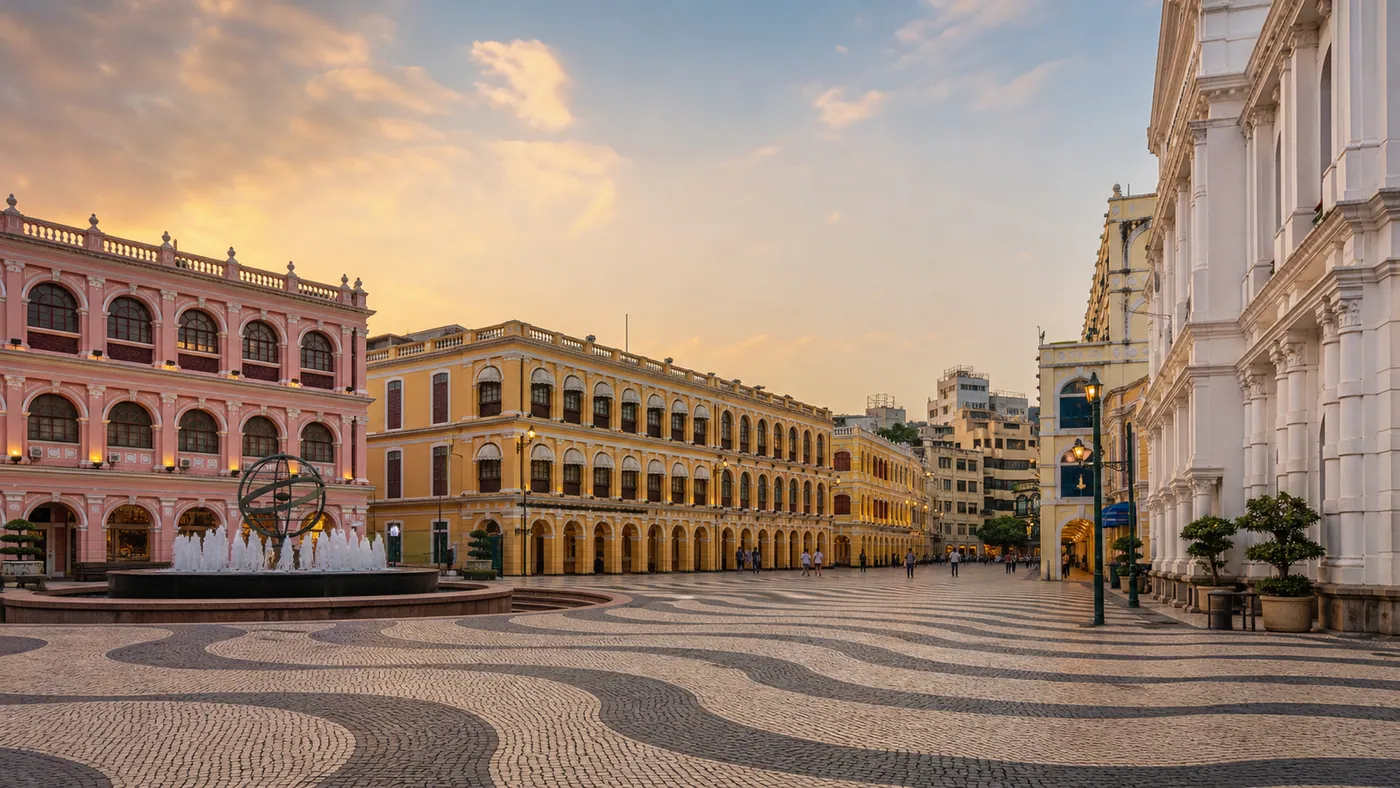
14-Day Macau Foodies Itinerary 2026: Senado Square Bakery Lanes and Historic Alleyways, Horta da Mitra Municipal Market and Surrounding Snack Streets, Historic Inner Harbour Noodle and Dim Sum Streets, Vila da Taipa Traditional Breakfast Lanes
Macau explored through market halls, street-food lanes, historic trading districts, tea culture, global flavors, and modern dining neighborhoods. Every day remains food-first while keeping meal pacing and transfers practical.
Carry small-denomination patacas since many heritage sweet stalls and family-run market counters do not accept credit cards or digital resort passes.
This morning route winds through pedestrian-only lanes, requiring nothing more than comfortable footwear to stroll from Senado Square up to the Horta da Mitra market before taking a gentle downhill walk to the Inner Harbour.
09:00Senado Square area, Macau Peninsula
Senado Square Bakery Lanes and Historic Alleyways
The narrow lanes radiating from Senado Square serve as a living museum of Macanese baking history. Here, the aroma of roasting nuts and sweet egg custard hangs thick in the air, drawing you toward wood-fired ovens. Winding pathways reveal multi-generational family vendors who still manually stamp traditional cakes. Sampling these warm pastries amidst the pastel Portuguese facades offers a delicious connection to the peninsula's colonial merchant past.
Tip: Drizzle a drop of local maltose syrup onto your fresh pork-chop bun to balance the savory marinade with a traditional touch of sweetness.
Horta da Mitra Municipal Market and Surrounding Snack Streets
Established in the late Qing dynasty, the Horta da Mitra Municipal Market remains a cornerstone of the neighborhood's daily food run. The surrounding streets are packed with open-front stalls where noodles boil in deep vats and coffee is brewed in traditional clay pots over hot coals. It is a loud, fragrant enclave where local office workers and seniors share wooden tables. Eating here offers an unvarnished slice of Macau's working-class food culture.
Tip: Order your milk coffee from the corner stall that uses charcoal burners, as the slow-heated clay pot yields a velvety texture unmatched by modern metal kettles.
18:00Rua das Estalagens and Inner Harbour lanes, Macau Peninsula
Historic Inner Harbour Noodle and Dim Sum Streets
The historic Inner Harbour waterfront comes alive under the glow of neon signs as dinner service begins. The streets running parallel to the harbor are lined with old-school dim sum houses serving recipes that have disappeared elsewhere. Steam billows from stacked bamboo baskets, carrying the scent of shrimp dumplings and savory pork buns. Dining in this district connects you to Macau's storied history as a bustling maritime trading port.
Tip: Ask for the off-menu pan-fried dace fish cakes, which are made by hand daily and seasoned with aged tangerine peel.
Walk through the narrow side alleys off the main street-food corridor to discover quieter family-run shops that sell handmade peanut candies.
Use the modern Macau Light Rapid Transit to cross from Cotai or the Peninsula to Taipa, and then navigate the flat, pedestrianized village streets entirely on foot.
09:00Rua de Joao and surrounding lanes, Taipa Village
Vila da Taipa Traditional Breakfast Lanes
In the quiet morning hours, Vila da Taipa retains the calm charm of an old fishing village. Locals gather at street-side tables for bowls of velvety congee, steamed rice sheets, and strong milk tea. The gentle clatter of cups and the smell of toasted sesame oil create a welcoming neighborhood scene. Beginning here offers a peaceful, authentic start to your second culinary day.
Tip: Order a side of fried dough sticks to dip directly into your savory fish congee, which is how locals enjoy this classic breakfast.
By midday, Rua do Cunha becomes a bustling corridor of sweet and savory aromas. This famous pedestrian street is lined with historic bakeries, coconut ice cream stalls, and pork-chop bun shops. You will walk past active kitchens where cookies are baked in large ovens right before your eyes. The energetic atmosphere is a celebration of Macau's rich street food culture.
Tip: Skip the longest bakery lines and head to the smaller, family-owned shops at the end of the street for fresher, hand-wrapped egg rolls.
18:00Calçada do Carmo and surrounding dining lanes, Taipa Village
Taipa Village Portuguese-Macanese Dining Lanes
As night falls, the colonial lanes of Taipa Village light up, creating a romantic setting for dinner. The historic buildings house cozy restaurants that specialize in Portuguese and Macanese fusion dishes. You will dine on signature plates like African chicken and savory minchi in rooms decorated with traditional blue tiles. It is a culinary celebration of Macau's unique East-West history.
Tip: Order the house-made peri-peri dipping sauce on the side, as local chefs customize the spice blend using imported African chilies.
Coloane Seaside Baking and Traditional Coastal Dining
7 hr plan
Arrive before the afternoon bus tours to secure an outdoor table at the seaside cafes without waiting.
Take a public bus or a short taxi ride south from Taipa to the Coloane Village town square, and then explore the flat waterfront route on foot.
09:00Rua do Meio, Coloane Village
Coloane Village Bakery and Cafe Lanes
Coloane Village is a tranquil enclave of pastel houses, narrow lanes, and historic temples. The sweet scent of caramelized custard fills the air, leading you to the bakery that created Macau's egg tart craze. Sitting by the sea with a warm pastry and hot coffee is a classic Macanese experience. It is a peaceful morning that highlights the slow-paced charm of the southern coast.
Tip: Drizzle a dash of ground cinnamon over the egg tart's blistered top to bring out the subtle nutmeg notes in the custard recipe.
The waterfront avenue of Coloane is lined with banyan trees and historic stone buildings. Here, you will sit down for a leisurely lunch of classic Portuguese dishes, including crispy cod fritters and rich seafood rice. The cool sea breeze and the slow pace of service encourage you to relax and enjoy the moment. It is a dining experience that celebrates the simple pleasures of coastal life.
Tip: Squeeze a fresh lime wedge over the salt cod fritters to cut through the richness of the fried fish.
At sunset, the waterfront alleys of Coloane become quiet and romantic. Lanterns light up the old stone walls, and the sound of waves creates a peaceful backdrop for dinner. You will dine on fresh charcoal-grilled sea bass and sweet serradura in a historic tavern. It is a beautiful end to a day spent exploring the island's coastal heritage.
Tip: Order the house-made sangria, which is seasoned with local cinnamon and fresh citrus fruits.
Try the Burmese-style chickpea flour cakes, which are fried to order at the small stall on the east side of the circular plaza.
Stroll between the San Kio and Three Lamps neighborhoods via pedestrian-friendly alleys, and then take a short taxi or bus ride to the Outer Harbour waterfront.
09:00San Kio neighborhood, Macau Peninsula
San Kio District Traditional Noodle and Dim Sum Streets
The San Kio district is a bustling residential neighborhood that offers a look at traditional Cantonese foodways. In the morning, local residents fill the noodle shops for bowls of wontons and steamed rice rolls. The steam rising from large metal pots and the sounds of busy kitchens create an authentic scene. Beginning your day here connects you to the heart of Macau's local community.
Tip: Drizzle a spoonful of house-made chili oil onto your wonton noodles to enhance the flavor of the broth.
13:00Rotunda de Carlos da Maia (Three Lamps) area, Macau Peninsula
Three Lamps Southeast Asian Macanese Snack Streets
The Three Lamps plaza is the center of a lively neighborhood known for its Southeast Asian food. Here, the aroma of lemongrass, turmeric, and coconut curry fills the air, drawing you to small street stalls. You will sample unique fusion dishes like Burmese coconut chicken noodles and spicy beef skewers. It is a delicious example of how diverse cultures have influenced Macau's food.
Tip: Try the pickled tea leaf salad at the small Burmese cafe tucked into the alley just north of the round plaza.
For your final dinner, you will head to the Outer Harbour waterfront promenade. The modern restaurants here offer a sophisticated dining experience with views of the illuminated harbor. You will enjoy a premium dinner featuring classic dishes like baked duck rice and rich Portuguese wines. It is an elegant conclusion to your culinary journey through Macau.
Tip: Order the wood-fired Portuguese sausage, which is flambéed at your table for an interactive dining experience.
Red Market and Northern Peninsula Heritage Culinary Lanes
7 hr plan
Bring along small bank notes to make purchasing snacks from the market vendors faster and easier.
Navigating the northern peninsula is straightforward since the route connects adjacent neighborhoods on foot. You can walk between most stops or hail a quick taxi if you prefer to save your energy for the uphill slope near Mong Ha.
09:00Avenida do Ouvidor Arriaga and Red Market, Macau Peninsula
Red Market Historic Produce and Morning Snack Streets
Immerse yourself in the bustling morning energy of a historic red-brick market where locals gather to buy fresh ingredients. Stalls spilling into the surrounding lanes steam fresh rice rolls and serve bowls of hot congee to residents on their daily routines. The clank of butcher knives and lively bargaining create an authentic neighborhood soundtrack.
Tip: Look for the vendor with the longest queue near the main building entrance to find the softest, freshest steamed rice rolls.
13:00Rua de Francisco Xavier Pereira and Mong Ha area, Macau Peninsula
Mong Ha District Heritage Coffee and Pastry Lanes
Stroll up the gentle slopes of the Mong Ha district to find quiet residential streets hiding vintage coffee shops. Here, brewers heat clay pots over hot coals to produce exceptionally smooth coffee, a traditional technique preserved by local merchants. The aroma of sweet biscuits and freshly baked buns drifts through the pastel-colored colonial alleys.
Tip: Pair your coffee with a hot pineapple bun with a cold slice of salted butter for the perfect sweet and savory combination.
18:00Avenida de Horta e Costa and surrounding lanes, Macau Peninsula
Avenida de Horta e Costa Late-Night Noodle and Dessert Alleys
As dusk falls, the lanes off Avenida de Horta e Costa glow with neon signs from decades-old noodle houses and dessert stalls. The main draw is springy bamboo-pulled noodles served in clear flounder broth alongside plump wontons. Afterward, join the local queue for traditional warm sweet soups to round out the evening.
Tip: Try the dry noodles with oyster sauce if you want to enjoy the springy texture of the noodles on their own.
Barra and Southwest Peninsula Portuguese-Macanese Dining Alleys
7 hr plan
Most Macanese family restaurants along Rua do Almirante Sergio require advance reservations for lunch, especially on weekends.
This route connects the southern tip of the peninsula to the historic St. Lawrence neighborhood. Walking is the ideal option to appreciate the transitions between harbor-side docks, colonial plazas, and old stone staircases.
09:00Rua do Caetano and Barra waterfront lanes, Macau Peninsula
Barra District Traditional Waterfront Congee Lanes
In the quiet morning hours near the Inner Harbour docks, steam rises from huge metal pots cooking savory rice porridge. This neighborhood serves simple, satisfying breakfasts to ferry workers and neighborhood residents. Golden fried dough sticks and steamed rice crepes complement the silky bowls of congee.
Tip: Order a side of fried dough sticks and dip them directly into your hot congee bowl to absorb the savory broth.
Rua do Almirante Sergio Portuguese-Macanese Dining Alleys
Walk along a historic shipping street to discover cozy, wood-paneled dining rooms specializing in Macanese fusion cuisine. The menus here represent centuries of spice trade, combining Portuguese techniques with ingredients from Goa, Malacca, and southern China. The signature aromas of roasted garlic, coconut, and olive oil fill the air.
Tip: Be sure to try the Portuguese baked seafood rice, which is loaded with local shellfish and baked to a golden brown crust.
Climb the steps into the quiet parish of St. Lawrence to explore pastry shops that have operated for generations. The rhythmic sound of wooden molds shaping almond cakes echoes through the lanes. As evening falls, the neighborhood dessert spots fill with locals enjoying warm sweet soups and delicate custards.
Tip: The handmade almond biscuits are packed in sturdy tins, making them the perfect edible souvenir to carry home.
Taipa Village Outer Fringes and Coastal Coloane Foodways
7 hr plan
Use the Macau LRT to quickly travel between Taipa and Cotai, then switch to a taxi for the longer ride down to the shipyards.
This itinerary bridges three distinct districts: residential Taipa, coastal Coloane, and the Cotai resort corridor. Taking a public bus or taxi is the most efficient way to travel between these districts, keeping your transit times short and simple.
09:00Rua de Coimbra and Taipa Central Park area, Taipa
Taipa Central Park Local Bakery and Dim Sum Lanes
Start your day in the lively residential neighborhood surrounding Taipa Central Park, where local families meet for morning dim sum. The scent of baked pineapple buns drifts from busy bakery doors, tempting early morning shoppers. Steaming bamboo baskets filled with shrimp dumplings are served at bustling neighborhood tables.
Tip: Ask for a slice of unsalted butter to insert into your warm pineapple bun, allowing it to melt slightly before your first bite.
Lai Chi Vuan Shipyards Heritage Cafe and Bakery Lanes
Travel south to the quiet coast of Coloane to find a beautifully restored industrial heritage site. Rustic cafes nested inside the old wooden shipyard structures serve hand-beaten claypot coffee with deep caramelized notes. Enjoy a cup of chilled serradura pudding while looking out over the quiet waterfront mudflats.
Tip: The hand-beaten coffee is whipped manually to create a thick, smooth foam that stays creamy to the last sip.
As night falls, this lively pedestrian dining street brings together local family-run eateries under warm hanging lanterns. Sizzling woks, grilled skewers, and steaming noodle bowls fill the air with delicious aromas. It is the perfect place to sample iconic street food, complete with acoustic music and live entertainment.
Tip: Look out for the traditional peanut candy cart where you can watch the vendor pull and cut the candy fresh.
Waterfront Traditions and Residential Bites of Patane and Fai Chi Kei
7 hr plan
Many of the traditional dessert shops in Fai Chi Kei only open after 2:00 PM, so save your sweet soup cravings for the afternoon or evening.
This route follows the harbor line on the northwestern side of the peninsula. Paved pedestrian paths make walking the most enjoyable way to move from the market to the residential alleys.
09:00Patane Market area, Macau Peninsula
Patane Municipal Market Waterfront Breakfast Hub
Join the local community at a modern waterfront market hall to experience morning dining on the peninsula. The ground floor bustles with fishmongers selling the morning catch, while the upper cooked food center serves hot breakfasts. Silky fish congee and steamed rice rolls are prepared fresh to order.
Tip: Order your rice rolls with mixed sauces (peanut, sweet, and soy) to enjoy the classic local flavor combination.
Wander north into the dense residential high-rises of Fai Chi Kei, where tree-lined alleys host local lunch spots. Here, workers gather at noodle shops for springy wontons served in deep, rich flounder broth. Street side stalls sell skewers of curry fish balls and warm, buttered pineapple buns.
Tip: Look for the tiny bakeries tucked into the residential courtyards for the freshest egg tarts in the afternoon.
Fai Chi Kei Northern Waterfront Evening Dessert Alleys
As dusk settles over the Inner Harbour, the waterfront path becomes a popular spot for evening desserts. Cozy shops serve silky double-boiled milk pudding and warm black sesame paste. A cool harbor breeze makes sitting outdoors with a bowl of sweet soup a relaxing experience.
Tip: The hot ginger milk pudding is curdled fresh to order, offering a sharp, spicy kick that warms the throat.
Northern Border Flavors of Iao Hon and Areia Preta
7 hr plan
Many of the Southeast Asian eateries in Areia Preta close between 3:00 PM and 5:30 PM, so plan your lunch timing accordingly.
This route moves through the dense northern grid of Areia Preta. Walking is the best way to explore the neighborhood alleys, though local buses can save your feet when traveling from Fai Chi Kei.
09:00Iao Hon Market, Macau Peninsula
Iao Hon Market Hall Cantonese Morning Dim Sum
Enter a bustling neighborhood market hall where retiree groups meet for morning tea and conversation. Huge metal steamers release clouds of steam as cooks pull fresh dim sum baskets. Fluffy barbecued pork buns and shrimp siu mai are served alongside hot loose-leaf tea.
Tip: The congee stall near the back of the food court serves excellent pork blood congee, a local favorite.
Areia Preta Residential Southeast Asian Snack Corridors
Wander through the high-rise residential blocks of Areia Preta to find hidden Southeast Asian cafes. The air is fragrant with lemongrass, chili, and toasted garlic. Try the Burmese-style coconut chicken noodles or a pork chop bun seasoned with local spices.
Tip: Ask for a side of pickled mustard greens to add a sour, crunchy element to your curry noodles.
As night falls, the lanes of Areia Preta glow with neon signs from open-fronted eateries. The specialty here is claypot rice cooked over hot charcoal embers, which creates a delicious crispy crust. Top the hot rice with savory sausages or marinated chicken slices.
Tip: Drizzle the sweet soy sauce over the rice immediately when it is served, then cover the pot for two minutes to let the steam work.
Borderline Heritage and Cozy Residential Alleys of Ilha Verde
7 hr plan
Ilha Verde is a very quiet neighborhood with few taxis, so rely on public buses to return to the city center after dinner.
This day is entirely walking-friendly, centered around the green hill base and adjacent housing estates. Paved streets make navigating between breakfast, lunch, and dinner stops easy and pleasant.
09:00Ilha Verde Hill Base, Macau Peninsula
Ilha Verde Northern Footstep Breakfast Congee Lanes
Start your morning at the foot of Ilha Verde hill, where the neighborhood has a relaxed, slow-paced feel. Quiet lanes host simple breakfast stalls serving bowls of savory pork congee and pan-fried chive dumplings. Local residents chat over morning papers under the trees.
Tip: Ask for a side of black vinegar to dip your hot chive dumplings for a nice, tangy balance.
Ilha Verde Residential Midday Noodle Soup and Tea Rooms
Head deeper into the neighborhood's residential lanes to find cozy tea rooms where locals gather for lunch. The specialty here is delicate fish head vermicelli noodle soup, served in a milky ginger-infused broth. Pair your lunch with a tall glass of iced milk tea, pulled to a velvety texture.
Tip: The tea rooms are famous for their sweet condensed milk toast, which is grilled to a perfect golden crunch.
Ilha Verde Residential District Homestyle Macanese Supper Alleys
As evening falls, search for family-run dining rooms tucked into the quiet residential alleys. These warm spaces specialize in comfort food like homestyle minchi, served over warm rice and topped with a fried egg. A chilled cup of serradura completes a satisfying dinner.
Tip: Break the yolk of the fried egg and mix it directly into the warm minchi to create a rich, savory sauce.
Waterfront Cafes and Lakeview Dessert Corridors of Nam Van and Praia Grande
7 hr plan
Walk down the stone stairs behind the main avenue around 4:00 PM to find the quietest lakeside tables before the dinner rush begins.
This peninsula route is entirely pedestrian-friendly, connecting waterfront avenues to inner streets using wide pavements and lakefront boardwalks.
09:00Avenida da Praia Grande, Macau Peninsula
Praia Grande Waterfront Morning Cafe and Bakery Corridors
Avenida da Praia Grande retains the graceful charm of Macau's colonial era, with banyan trees casting dappled shadows on the historic pavement. Morning strolls here are accompanied by the sweet, buttery scent of baking puff pastry drifting from local bakeries. Sitting at an outdoor table with a freshly baked Portuguese egg tart provides a perfect introduction to the city's unique culinary blend. The crisp, layered crust contrasts beautifully with the warm, caramelized custard center, especially when paired with a strong espresso. Watching local residents walk their dogs and read newspapers creates a peaceful, authentic neighborhood vibe before the midday heat sets in.
Tip: Look for the smaller bakeries tucked into the arcades of the older buildings, where tarts are often cheaper and just as flaky as the famous flagship stores.
Nam Van Side-Street Portuguese Macanese Lunch Alleys
Tucked behind the high-rises of Nam Van are narrow lanes lined with traditional cha chaan tengs and Macanese diners. These casual eateries serve homestyle dishes that merge Chinese stir-frying with Portuguese baking styles. The star of the lunch menu is the baked pork chop rice, featuring egg fried rice topped with a tenderized, fried pork chop and a rich tomato-based sauce, all melted under a layer of cheese. The noisy, friendly chatter of local office workers and shopkeepers fills the small dining room, creating a lively local atmosphere. It is a hearty, satisfying meal that represents the true everyday comfort food of the peninsula.
Tip: Ask the server for a side of pickled vegetables or 'chaoyue' to cut through the richness of the baked cheese sauce.
Nam Van Lakefront Evening Sweet Soups and Custard Lanes
As the sun sets, the Nam Van lakefront transforms into a scenic walkway with illuminated fountains and views of the Macau Tower. Local dessert shops along the water serve traditional Cantonese sweet soups and Portuguese puddings to evening strollers. A bowl of hot ginger milk pudding, freshly curdled using raw ginger juice and sweetened milk, offers a warming treat. For a cool alternative, the serradura features layers of sweetened whipped cream and finely crushed Marie biscuit crumbs. Sitting on the lakeside steps with a sweet treat provides a relaxed way to enjoy Macau's night breeze.
Tip: Order the double-skin milk pudding cold if you prefer a custard texture, or hot if you want a stronger dairy aroma.
Modern Tea Rooms and Evening Hotpots of NAPE and ZAPE
7 hr plan
Walk through the quiet gardens of the Dr. Sun Yat-Sen Municipal Park to transition between ZAPE and NAPE away from busy traffic.
This route links the NAPE residential grid to ZAPE's commercial lanes, easily covered on foot or by a short taxi ride across the main avenues.
09:00NAPE District, Macau Peninsula
NAPE Residential Morning Tea and Savory Toast Streets
In the sleek NAPE neighborhood, modern high-rises stand alongside spacious pedestrian plazas. Local breakfast spots here cater to busy professionals with quick, satisfying bites like thick-cut condensed milk toast. The bread is toasted until golden, buttered, and drizzled generously with sweet condensed milk. Pair this with a cup of smooth Macanese milk tea, brewed using a blend of black tea leaves and evaporated milk. The bright, energetic dining room offers an excellent window into the daily life of Macau's working professionals.
Tip: Ask for 'dor-ma' (extra condensed milk) if you prefer a sweeter, richer coating on your morning toast.
NAPE Modern Afternoon Dessert and Specialty Tea Rooms
After lunch, seek out one of NAPE's contemporary tea salons, where tea masters pair rare leaves with creative desserts. The standout option is a modernized version of serradura, layering chilled vanilla cream with crushed almond biscuits instead of standard crackers. This dessert pairs beautifully with a pot of charcoal-roasted oolong or floral jasmine tea. The minimal decor and soothing music offer a quiet retreat from the busy city streets outside. It is a wonderful space to relax, sip tea, and enjoy a quiet afternoon of conversation.
Tip: Order a cold-brewed white tea if you visit on a humid day; its delicate, sweet flavor is incredibly refreshing.
ZAPE Residential Evening Hotpot and Macanese Roast Lanes
ZAPE comes alive after dark, its narrow streets illuminated by colorful neon signs and filled with the aroma of roasting meats. The district is famous for its traditional Cantonese hotpot restaurants, where families gather around large tables to share a communal meal. Choose a rich satay or coconut curry broth to cook fresh oysters, sliced beef, and local greens. To complete your dinner, order a platter of African chicken, a classic Macanese dish of roasted chicken coated in a thick sauce of garlic, chili, coconut, and peanuts. The lively, crowded atmosphere and friendly service make for an unforgettable dining experience.
Tip: Order a side of deep-fried fish skin to dip into your hotpot broth; it absorbs the soup while keeping a crispy texture.
Modern Food Halls and Local Pantry Discoveries of Cotai
7 hr plan
Take the Macau LRT to travel between the different Cotai dining hubs without dealing with traffic or long walks through casino floors.
This route utilizes the modern Macau Light Rapid Transit (LRT) system, which provides direct links between Cotai's main dining complexes and shopping districts.
09:00Cotai Dining Complex, Cotai
Cotai Modern Gourmet Food Hall Breakfast Formats
Cotai's luxury food courts redefine casual dining with open kitchens and high-quality ingredients. For breakfast, savor a bowl of hot scallop congee, slow-cooked until smooth and seasoned with ginger and green onions. Pair the congee with truffle shrimp dumplings or baked pork buns for a delicious start to the morning. The bright space and clean design offer a comfortable spot to plan your day. Watching the chefs hand-fold dim sum through glass partitions adds a fun, interactive element to your morning meal.
Tip: Look for the specialty tea counter in the food hall to order a hot pot of Pu-erh tea, which helps digest the rich dim sum.
Cotai Local Pantry and Souvenir Food Shopping Alleys
Spend your afternoon exploring a colorful Cotai bazaar filled with local pantry goods and edible souvenirs. Friendly vendors offer warm samples of freshly baked almond biscuits and thick sheets of sweet pork jerky. The air is filled with the sweet aroma of toasted nuts and spices as you browse the stalls. You will also find jars of savory shrimp paste and packages of local tea leaves. It is the perfect place to pick up delicious gifts and authentic ingredients to bring back to your own kitchen.
Tip: Purchase the vacuum-sealed packages of jerky to ensure they stay fresh and meet international travel customs requirements.
Cotai High-End Contemporary Macanese and Asian Dining
In the evening, celebrate Cotai's dynamic culinary scene with a meal at a contemporary Macanese restaurant. The menu features creative updates of classic dishes, highlighting Macau's historical role as a trading port. Savor a refined version of minchi, made with finely minced Wagyu beef and crispy potato cubes, topped with a slow-cooked quail egg. For a main dish, share a rich seafood curry flavored with coconut, turmeric, and local spices. The elegant decor, soft lighting, and attentive service make for a memorable final dinner.
Tip: Ask the waiter about the wine list, which features excellent Portuguese red and white wines that pair perfectly with spicy curries.
Traditional Comforts and Midnight Bites from Patane to ZAPE
7 hr plan
Take a local bus to the old neighborhoods early in the morning to beat the commuter traffic and secure a seat at popular congee stalls.
This route links the old harbor district of Patane to the central Praia Grande area and ZAPE using local bus lines and flat walking streets.
09:00Patane Side Streets, Macau Peninsula
Patane Side-Street Traditional Morning Congee Hub
Patane is one of Macau's oldest residential areas, where narrow streets are lined with traditional shophouses and family-run diners. For breakfast, find a cozy spot that specializes in slow-simmered Cantonese congee. The congee is cooked for hours with pork bones until it reaches a smooth, velvety texture, served hot with tender slices of pork and green onions. Pair this comforting bowl with crispy fried dough sticks, which are perfect for dipping into the warm porridge. The simple setting and friendly service offer a warm, authentic glimpse into the daily life of this historic harbor community.
Tip: Add a splash of light soy sauce and a pinch of white pepper to your congee to enhance the savory flavor of the pork.
13:00Praia Grande Residential Alleys, Macau Peninsula
Praia Grande Residential Midday Baked Rice and Pastry Alleys
Spend your afternoon exploring the quiet residential lanes behind Praia Grande, where local cafes serve comforting lunch specials. A favorite among residents is the baked pork chop rice, featuring egg fried rice topped with a thick, juicy pork chop and a sweet tomato sauce, baked with cheese until bubbly. Follow your meal with a sweet local pastry, such as a traditional egg tart or a soft, sweet coconut bun. The friendly atmosphere of these neighborhood cafes offers an authentic taste of local home cooking in a relaxed setting.
Tip: Order an iced lemon tea to balance the rich, savory flavors of the baked pork chop rice.
ZAPE Coastal Neighborhood Midnight Sweet and Savory Supper Lanes
For your final evening in Macau, visit the lively coastal streets of ZAPE to experience the local late-night dining scene. Join residents at a busy food stall to share a variety of sweet and savory dishes. Savor a hot bowl of wonton noodle soup, featuring springy egg noodles and plump dumplings filled with fresh shrimp and pork. For dessert, enjoy a bowl of warm black sesame paste or a chilled custard cup. The energetic atmosphere and friendly chatter of local diners provide a memorable ending to your culinary adventure.
Tip: Try the savory grilled beef skewers, which are brushed with a local sweet and spicy soy glaze.