10-Day Macau Essential Itinerary 2026: Senado Square, Ruins of Saint Paul's, Monte Fort Corridor, A-Ma Temple
Experience the best of Macau through this four-day essential guide, taking you from the cobblestone plazas of the historic peninsula to the glittering resorts of Cotai. Discover the deep maritime heritage, historic temples, and preserved island villages that define this unique cultural crossroads.
Wear supportive, slip-resistant walking shoes as the Portuguese wave-patterned cobblestones can become remarkably slick when damp or polished by high foot traffic.
This entire day is designed as a contiguous walking route, requiring no vehicles once you arrive at the central starting plaza of Senado Square.
09:00Largo do Senado, Macau Peninsula
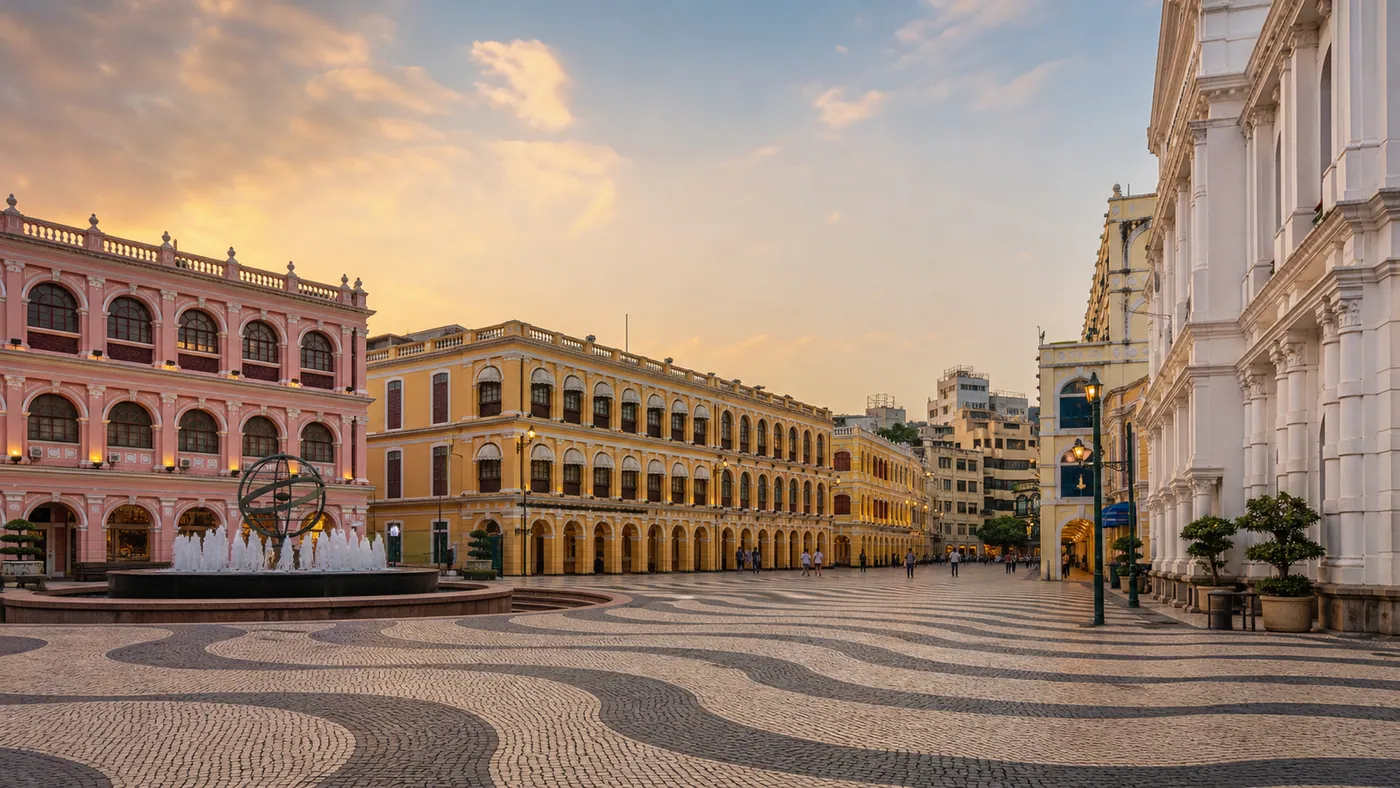
Senado Square
Walking into this historic plaza feels like entering a Mediterranean town, defined by the beautiful wave-like patterns of the black-and-white stone mosaics underfoot. Elegant neoclassical buildings painted in soft pastel yellows and pinks flank the pedestrian zone, housing long-standing civic institutions like the Leal Senado. The square serves as the peninsula's traditional civic center, where the colonial heritage of Portugal meets the bustling daily commerce of local shops and traditional pharmacies. It offers an open-air introduction to Macau's unique cultural fusion, showing how European architecture adapted to the climate and culture of South China.
Tip: Walk to the back of the Leal Senado building to discover a hidden, peaceful courtyard garden decorated with traditional blue Portuguese glazed tiles.
Next move: Public Bus or Taxi to Senado Square bus stop
Standing majestically atop a monumental flight of stone steps, this towering stone facade is all that remains of the seventeenth-century Church of Mater Dei. Constructed by Jesuit priests and Japanese Christian artisans fleeing persecution, the granite wall features intricate carvings that blend biblical narratives with Asian motifs like dragons and chrysanthemums. It stands as a striking testament to early globalization and spiritual exchange in East Asia, silhouetted against the open sky. Visitors can climb the stairs to examine the details closely, appreciating how the stone carvings tell the story of a Portuguese-Chinese settlement.
Tip: A narrow pathway to the left of the facade leads down to a small, hidden alleyway known as the Love Lane, offering a unique framed view of the ruins away from the main steps.
Next move: Short pedestrian walk from Senado Square
Perched high on a hill adjacent to the ruins, this ancient military stronghold offers stunning views that stretch across the old city streets and over to the glittering modern skyline of Cotai. The stone battlements are lined with historic bronze cannons, presenting a stark visual contrast to the nearby glass skyscrapers of the casinos. Walking along the grassy perimeter path provides a peaceful escape from the busy streets below, especially as the late afternoon breeze cools the hilltop. It is the perfect place to watch the city transition from daylight into a sea of neon lights.
Tip: Use the elevators inside the Macao Museum to reach the fortress peak comfortably without having to walk up the steep hillside path.
Next move: Escalator access or walking path from the Ruins of Saint Paul's
Purchase a local Macau Pass card at a convenience store early in the day to enjoy seamless, discounted fares across all public bus routes.
Beginning with a light rail journey to Barra, this route transitions to a highly compact walking tour before a short bus or taxi transfer.
09:00Barra Square, Southwest Macau Peninsula
A-Ma Temple
Tucked against the green slope of Barra Hill, this sacred temple complex pre-dates the arrival of Portuguese traders and is the origin of Macau's name. The sanctuary is dedicated to Mazu, the goddess of seafarers, featuring several small pavilions built directly into the red granite cliffs. Giant banyan trees shade the entrance, while winding stone steps lead past incense burners and colorful shrines adorned with traditional clay figures. The peaceful atmosphere and the smell of burning incense coils offer an immersive look into the maritime traditions that shaped the peninsula.
Tip: Look for the detailed red carving of a traditional Chinese sailing junk on a large boulder near the entrance, which represents the safe arrival of early sea travelers.
Next move: Macau Light Rapid Transit (LRT) or Public Bus to Barra Station
Housed in a white, ship-shaped building directly on the waterfront, this museum preserves the rich sailing history of the Pearl River Delta and the early Portuguese trade routes. The exhibits display detailed scale models of traditional Chinese fishing boats, sailing junks, and historical navigation instruments. It highlights how the local fishing communities lived and worked, showing the deep connection between the sea and the growth of the colony. The air-conditioned galleries offer a comfortable space to explore the history of regional shipbuilding and ancient trade maps.
Tip: Visit the museum's small harbor-facing courtyard to see a traditional wooden fishing junk up close.
Next move: Short walking distance across Barra Square from A-Ma Temple
18:0010 Travessa de António da Silva, Macau Peninsula
Mandarin's House
This massive residential complex is a rare example of a late Qing dynasty merchant family home, showcasing a beautiful blend of Chinese and Western design styles. The walled estate features winding corridors, circular moon gates, and quiet courtyards lined with grey-brick buildings. Intricate wood carvings and traditional Chinese lattice windows sit alongside Portuguese-style shuttered verandas, demonstrating the cultural exchange of the late nineteenth century. Walking through the quiet reading rooms and gardens offers a peaceful look into the lifestyle of the city's early elite.
Tip: Walk to the second-floor windows of the main Yu Qing Tang hall to look down at the geometric patterns of the central courtyard tiles.
Next move: Short historic walking route from the Maritime Museum
Use the elevated Cotai-Taipa pedestrian walkway to transition safely and comfortably between the historic village and the modern resort complexes.
Combines a leisurely morning walking circuit around Taipa Village with a stroll across the covered elevated walkway straight into Cotai.
09:00Avenida da Praia, Taipa Island
Taipa Houses
Overlooking a tranquil wetland park, these five pastel-green colonial houses are among the most charming heritage sites on Taipa Island. Built in 1921, the buildings were once the homes of senior Portuguese government officials and Macanese families who lived on the island. Today, they have been restored as museums, showcasing vintage European furniture, historic family photos, and traditional household items. The quiet, tree-shaded lakeside walk offers a peaceful atmosphere that contrasts beautifully with the massive resort towers rising in the distance.
Tip: Wander along the shoreline path to the adjacent ecological wetland park, which features viewing platforms for observing local migratory birds.
Next move: Public Bus or Taipa LRT to Pai Kok Station
13:00Rua do Cunha and surrounding lanes, Taipa Island
Vila da Taipa
This historic village is a lively neighborhood where narrow pedestrian alleys are packed with traditional bakeries, colorful temples, and colonial buildings. The main street of Rua do Cunha is famous for its local street food, drawing visitors with the aroma of freshly baked almond cookies and hot pork chop buns. Walking past the yellow-stucco storefronts leads to quiet squares and old shrines like the Pak Tai Temple, where locals still gather. It is a highly walkable district that preserves the village charm and culinary heritage of the island.
Tip: Walk to the quieter Rua de Clerigos to find local craft shops and independent coffee roasters away from the busy crowds of Rua do Cunha.
Next move: Short walking distance from the Taipa Houses
Located inside the massive Venetian resort, this high-tech digital art museum offers a spectacular sensory journey through interactive light installations. The massive exhibition hall features three-dimensional projection-mapped artworks that respond and change in real-time as visitors move through the rooms. Fields of digital flowers bloom and scatter, waterfalls cascade down towering walls, and floating light spheres change color at a touch. It is a stunning showcase of modern creative technology, offering a complete contrast to the historic lanes of Taipa Village.
Tip: Wear flat, comfortable shoes as some of the exhibition rooms feature uneven, soft, or mirrored floors that can make walking difficult.
Next move: Walk or take a short taxi/shuttle from Vila da Taipa
Start your morning early at the panda pavilion as they are fed and highly active precisely when the sanctuary doors open.
Utilizes a direct southbound public bus corridor to reach Coloane, returning north via the modern Light Rapid Transit system to Cotai.
09:00Seac Pai Van Park, Coloane Island
Macao Giant Panda Pavilion
Nestled against the green hills of Seac Pai Van Park, this modern sanctuary is home to the city's beloved giant pandas and red pandas. The facility features a large indoor viewing area with a translucent roof and an outdoor yard designed to mimic the mountain habitats of Sichuan. Visitors can observe the pandas playing, climbing, and feeding on fresh bamboo stalks in a peaceful natural setting. The surrounding botanical gardens and walk-in aviaries make it a relaxing, family-friendly escape on the quiet island of Coloane.
Tip: Visit the pavilion's gift shop to purchase unique, locally designed panda-themed souvenirs that support the park's animal care and education programs.
Next move: Public Bus or Taxi to Seac Pai Van Park bus stop
Occupying a handsome, pastel-green municipal building in the center of Coloane Village, this museum preserves the history and archaeology of the islands. The galleries display old photographs, fishing gear, and farming tools that show how these remote communities lived before the modern bridges were built. It also highlights ancient pottery and stone tools found during local excavations, proving the long history of human settlement here. The quiet, air-conditioned rooms offer an educational look at the island's transition from pirate haven to quiet village.
Tip: Look for the large stone anchor displayed on the ground floor, which was salvaged from the harbor and dates back to the early shipping era.
Next move: Short bus ride or taxi from Seac Pai Van Park
18:00Wynn Palace, Avenida da Nave Desportiva, Cotai
Performance Lake
This spectacular outdoor water show at Wynn Palace brings the evening to life with a dramatic symphony of water, light, and music. Choreographed to a mix of classical, Broadway, and pop songs, hundreds of water jets shoot high into the air, dancing in perfect sync with colorful lights. The lake is surrounded by a free cable car system that glides directly over the fountains, offering a unique aerial view of the performance. It is a dazzling, modern spectacle that highlights the grandeur and creative entertainment of the Cotai district.
Tip: Stand near the central boarding station of the SkyCab to capture the best view of the water jets shooting up beside the cable car lines.
Next move: Bus or Macau LRT to East Asia Games Station / Wynn Palace
Visiting the Grand Prix museum right at its morning opening time allows you to access the popular interactive racing simulators without waiting in lines.
The stops along the Outer Harbour waterfront are situated in a flat, linear arrangement, making it very straightforward to walk between the attractions or take a short taxi ride from the old town.
09:00Rua de Luis Gonzaga Gomes, No. 431, Macau Peninsula
Macao Grand Prix Museum
Macau's deep connection to international motorsport comes alive in this multi-story facility located in the NAPE area. Inside, visitors can admire the actual Formula 3 cars and motorcycles driven by legends like Ayrton Senna and Michael Schumacher on the challenging Guia Circuit. Interactive multimedia displays trace the race's history from its amateur origins in 1954 to its current status as a world-class street race. The space is fully air-conditioned and designed with modern, clean lines that echo the high-tech nature of modern racing.
Tip: The wind tunnel exhibit near the motorcycle section provides a great look at aerodynamics that most casual visitors walk past.
Next move: Located a short taxi ride from the historic center or public bus route 3 to the Outer Harbour.
Situated within the Macao Cultural Centre complex, this expansive museum highlights the cultural dialogues between China and Europe. The galleries display delicate Chinese calligraphy, historic scroll paintings, and Western-style oil paintings that depict old Macau's harbor scenes. High ceilings and large glass windows create a bright, contemplative atmosphere overlooking the outer harbor waters. Temporary exhibitions often bring in major international collections, offering visitors fresh artistic perspectives.
Tip: Look for the historical sketches by George Chinnery, which offer a detailed look at street life in the Pearl River Delta during the nineteenth century.
Next move: A scenic 10-minute walk southeast from the Grand Prix Museum along Avenida da Amizade.
18:00Avenida da Amizade, Outer Harbour, Macau Peninsula
Macau Fisherman's Wharf
Stretching along the Outer Harbour coastline, this theme-style waterfront park offers an eclectic mix of shopping and dining. The architectural designs mimic various global landmarks, with the central focus being a large replica of a Roman Amphitheatre. As evening sets in, the harbor breeze cools the stone walkways, making it a popular spot for photography and casual walking. The views of the illuminated Friendship Bridge spanning the water are particularly impressive after dark.
Tip: Walk to the far end of the wooden pier near the hotel for an unobstructed view of the Friendship Bridge lights reflecting on the water.
Next move: A pleasant 10-minute walk northeast along the flat waterfront promenade from the art museum.
Bring small coins for the public buses, as the drivers do not provide change and the fares are flat rates.
Walk through the central alleys from Senado Square to the Horta da Mitra market, and then catch a public bus or short taxi ride south to the Macau Tower.
09:00No. 7 Travessa da Se, Central Macau Peninsula
Lou Kau Mansion
Tucked away in a narrow alley near Senado Square, this two-story mansion was once the home of a prominent merchant. Built in 1889, the residence features traditional Chinese grey bricks, fine wood carvings, and decorative plasterwork. European influences are visible in the colorful stained-glass windows and arched doorways, reflecting the cultural mixing of the era. The internal courtyards are open to the sky, allowing natural light and ventilation to cool the brick rooms.
Tip: Look closely at the decorative plaster plaques above the doorways, which depict traditional Chinese scenes of prosperity and good fortune.
Next move: Easily reached by a short taxi ride or public bus to the historic town center near Senado Square.
13:00Rua de Horta da Mitra, Central Macau Peninsula
Horta da Mitra Municipal Market
Established over a century ago, this neighborhood market serves as a central hub for the surrounding residential streets. The octagonal brick building was recently modernized to improve comfort while preserving its historic facade. Inside, local vendors sell fresh vegetables, seafood, and traditional ingredients under bright red market lamps. It is an excellent place to experience the sights, sounds, and aromas of authentic Macanese community life.
Tip: The small bakeries in the streets surrounding the market sell excellent traditional almond cookies that are fresher than those in tourist shops.
Next move: A scenic 10-minute walk northeast from Lou Kau Mansion through narrow residential streets.
Dominating the peninsula's southern skyline, this landmark tower offers views of the Pearl River Delta and the Cotai Strip. Glass-fronted elevators carry visitors to the observation deck, where you can walk on glass floors looking down at the city below. As night falls, the views transition into a sea of glittering lights across the bridges and harbor channels. For adventure seekers, the tower is famous for its skywalks and bungy jumping platforms.
Tip: The viewing deck is less crowded during the dinner hour, making it easier to take unobstructed photos of the sunset.
Next move: A direct 10-minute taxi ride or public bus route 9A from the Horta da Mitra district.
Use the driverless Macau Light Rapid Transit (LRT) to quickly travel between the major resort properties in Cotai.
Start with a historic walk in Taipa, cross into Cotai using the covered pedestrian walkway with travelators, and utilize the LRT or resort shuttles to travel south.
09:00Avenida de Carlos da Maia, Taipa Island
Feira Do Carmo
Overlooking the old village of Taipa, this quiet square is a beautiful reminder of the island's colonial history. The plaza is anchored by the Church of Our Lady of Carmel, a pastel-green structure built in 1885. Shady banyan trees, classical stone benches, and traditional street lamps line the paved walkways. It is a popular spot for quiet morning strolls, offering views of the wetlands and the Cotai skyline in the distance.
Tip: The small pavilion on the south side of the garden offers the best framed view of the green Taipa Houses below.
Next move: A short taxi ride across the Sai Van Bridge or Macau Light Rapid Transit (LRT) to Taipa.
13:00Estrada da Baia de Nossa Senhora da Esperanca, Cotai
The Venetian Macao
Bringing the canals of Venice to Macau, this resort is one of the largest buildings in the world. Inside, visitors can wander through recreated Italian streets under a painted blue sky that changes from day to night. Three indoor canals feature gondola rides, complete with singing gondoliers who perform Italian melodies. The main lobby is decorated with gold leaf, grand frescoes, and classical columns, creating a striking visual impression.
Tip: The bridge near the main casino entrance offers the best angle for photographing the replica Rialto Bridge and Venice canals.
Next move: A direct, flat 10-minute walk south from Feira Do Carmo via the scenic pedestrian footbridge.
This massive water park is one of the premier family attractions on the Cotai Strip, featuring both indoor and outdoor zones. Thrill-seekers can try high-speed water slides, while families can relax in the wave pools and the themed lazy river. As night falls, the surrounding resort lights illuminate the pools, creating a colorful and dynamic evening environment. The indoor zone is heated, allowing for comfortable water activities throughout the year.
Tip: The indoor slides tend to have shorter lines during the early evening hours when most visitors head to dinner.
Next move: A quick, convenient walk south along the Cotai Strip or a short light rail (LRT) link.
Take the Guia Cable Car to the top of the hill to save your energy, and enjoy the scenic walk downhill through the historic streets.
This day is designed as a downhill walking route, starting at the peak of Guia Hill, moving through the St. Lazarus creative area, and finishing at Tap Seac Square.
09:00Guia Hill, Macau Peninsula
Guia Fortress and Lighthouse
Built between 1622 and 1638, this military fort sits on the highest point of the Macau Peninsula. Inside the stone ramparts lies the Chapel of Our Lady of Guia, which preserves delicate murals blending Western and Chinese religious art. Beside the chapel stands the white-and-yellow Guia Lighthouse, constructed in 1865 to guide ships navigating the Pearl River Delta. The breezy viewing platforms offer panoramic views of the outer harbor and the modern Cotai bridges.
Tip: Take a walk inside the small information center near the fortress gate to view historical photographs of the hill before the surrounding land was reclaimed.
Next move: Accessible via a short walk from the Flora Garden entrance where the Guia Cable Car operates.
Descending from Guia Hill brings you to this quiet, historic neighborhood. The streets are lined with yellow and red stucco villas featuring wrought-iron balconies and green shutters. St. Lazarus Church, one of the city's oldest parish churches, anchors the district with its classic neoclassical facade. Today, these historic buildings house art galleries, fashion design studios, and music schools, making it a center for local creative culture.
Tip: Visit the courtyard of Albergue SCM to see two massive, historic camphor trees that provide a beautiful canopy over the patio.
Next move: A 10-minute downhill walk along Estrada de Cacilhas and Calçada da Igreja de S. Lázaro from Guia Hill.
18:00Avenida do Conselheiro Ferreira de Almeida, Macau Peninsula
Tap Seac Square Cultural Complex
This large public square is surrounded by early twentieth-century neoclassical buildings painted in rich mustard and terracotta tones. The plaza is paved in the traditional Portuguese style with black and white cobblestones arranged in wave patterns. The surrounding buildings house key cultural institutions, including the Macau Central Library, the Historical Archives, and local art galleries. In the evening, the square is illuminated by warm lights, making it a popular gathering space.
Tip: The Macau Central Library building has a beautiful interior courtyard that is accessible during opening hours.
Next move: A 5-minute flat walk from the heart of the St. Lazarus District via Rua de Sanches de Miranda.
Wear shoes with excellent grip, as the cobblestone paths up Penha Hill are steep and can be slippery when damp.
Descend Penha Hill on foot, walk through the historic St. Augustine's area, and head south to the waterfront of the Barra district using public buses or walking paths.
09:00Penha Hill, Macau Peninsula
Chapel of Our Lady of Penha
Perched on the summit of Penha Hill, this quiet chapel was first built in 1622 by Portuguese sailors grateful for surviving dangerous voyages. The current stone structure dates to 1935 and features a tall, slender bell tower. A large stone statue of Our Lady of Penha stands on the courtyard wall, looking out over the shipping lanes. The quiet courtyard is surrounded by pine trees, offering a peaceful space with views of the southern coastline.
Tip: Visit the quiet stone grotto of Our Lady of Lourdes built into the hillside directly below the main chapel terrace.
Next move: Requires a steep uphill walk from the Nam Van Lake area or a taxi ride directly to the summit.
Located in the historic St. Augustine's Square, this pastel-yellow mansion was built in the late nineteenth century as a private villa. It was later bequeathed to the public and now serves as one of the city's most unique libraries. The historic mansion features arched corridors and green shutters, while a modern glass-and-steel extension sits behind it. The highlight is the quiet, tiered garden at the back, where tropical plants and water features create a peaceful green sanctuary.
Tip: The second floor of the old mansion houses a collection of rare ancient books that are displayed in beautiful glass cabinets.
Next move: A 12-minute downhill walk from Penha Hill along Estrada de D. João Paulino.
Running along the southwestern coast of the peninsula, this wide promenade offers views of the Inner Harbour. Visitors can watch tugboats, traditional fishing vessels, and cargo ships navigate the channel separating Macau from the mainland. As the sun sets, the walkway is lit by streetlamps, creating a pleasant environment for evening walks. The path connects the historic Barra area with the modern light-rail terminal.
Tip: Look across the channel in the evening to see the skyline of Wanzai on the mainland lighting up the night sky.
Next move: A 10-minute walk south from St. Augustine's Square, or a short ride on public bus 1 or 2.
Visit Camões Garden early in the morning to see local elders practicing tai chi and hanging birdcages in the trees.
Begin at Camões Garden in the northwest, walk east to the Sun Yat Sen Memorial House, and head north to climb Mong-Ha Hill for the fort.
09:00Praça de Luís de Camões, Macau Peninsula
Camões Garden and Grotto
This historic park is built on hilly ground filled with mature banyan trees, stone staircases, and granite boulders. In the center of the garden lies a natural stone grotto housing a bronze bust of Luís de Camões, Portugal's national poet who is said to have written part of his epic poem here. In the morning, the park is a lively center of community life, with residents playing chess, walking, and socializing. The shade of the trees and the sound of birds make it a peaceful green escape.
Tip: The bronze sculpture titled 'Embrace' near the entrance plaza is a beautiful modern work symbolizing the meeting of Portuguese and Chinese cultures.
Next move: Easily reached via public bus routes 8A, 17, or 26 stopping directly at Camões Garden.
Built in 1918, this unique three-story building stands out with its Islamic-style arches, wide verandas, and stained-glass windows. The house was once the residence of the family of Dr. Sun Yat Sen, the revolutionary leader who practiced medicine in Macau. The rooms are preserved with original wooden furniture, personal letters, and vintage photographs that document his life and work. The small front garden features a bronze statue of Sun, surrounded by high brick walls.
Tip: Take time to admire the pointed arches and detailed stucco work on the second-floor verandas, which show strong Moorish design influence.
Next move: A 15-minute walk east from Camões Garden or a short taxi ride through the central district.
Built in 1849 to defend Macau's northern border, this fort complex is constructed from dark granite and local brick. The military site has been integrated into a public park featuring walking paths, garden terraces, and quiet seating pavilions. Walking along the stone walls in the evening offers views of the dense residential neighborhoods and the border gate. The quiet hilltop is popular with local residents who come to exercise and enjoy the cooler evening air.
Tip: The eastern rampart of the fort offers the clearest, unobstructed view of the lights along the northern border area.
Next move: A 12-minute walk north from the Sun Yat Sen Memorial House up Mong-Ha Hill.