14-Day London Essential Itinerary 2026: Westminster Abbey, Churchill War Rooms, London Eye, Tower of London
Discover London arranged for first-time visitors with landmark clarity, river context, major museums, and walkable neighborhood groupings. Each day keeps practical transport choices and visible planning notes close to the route.
To save time at the stations, tap in and out using your contactless card or phone, and remember that Westminster Abbey is closed to tourist visits on Sundays.
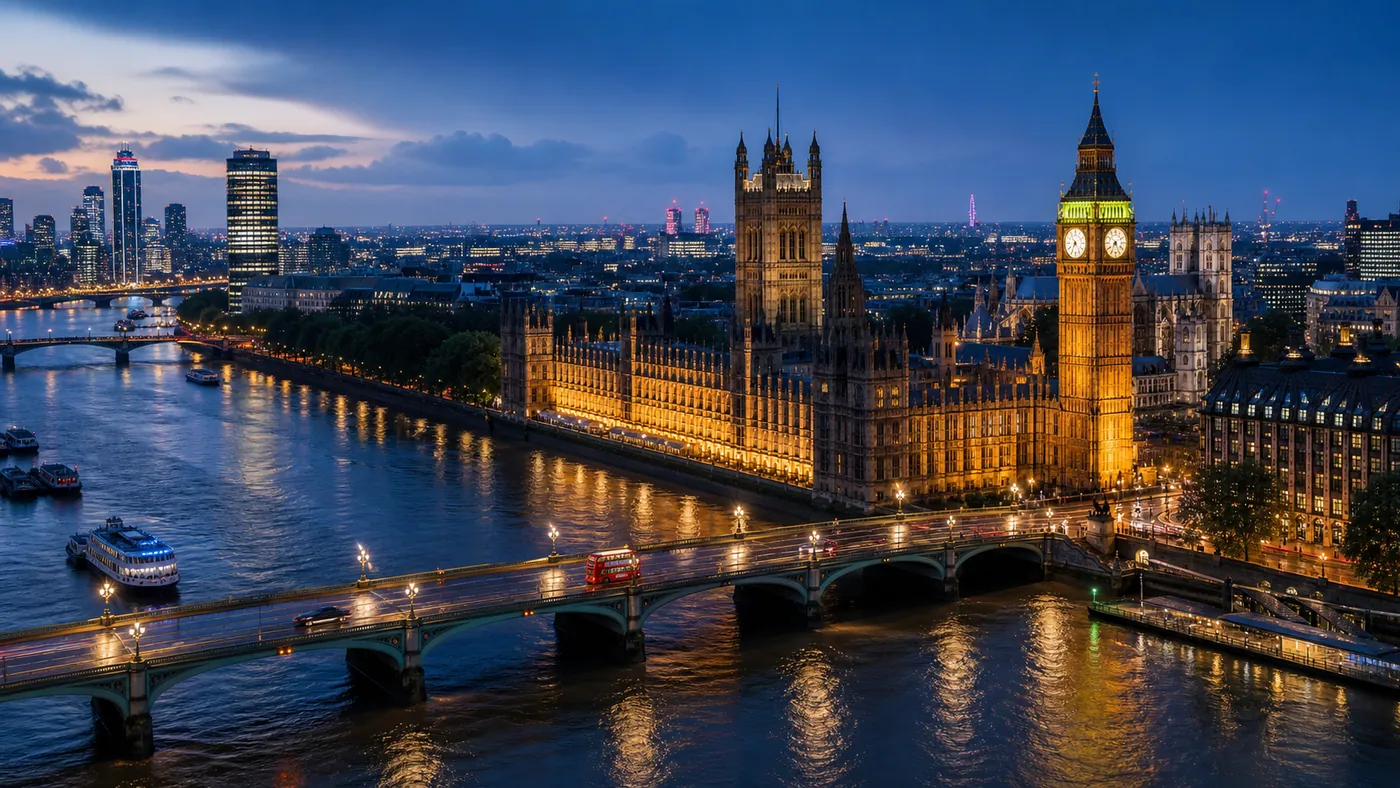
Navigating this day is straightforward on foot as the key sights cluster around Parliament Square, before a brief walk across the river brings you to the South Bank.
09:00Deans Yd, London SW1P 3PA
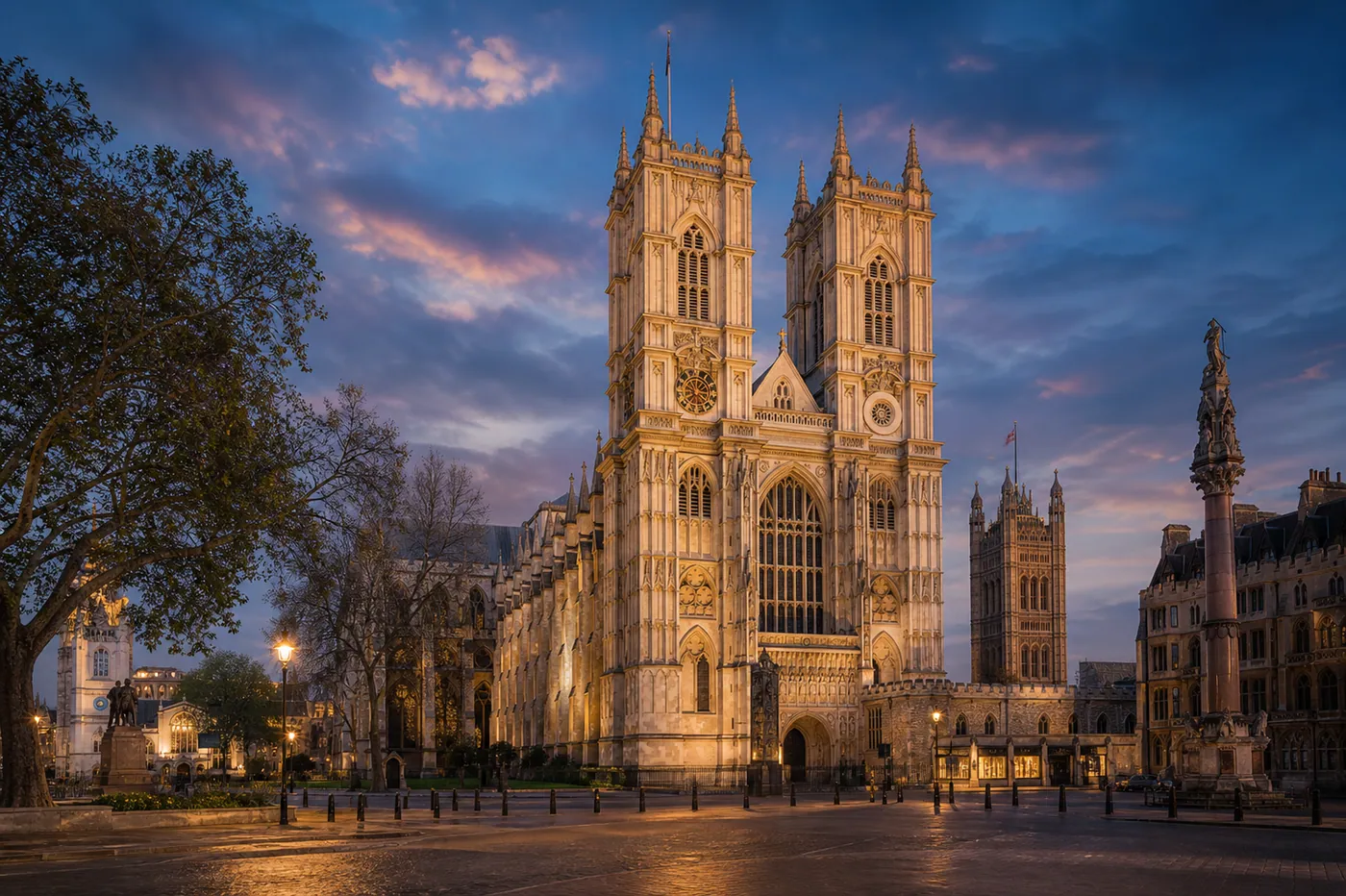
Westminster Abbey
This stunning Gothic church has stood at the center of British royal history for over a thousand years, serving as the setting for every coronation since William the Conqueror. Walking through the nave reveals a rich tapestry of national memory, from the intricate stone carvings in the Lady Chapel to the final resting places of legendary poets, scientists, and monarchs. The atmosphere is solemn yet awe-inspiring, with stained glass windows casting colorful light across the medieval stone floors.
Tip: Look closely at the walls of the cloisters to find medieval graffiti carved by schoolboys centuries ago.
Next move: Westminster Underground Station (Jubilee, District, and Circle lines)
13:00Clive Steps, King Charles St, London SW1A 2AQ
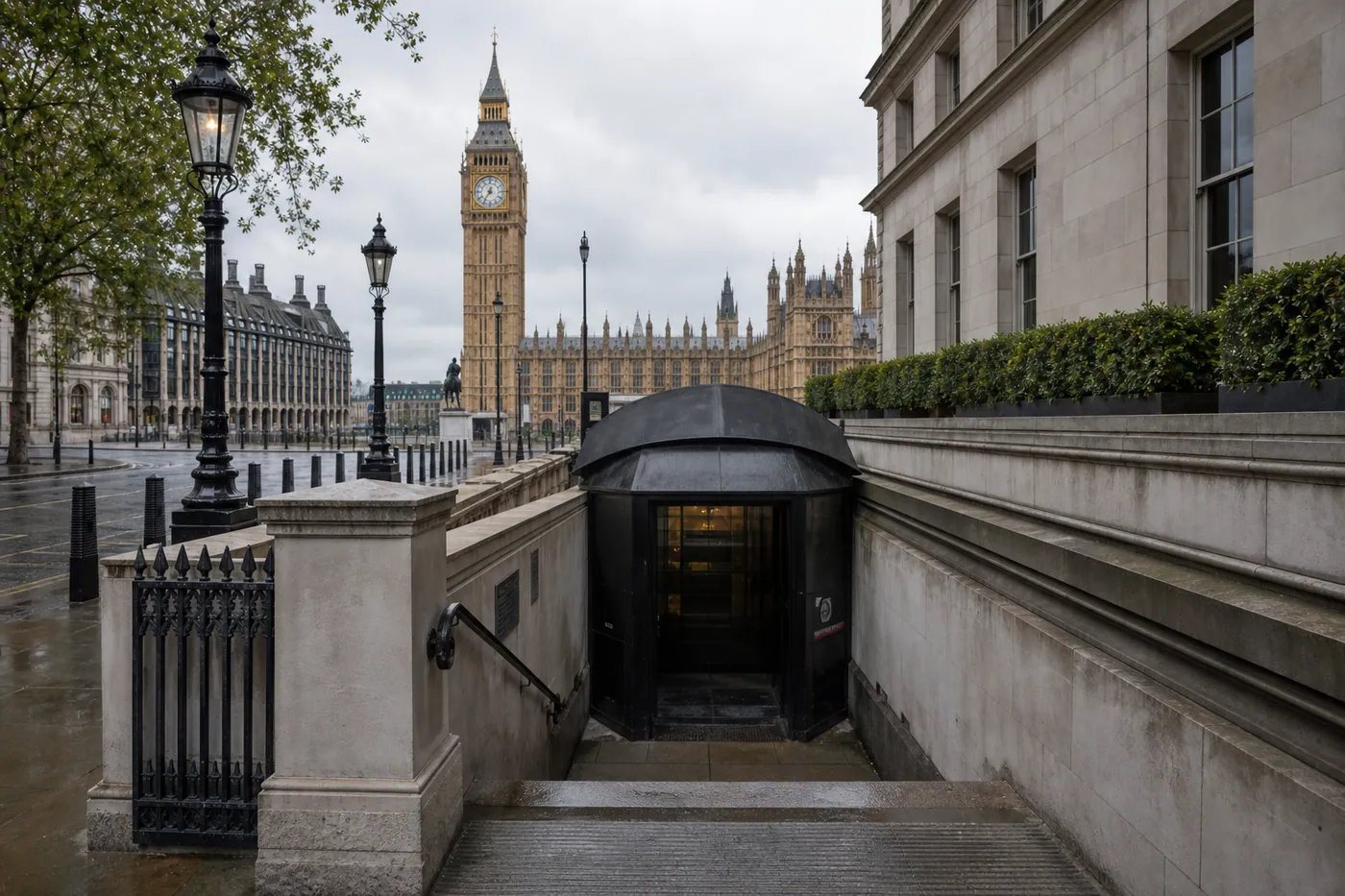
Churchill War Rooms
Beneath the stone government buildings of Whitehall lies the subterranean bunker where Winston Churchill and his staff managed the strategy of the Second World War. The rooms remain preserved in their wartime state, with maps pinned to the walls and communication equipment left exactly as it was when the lights were switched off in 1945. It offers a tangible connection to the tense atmosphere of London during the Blitz.
Tip: Look for the scratch marks on the arms of Churchill's chair in the room, showing where he nervously clawed at the wood during meetings.
Next move: Short walk from Westminster or St. James's Park Underground Stations
18:00Riverside Building, County Hall, London SE1 7PB
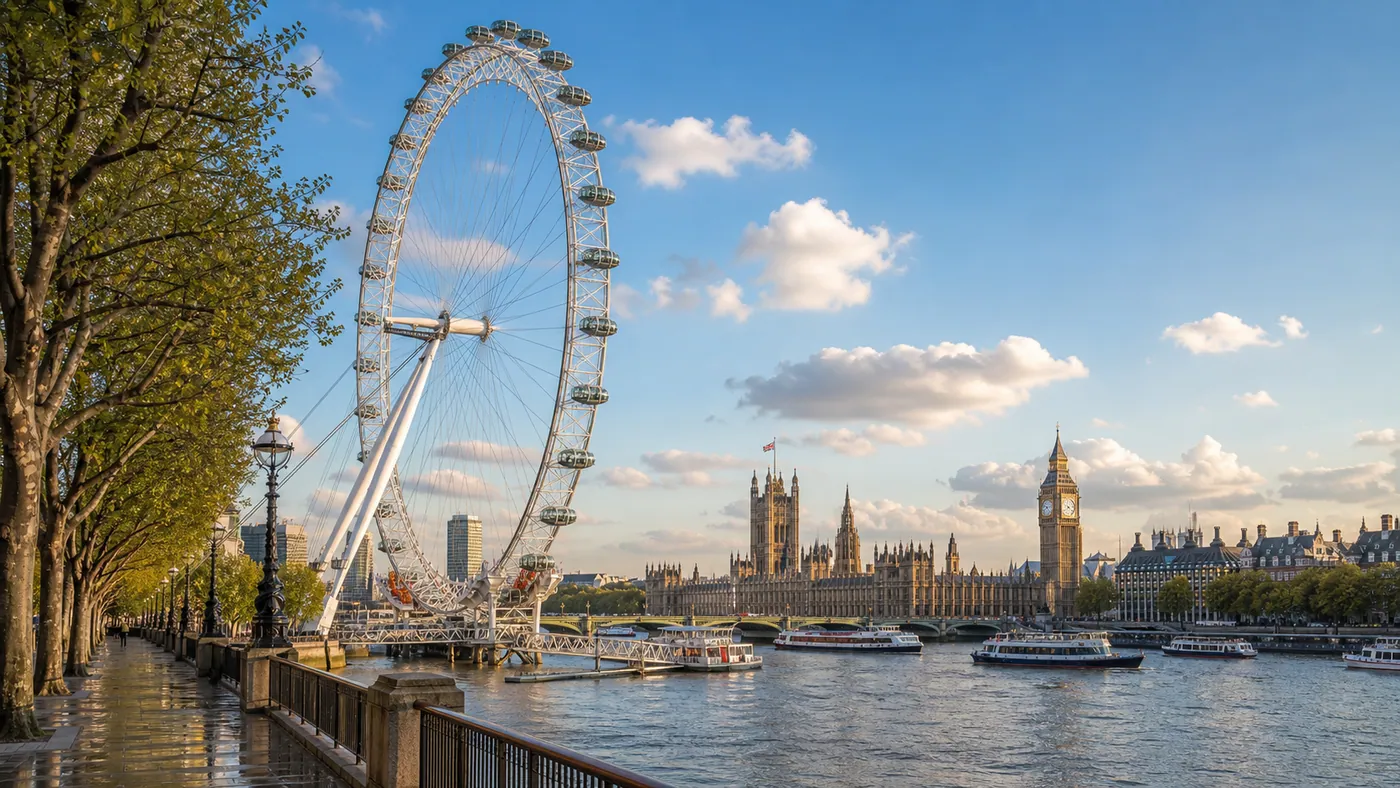
London Eye
Floating slowly above the South Bank, this massive observation wheel offers a dynamic perspective on the capital's sprawling skyline. The climate-controlled glass capsules carry you high above the river, providing unobstructed views of the houses of parliament and the city beyond. It is a peaceful experience that lets you trace the winding path of the Thames from a birds-eye view.
Tip: The wheel rotates so slowly that you can easily spot the tiny green cabs of London's historic taxi shelters dotting the streets below.
Next move: Waterloo Underground Station (Bakerloo, Jubilee, Northern, and Waterloo & City lines)
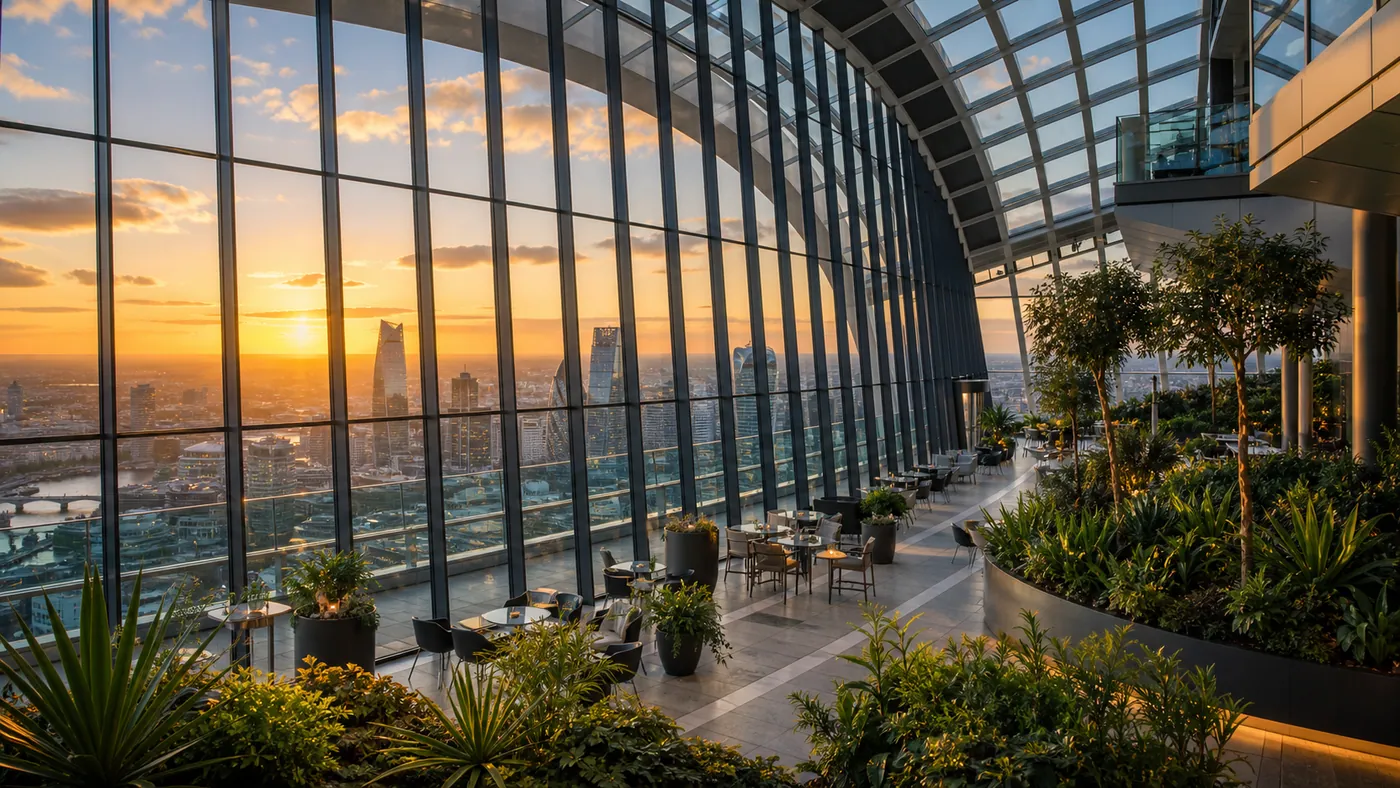
Book your free Sky Garden ticket online a few weeks in advance, as slots are released on Monday mornings and disappear quickly.
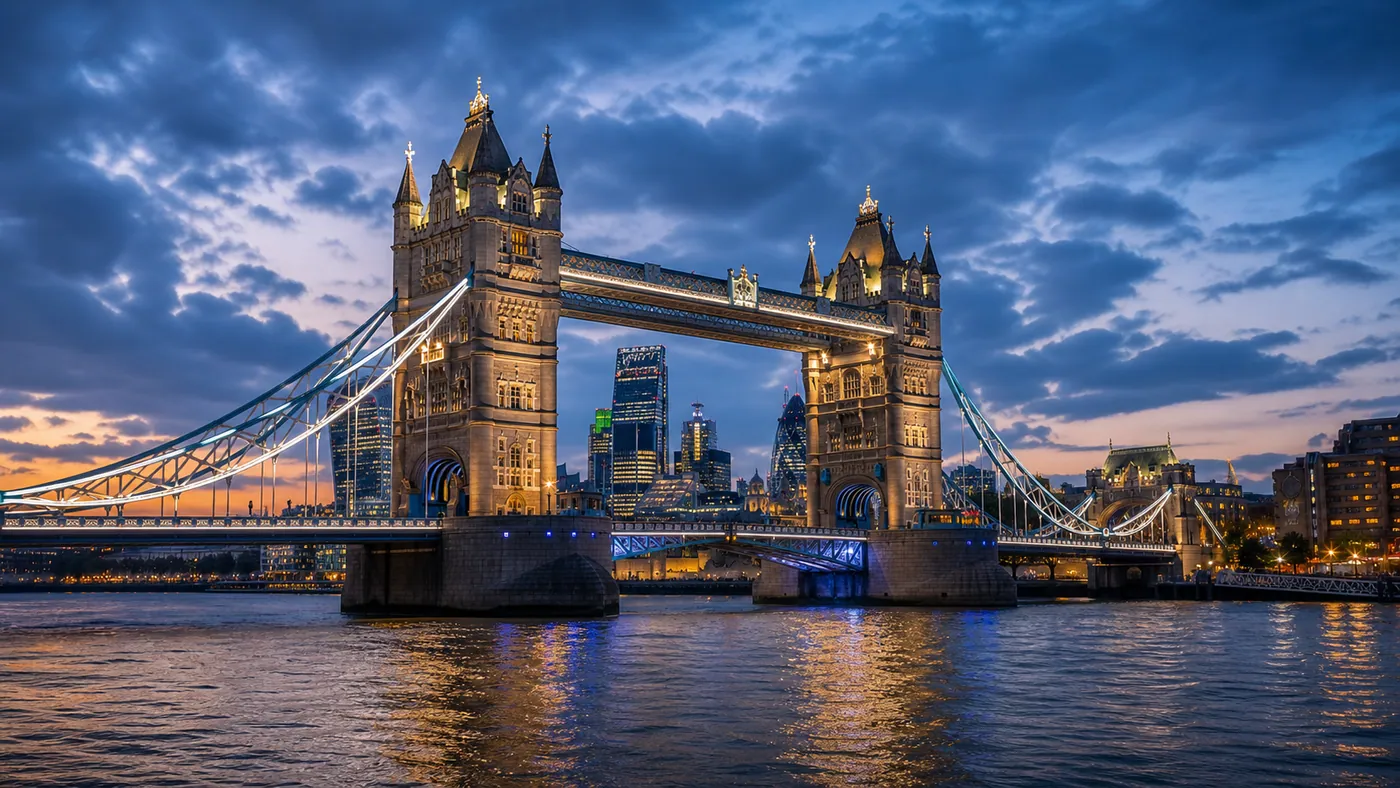
The route centers on the Tower Hill area, connecting the fortress, the bridge, and the City via direct pedestrian walkways.
09:00London EC3N 4AB
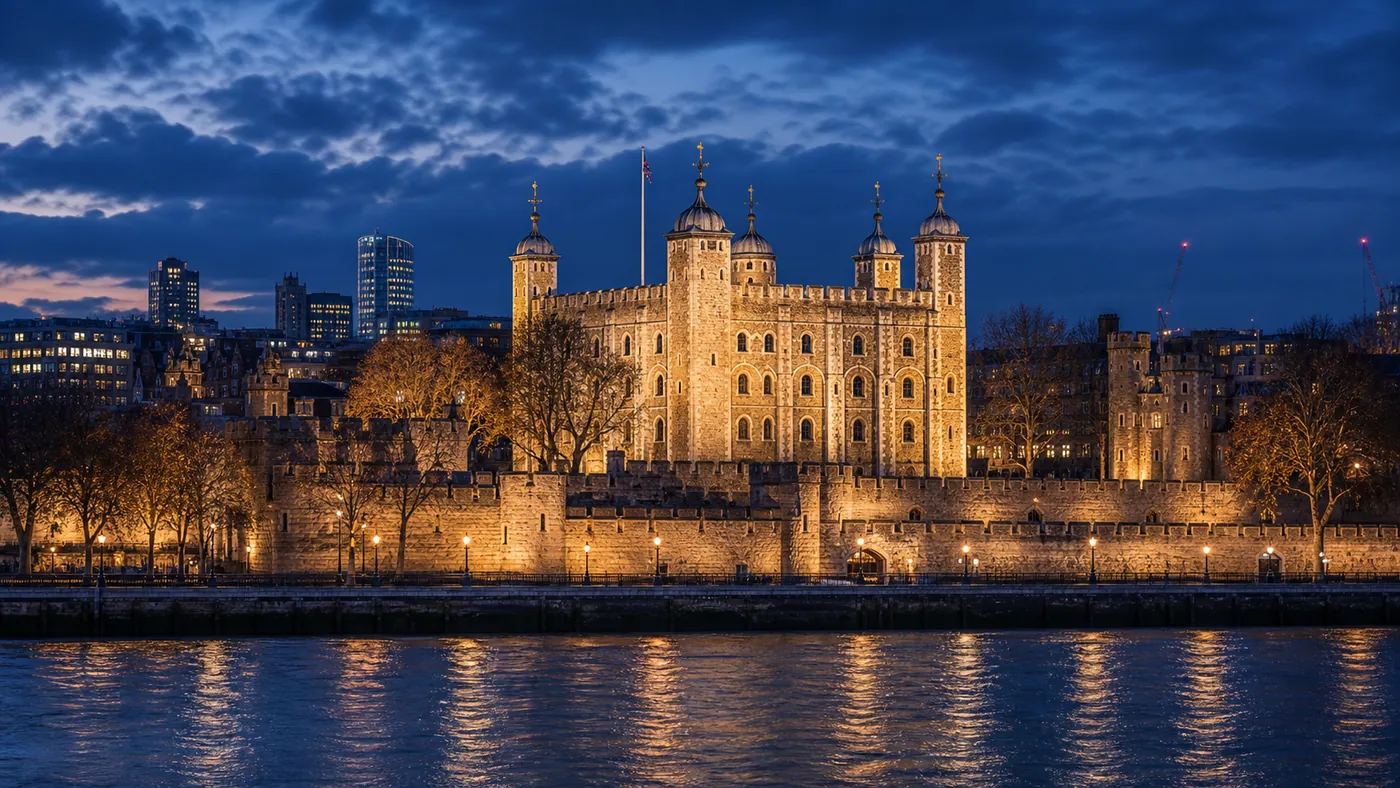
Tower of London
This historic fortress on the north bank of the River Thames has served as a royal residence, a treasury, and a notorious prison over its thousand-year history. Within its ancient stone walls, you can explore medieval towers and meet the legendary Yeoman Warders who share tales of intrigue and imprisonment. The centerpiece is the Jewel House, which houses the glittering coronation regalia of the British monarchy.
Tip: Look for the prisoners' graffiti carved into the stone walls of the Beauchamp Tower, detailing their hopes and fears.
Next move: Tower Hill Underground Station (District and Circle lines)
This iconic Victorian suspension bridge stands as a masterpiece of nineteenth-century engineering, recognizable by its two massive stone towers. Walking across the high-level walkways provides views of the river below, seen through transparent glass floor panels. Below the bridge, the historic engine rooms preserve the original steam boilers that once raised the road for passing ships.
Tip: Walk right into the Victorian Engine Rooms at the end of the tour, where the air still smells of coal and grease, to see the original steam mechanics.
Next move: Tower Hill or London Bridge Underground Stations
Located at the top of the Fenchurch Street building, this indoor garden features terraced landscaping filled with Mediterranean and South African plants. The floor-to-ceiling glass windows offer a 360-degree view of the city, showing the winding river and the sprawling suburbs in the distance. It is a relaxing spot where nature and modern architecture meet above the busy streets.
Tip: Walk to the garden's northern terrace to get a direct top-down view of the historic Leadenhall Market's Victorian roof.
Next move: Monument Underground Station (District and Circle lines)
Many galleries around the West End open late on Friday evenings, which is the best time to see major art collections with fewer crowds.
This route links Bloomsbury to Covent Garden and the Strand along pedestrian-friendly streets that require no tube journeys.
09:00Great Russell St, London WC1B 3DG
The British Museum
This world-famous museum houses a collection that spans two million years of human history, culture, and art. The central Great Court, with its glass-and-steel roof, is an architectural marvel that leads to galleries filled with treasures from ancient Egypt, Greece, and Rome. It offers a window into the development of civilizations across the globe.
Tip: Seek out the Sutton Hoo treasures in Room 41 to see the exquisite Anglo-Saxon helmet and gold ornaments up close.
Next move: Tottenham Court Road or Holborn Underground Stations
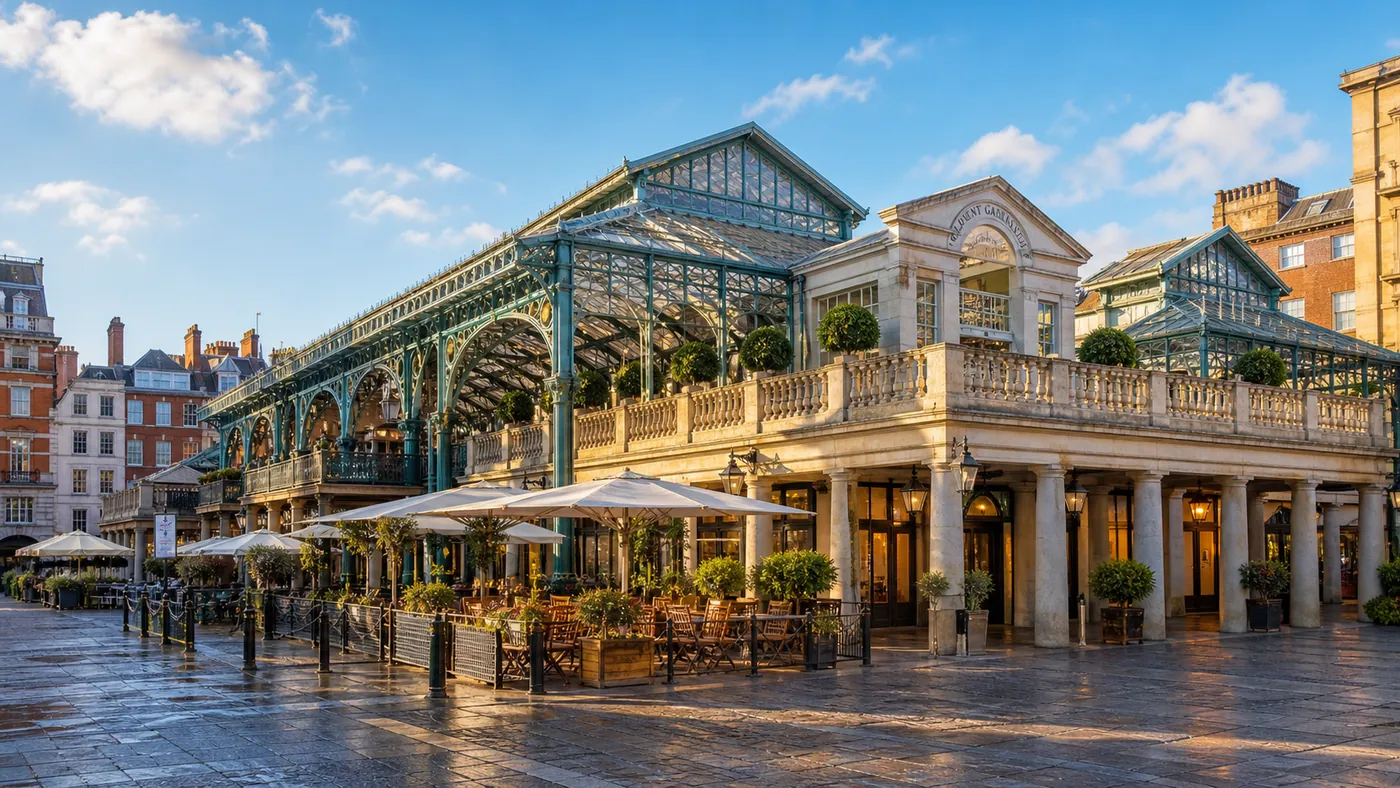
This historic fruit and vegetable market has evolved into a pedestrian hub filled with shops, dining options, and street performers. The central market building houses independent craft stalls alongside international brands, all set beneath a nineteenth-century iron roof. The surrounding streets are alive with the sounds of street musicians and classical performers.
Tip: Look up at the carving of the floral decorations on the columns of the main market hall, which represent the historic flower market.
Next move: Covent Garden Underground Station (Piccadilly line)
Overlooking Trafalgar Square, this grand building houses a collection of European paintings from the middle ages to the early twentieth century. The galleries showcase works by masters like Da Vinci, Van Gogh, and Rembrandt in beautifully lit rooms. It provides an accessible way to experience some of the world's most famous artworks.
Tip: Walk to the Central Hall to find the mosaic floors featuring famous portraits of twentieth-century figures like Virginia Woolf.
Next move: Charing Cross Underground Station (Northern and Bakerloo lines)
Avoid the weekend crowds by visiting South Kensington's museums during the week, starting your day early when the doors first open.
The museums sit side by side, allowing you to walk between them via Exhibition Road and head north directly into the park.
09:00Cromwell Rd, London SW7 2RL
Victoria and Albert Museum
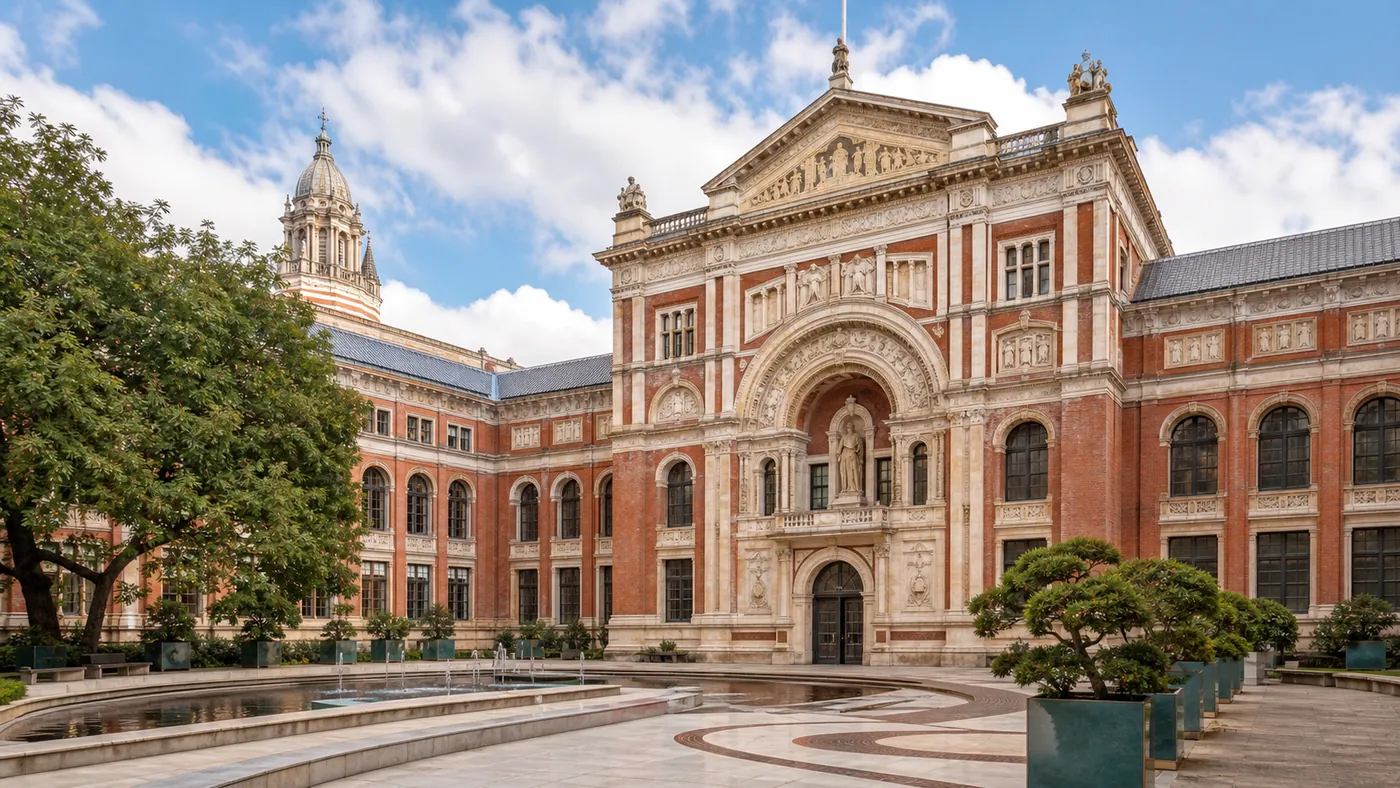
This museum dedicated to art, design, and performance houses a collection of creative works spanning several thousand years. The galleries exhibit fashion, textiles, metalwork, and sculptures from cultures around the world. The building's Victorian architecture, with its red brick and mosaic details, is a work of art in itself.
Tip: Find the plaster cast of Trajan's Column in the Cast Courts, which is so tall it had to be cut in half to fit inside the room.
Next move: South Kensington Underground Station (Piccadilly, District, and Circle lines)
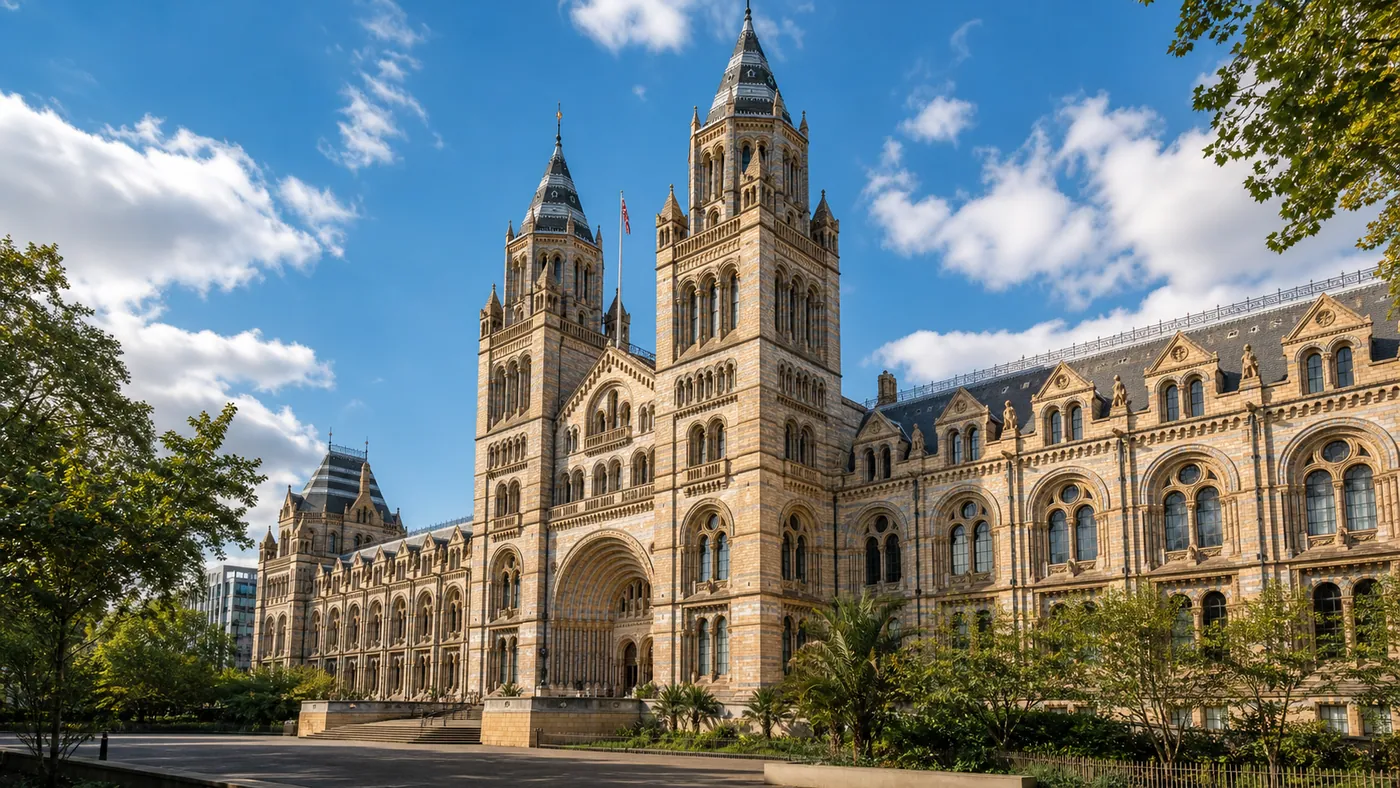
Housed in a Romanesque building, this museum showcases the history of life on Earth through millions of specimens. The entrance hall is famous for its blue whale skeleton, which hangs from the ceiling above the central staircase. The displays cover everything from prehistoric fossils to the geological forces that shape the planet.
Tip: Look closely at the stone pillars in the Hintze Hall to spot the intricate carvings of monkeys and fossils climbing the arches.
Next move: South Kensington Underground Station (Piccadilly, District, and Circle lines)
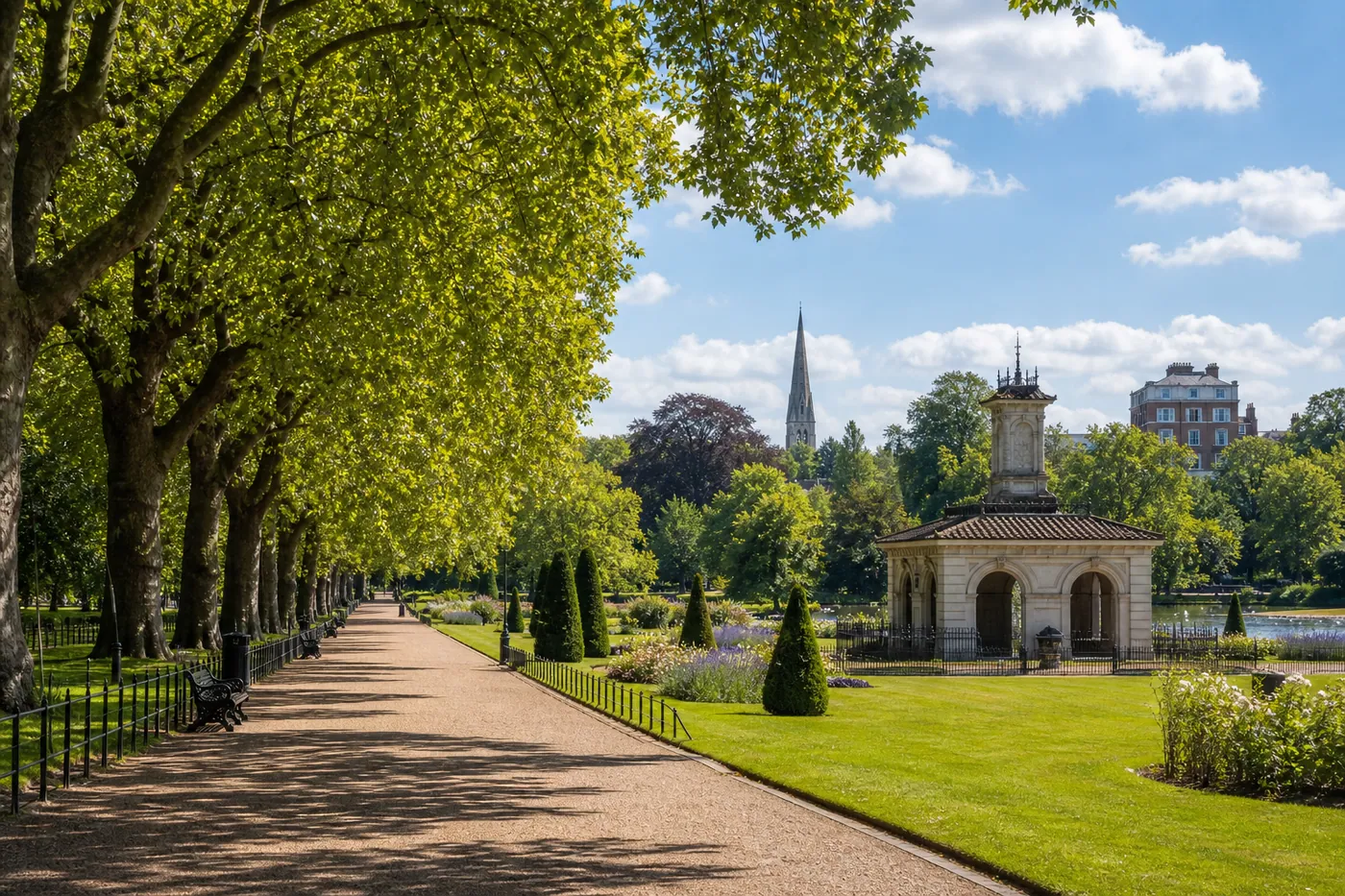
This royal park offers a green space next to Kensington Palace, featuring broad avenues and lawns. You can walk along the paths to find historic statues, memorials, and views of the Serpentine lake. It provides a quiet contrast to the busy streets and museums of South Kensington.
Tip: Look for the Peter Pan statue on the bank of the Long Water, which was secretly installed overnight by the author J.M. Barrie in 1912.
Next move: High Street Kensington or Queensway Underground Stations
To view the historic docks and bridges from the water, board the river bus during the morning hours when passenger numbers are low and seating is easy to find.
Exploring Greenwich on foot is both simple and scenic, as the main attractions are situated close together within the park and riverside precincts. Clear pedestrian pathways link the historic piers directly to the grand college lawns and the rising hill of the Royal Observatory.
09:00King William Walk, London SE10 9HT
Cutty Sark
Standing proud on the Greenwich waterfront, this iconic nineteenth-century tea clipper represents the pinnacle of merchant sailing technology. The ship is suspended in a dramatic glass-and-steel dry dock, allowing visitors to walk directly beneath the copper-sheathed hull that once sliced through the oceans. Exploring the upper decks reveals the towering masts, complex rigging, and tight crew quarters that defined life at sea. Inside the cargo hold, interactive displays tell the stories of high-stakes tea races from China and the global trade networks of the Victorian era.
Tip: Walk all the way to the bow in the lower dry dock gallery to get the most dramatic photo angle looking up at the ship's sharp leading edge.
Next move: Take the River Bus (Uber Boat by Thames Clippers) from central piers to Greenwich Pier, arriving directly adjacent to the ship.
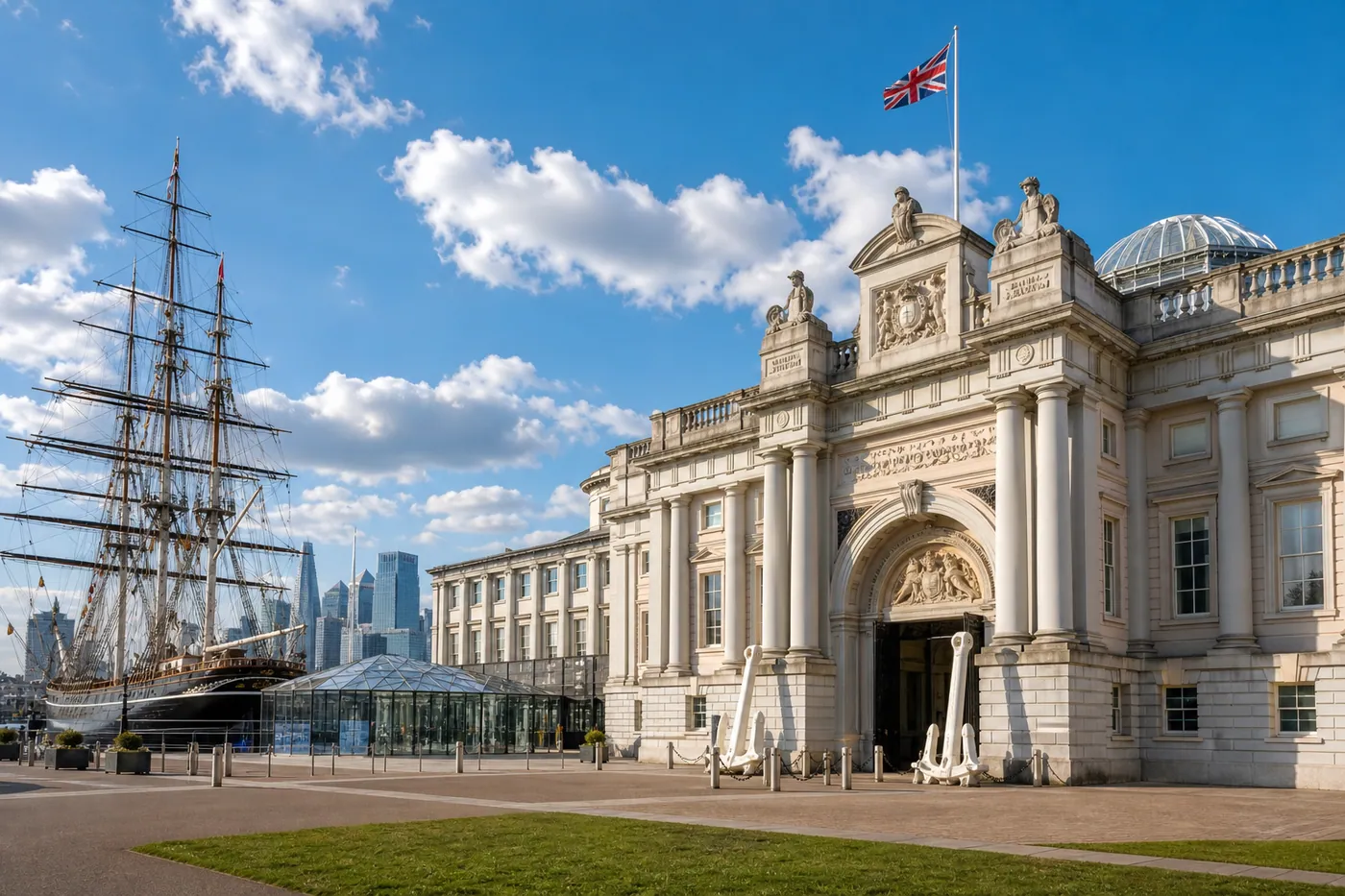
This expansive museum houses one of the world's most significant collections of seafaring history, located in the elegant neoclassical buildings of Greenwich. The galleries guide visitors through centuries of ocean exploration, naval battles, and maritime trade that shaped the modern world. Among the highlights are the historic royal barges, ornate navigational instruments, and fine art capturing dramatic moments at sea. The museum succeeds in connecting personal stories of sailors with the grand scale of global history.
Tip: Locate the Baltic Exchange memorial glass window on the first floor to admire its intricate stained-glass panels reflecting sea and sky.
Next move: Walk five minutes east from the Cutty Sark through the beautiful grounds of the Old Royal Naval College.
Dating back to Roman times, this sprawling royal park is a beautiful blend of ancient chestnut trees, quiet gardens, and spectacular high points. Walking along the paths leads visitors past historic monuments and rolling green lawns where deer once roamed. The view from the top of the hill, looking down over the Queen's House and across the river to the Canary Wharf towers, is one of London's most famous vistas.
Tip: Follow the path on the eastern side of the observatory to find the ancient sweet chestnut trees, some of which have stood here for over four centuries.
Next move: Walk five minutes south from the National Maritime Museum into the park gates and follow the main rising path.
Many of the historic alleyways near the Mithraeum are completely quiet on weekends, making it a peaceful time to explore the city's older street patterns.
Moving between these historic sights is straightforward on foot, since they follow a direct southward path from St. Paul's down to the river. Crossing the pedestrian-only Millennium Bridge brings you straight to the south bank without encountering any vehicle traffic.
09:00St. Paul's Churchyard, London EC4M 8AD
St. Paul's Cathedral
Sir Christopher Wren's English Baroque masterpiece has dominated the City's skyline for over three centuries, standing as a monument of survival and faith. The grand interior features soaring ceilings, intricate stone carvings, and brilliant mosaics that catch the morning light. Visitors can explore the vast crypt, where heroes like Wellington and Nelson are buried, or climb to the high galleries for views across the Thames.
Tip: Look down at the floor of the crypt to find the simple stone slab marking Sir Christopher Wren's grave, which features a famous Latin inscription telling visitors to look around them for his monument.
Next move: Take the Central Line on the London Underground directly to St. Paul's Station.
Located seven meters below the modern streets of the City, this archaeological exhibition displays the remains of a Roman temple to Mithras. The temple has been restored to its original discovery site, surrounded by an immersive display of ancient light and sound that evokes the mystery of Roman rituals. In the gallery above, hundreds of Roman artifacts found during the excavation, including writing tablets and footwear, are displayed in sleek modern cases.
Tip: Spend time examining the display of Roman writing tablets on the ground floor, as some contain the oldest surviving financial documents in London.
Next move: Walk ten minutes east from St. Paul's Cathedral along Cannon Street and Walbrook.
This wide pedestrian promenade along the south bank of the Thames offers a front-row seat to London's riverfront architecture. Walking along the path takes you past landmarks like the Tate Modern and Shakespeare's Globe, with the river reflecting the lights of the City's skyscrapers. The atmosphere is lively, filled with street musicians, second-hand book markets under the bridges, and families enjoying the evening air.
Tip: Stop by the book stalls under Waterloo Bridge, where collectors sell vintage prints and classic novels in a sheltered riverside setting.
Next move: Walk five minutes west from the London Mithraeum to the Millennium Bridge and cross south over the Thames.
The canal towpath can get busy with runners on sunny weekends, so walking it in the late afternoon or early evening is usually the most relaxing option.
The route flows naturally in a northerly line, linking the park gardens to the hill and then joining the canal path. Walking along the designated towpath provides a car-free route directly into the heart of Camden's market area.
09:00Chester Road, London NW1 4NR
The Regent's Park
Designed by John Nash in the early nineteenth century, this elegant royal park is characterized by its grand neoclassical terraces, tree-lined walks, and boating lakes. The highlight is Queen Mary's Gardens, which houses a spectacular collection of roses arranged in formal beds. Visitors can walk along the curving paths, listening to the fountains and watching the waterfowl that inhabit the park's waterways.
Tip: Visit the secret St. John's Lodge Gardens in the inner circle for a quiet, formal garden space that is rarely visited by tourists.
Next move: Take the Bakerloo Line to Regent's Park Station and exit directly into the south park gates.
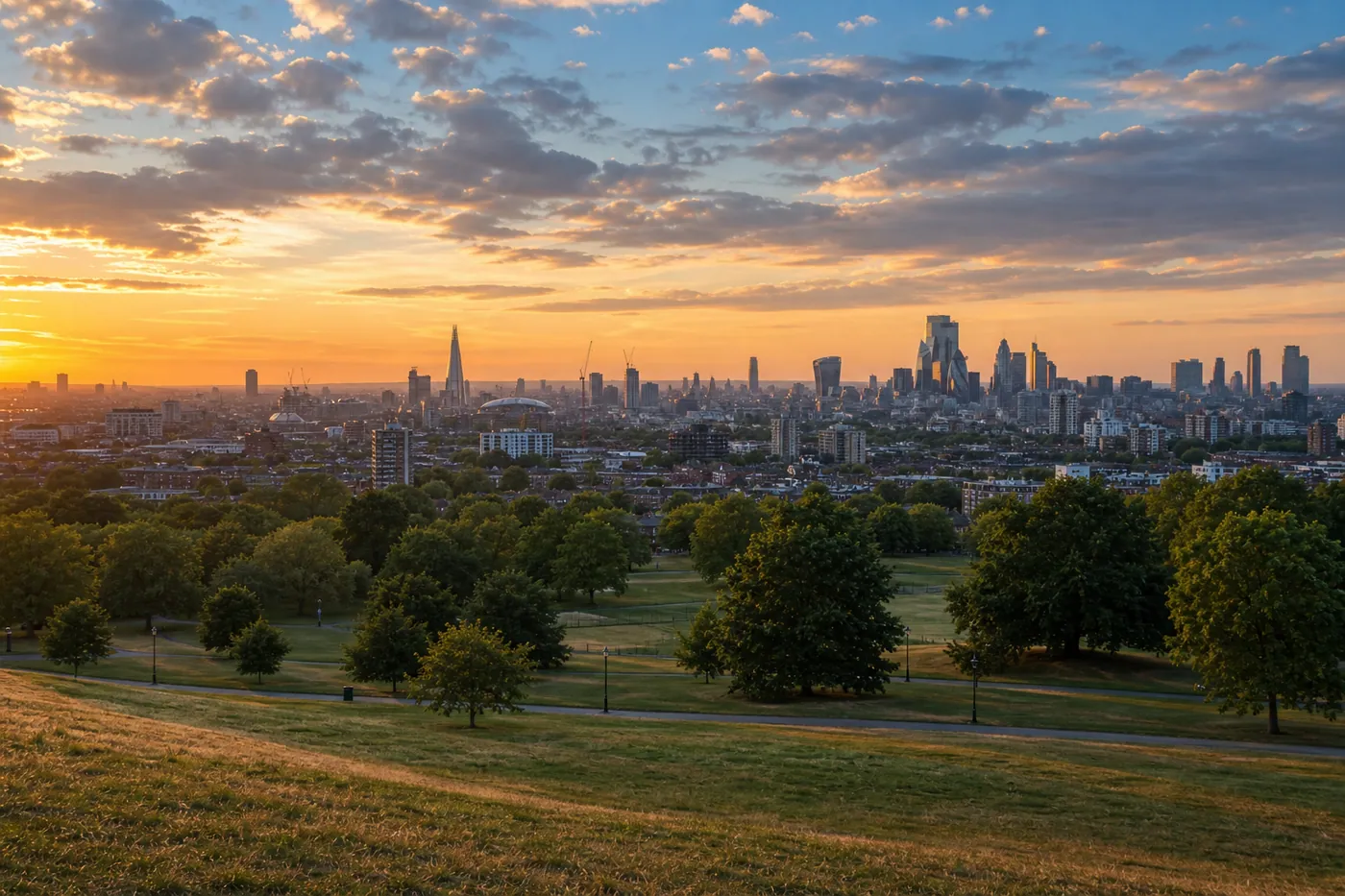
Located just north of the zoo, this grassy hill rises sixty meters to offer a panoramic view of the London skyline. It has long been a popular gathering spot for locals, offering clear views of landmarks like the Shard and St. Paul's Cathedral. The surrounding streets are lined with pastel-colored Victorian townhouses, giving the neighborhood a distinct village character.
Tip: The viewing area at the top has a bronze telescope that helps you pinpoint distant landmarks like the towers of Westminster.
Next move: Walk ten minutes north from Regent's Park, crossing Prince Albert Road directly to the Primrose Hill gates.
This world-famous market is located in a maze of Victorian stables and warehouses next to the Regent's Canal. It is a hub of alternative fashion, vintage items, and creative crafts, with colorful storefronts and street art. In the evening, the market lights up and the food stalls along the lock serve cuisines from around the globe.
Tip: Head to the indoor section of the Stables Market to find the old brick alcoves, where independent designers sell unique handmade jewelry.
Next move: Walk fifteen minutes east along the scenic Regent's Canal towpath directly into the heart of Camden Lock.
To view the morning guards' ceremony with more room to move, stand near the Wellington Barracks on Birdcage Walk rather than directly in front of the main palace gates.
Navigating this royal route is simple because the parklands and monuments are connected by wide, flat gravel avenues. Well-marked pedestrian crossings at Hyde Park Corner ensure a smooth transition from the lawns to the central arch.
09:00Spur Road, London SW1A 1AA
Buckingham Palace
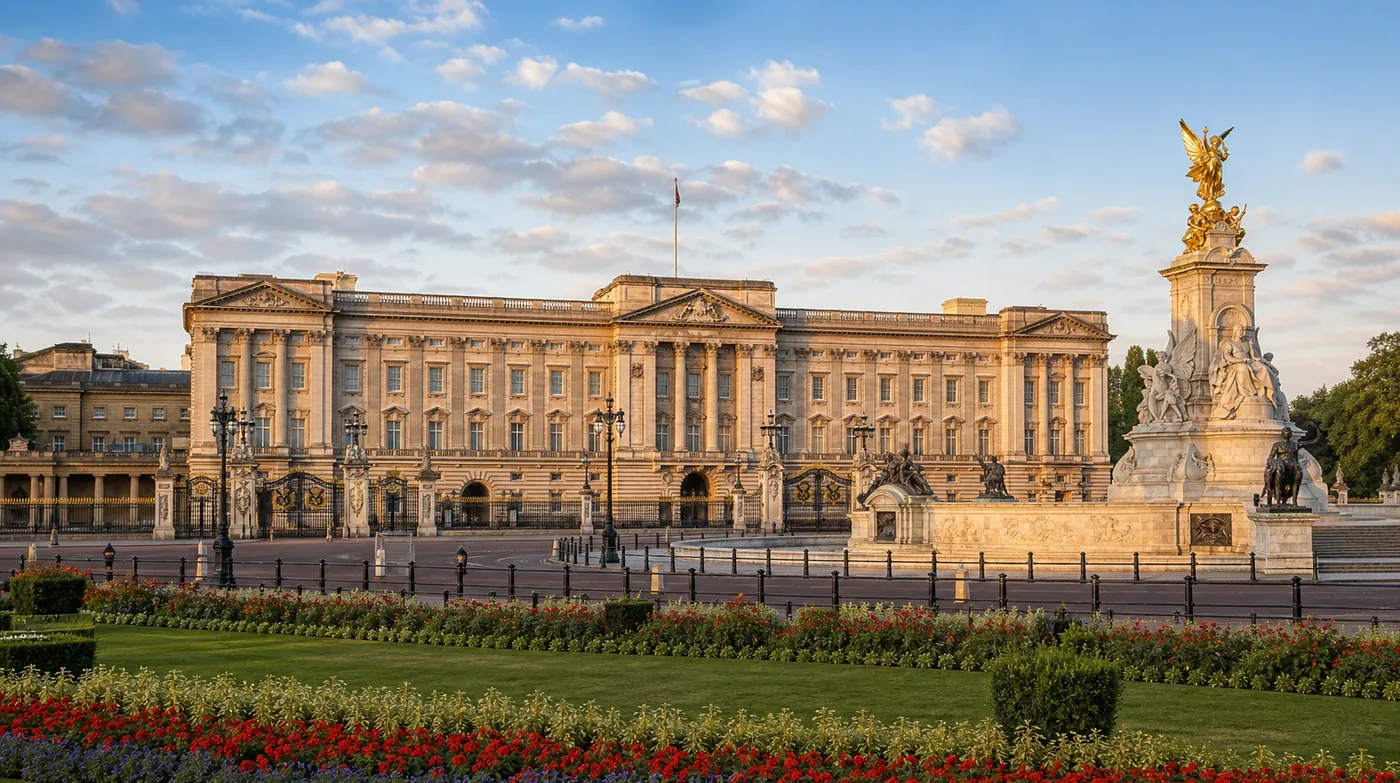
Serving as the official London residence of the British sovereign, this grand palace is a focal point for national celebrations and royal ceremonies. The imposing neoclassical facade, designed by Sir Aston Webb, looks out over a grand plaza centered on the Victoria Memorial. In the morning, the courtyard becomes the stage for the Changing the Guard, where soldiers march in traditional uniforms to military music.
Tip: Walk down the south side of the palace along Buckingham Gate to see the Royal Mews, where the historic gold state coaches are housed.
Next move: Walk directly from the nearest Underground station through the parklands to the main palace gates.
Unlike London's other royal parks, this peaceful green space contains no formal flowerbeds or lakes, focusing instead on its mature trees and rolling lawns. It offers a quiet retreat from the busy streets of Piccadilly, with wide gravel paths that run beneath a canopy of old plane trees. The park is home to several memorials, including the Bomber Command Memorial with its bronze sculptures.
Tip: Find the Canada Gate on the southern edge, an ornate iron entrance that was presented as a memorial to Queen Victoria.
Next move: Walk directly northwest from the Buckingham Palace forecourt into the park grounds.
Built in the nineteenth century to mark the Duke of Wellington's victories, this triumphal arch stands at the center of Hyde Park Corner. The top of the arch is crowned by a massive bronze sculpture of a chariot, the largest bronze sculpture in Europe. Inside, the arch houses galleries detailing the history of the monument, which once served as a tiny police station.
Tip: The viewing balconies are situated directly beneath the bronze chariot, providing a close-up view of the sculpture's details.
Next move: Walk southwest across Green Park to the pedestrian crossing at Hyde Park Corner.
Artistic Innovations and Restful Gardens in Kensington
7 hr plan
Explore the Design Museum's top-floor permanent collection for free, then head into the Kyoto Garden just before the gates close at dusk.
Simple pedestrian paths connect the palace gardens to the main shopping streets of Kensington. A short bus ride or a walk down the high street leads directly to the wooded paths of Holland Park.
09:00Kensington Gardens, London W8 4PX
Kensington Palace
Located in the quiet expanse of Kensington Gardens, this historic palace has been a home to the royal family since the seventeenth century. The red-brick building is famous as the childhood home of Queen Victoria and the former residence of Princess Diana. Inside, the grand State Apartments are decorated with historic paintings, ornate furniture, and displays of royal fashion.
Tip: Walk through the King's Gallery to admire the large wind dial on the wall, which was connected to a weather vane on the roof to let the King check sailing conditions.
Next move: Walk through the western side of the park directly to the palace's grand entrance.
13:00224-238 Kensington High Street, London W8 6AG
the Design Museum
Housed in a landmark mid-century building with a dramatic copper roof, this museum is dedicated to contemporary design in all its forms. The interior is structured around a soaring oak atrium that lets in natural light, creating a modern space for exhibitions. The galleries cover everything from product design and fashion to graphics and architecture, exploring how design impacts our daily lives.
Tip: Take a seat on the grand oak stairs in the central atrium to appreciate the engineering of the building's sweeping roof structure.
Next move: Walk south out of the gardens and head west down the main shopping avenue.
Gifted by the city of Kyoto in 1991, this quiet Japanese garden is a tranquil haven inside Holland Park. The design features a multi-tiered waterfall that flows into a pond filled with colorful koi fish. Winding stone paths, Japanese maples, and stone lanterns create a calm space that feels far removed from the surrounding city.
Tip: Cross the flat stepping stones at the base of the waterfall to see the koi fish gathering in the clear pool.
Next move: Walk north from the Design Museum deeper into the tranquil pathways of Holland Park.
For an unforgettable skyline sunset, secure your Horizon 22 ticket exactly when booking opens online, and carry a windbreaker to stay comfortable on the open-air viewing deck at the Shard.
This urban journey links City viewpoints through a short northeast walk from the Monument to Bishopsgate, followed by a scenic walk south across London Bridge to the Shard.
09:00Fish Street Hill, London EC3R 8AB
Monument to the Great Fire of London
Rising above the busy streets of the City, this fluted stone column stands as a dramatic memorial to the devastating fire of 1666. Designed by Sir Christopher Wren and Robert Hooke, its height matches the exact distance to the Pudding Lane bakery where the blaze first erupted. Climbing the spiral staircase gives you a real feel for the historic core of London, revealing the tight geography of the medieval streets below. Once you reach the top, the open viewing platform offers a fresh perspective on the capital's survival and rebirth.
Tip: Look for the large gilded urn of flames at the very top of the column, which was constructed from gilded copper to catch the light.
Next move: Walk a few paces east from Monument Underground Station to the cobbled plaza.
Elevate your perspective of the capital by stepping into Europe's highest free viewing gallery, situated high above the financial district. A swift lift ride transports you to the 58th floor of 22 Bishopsgate, where double-height windows reveal a vast panoramic canvas. From this vantage point, the Thames appears as a winding ribbon, and landmarks like the Gherkin and the Shard are displayed in clear detail. The bright, contemporary gallery offers a relaxed, indoor environment to study London's complex layout.
Tip: Use the built-in window shelves to steady your camera or phone for clear, reflection-free photos of the Tower of London below.
Next move: Walk north along Bishopsgate from the Monument for about ten minutes.
Watch London transition from dusk to night from the highest viewing point in Western Europe. Designed by Renzo Piano, this iconic glass spire rises over the South Bank, offering views that stretch across the entire metropolis. As night falls, the streets below light up in a grid of gold and red, while the city's bridges glow above the dark river. The experience combines the thrill of high-altitude viewing with a sophisticated evening atmosphere.
Tip: Check the weather forecast and try to time your entry for clear evening skies when the distant hills of Surrey are visible.
Next move: Cross London Bridge southwards to reach the Shard's ticket office entrance.
While the major national museums offer free entry, consider pre-booking a table at the Garden Museum's courtyard cafe to guarantee a spot for their highly seasonal, plant-focused lunch menu.
Our riverside route begins at Tate Britain, crosses the Thames at Lambeth Bridge to the Garden Museum, and then heads east along Lambeth Road to reach the Imperial War Museum.
09:00Millbank, London SW1P 4RG
Tate Britain
Situated on the Millbank waterfront, Tate Britain stands as a neoclassical storehouse of the nation's artistic history. The gallery's elegant stone facade leads to light-filled rooms that host works spanning from the Tudor era to the present day. It is home to the Clore Gallery, which houses the world's largest collection of paintings by J.M.W. Turner. Walking through these halls offers a quiet, inspiring look at how British artists have captured landscape, light, and society over five centuries.
Tip: Look for the tiny details in John Everett Millais's painting of Ophelia, which was painted along the banks of a Surrey river.
Next move: Take the Victoria line to Pimlico and walk south to the riverside entrance.
Nestled next to Lambeth Palace, the Garden Museum is a celebration of British horticultural history. Housed inside the medieval church of St Mary-at-Lambeth, the museum displays historical tools, botanical drawings, and garden designs. Outside, the Sackler Garden offers a green retreat designed around the tomb of the famous plant collector John Tradescant. Climbing the ancient stone tower rewards you with a unique, close-up view of the Houses of Parliament across the river.
Tip: Examine the Tradescant tomb in the courtyard garden to see the detailed stone carvings of mythical beasts and ancient ruins.
Next move: Cross Lambeth Bridge to the south bank to reach the museum gates.
Set in the leafy grounds of Geraldine Mary Harmsworth Park, this museum offers a moving look at the human experience of war. The building's neoclassical portico opens into a large atrium where historic aircraft are suspended from the ceiling. Through personal items, letters, and photographs, the exhibits tell the stories of people affected by conflict from the First World War to the present day. It is a thoughtful place for reflection and learning.
Tip: Visit the Peace Garden on the museum grounds, which was opened by the Dalai Lama and features a sand mandala design.
Next move: Walk east from the river along Lambeth Road directly into the park.
Board the Uber Boat by Thames Clippers from the power station pier after dark to enjoy a relaxing, illuminated river journey back under London's glowing bridges.
After visiting Hyde Park Corner, take a southbound bus over Chelsea Bridge to access the park, then enjoy a traffic-free riverside promenade walk directly into the power station complex.
09:00149 Piccadilly, London W1J 7NT
Apsley House
Located at Hyde Park Corner, this historic townhouse was once the home of the first Duke of Wellington. The elegant brick building preserves the opulent rooms where the Duke celebrated his victory over Napoleon at Waterloo. Inside, the rooms are decorated with gold ceilings, red silk walls, and classical columns. It is also home to a fine art collection, including paintings by Velázquez and Goya, reflecting the Duke's high status in 19th-century London.
Tip: Ask the staff to point out the hidden doors in the Waterloo Gallery, which are disguised as bookcases to keep the room's symmetry.
Next move: Exit Hyde Park Corner Underground Station directly into the front courtyard.
Battersea Park is a 200-acre green space on the south bank of the Thames, offering a peaceful escape from the busy city. Created in the Victorian era, the park features a boating lake, subtropical gardens, and wide, tree-lined avenues. Its most recognizable landmark is the Peace Pagoda, built by Buddhist monks on the river's edge. Walking along the promenade gives you clear views of the river and the decorative Albert Bridge.
Tip: Visit the Old English Garden, a hidden walled garden featuring traditional English roses and a central pond.
Next move: Take a bus south across Chelsea Bridge to the park entrance.
This massive brick building, with its four white chimneys, is one of London's most famous industrial landmarks. Recently restored, the power station has been transformed into a modern retail and dining space. Inside, the grand turbine halls have been preserved with their original steel columns, brickwork, and Art Deco details. At night, the building is lit up, creating a dramatic silhouette on the South Bank skyline.
Tip: Look for the preserved control room windows in Turbine Hall A, which still have their original brass dials and switches.
Next move: Walk east along the riverside path from Battersea Park to the power station.
Royal Escapes and Wild Woodlands of the Outer London Valley
7 hr plan
Arrive at Hampton Court Palace right at opening to wander the Tudor kitchens before the crowds arrive, and bring a fully charged phone to capture the deer herds in Richmond Park's golden hour.
Catch a regional train from Waterloo to Hampton Court Station, then utilize the local R68 bus to link the palace, Bushy Park, and Richmond Park's historic boundaries.
09:00Hampton Court Way, East Molesey KT8 9AU
Hampton Court Palace
Set on the banks of the Thames, Hampton Court Palace offers a journey through two distinct eras of royal history. The red-brick Tudor palace, built for Cardinal Wolsey and later taken by King Henry VIII, features the grand Great Hall and the historic kitchens. Next to it stands the elegant Baroque palace designed by Sir Christopher Wren for William III. Surrounding the buildings are 60 acres of formal gardens, including a famous hedge maze.
Tip: Wander to the Pond Gardens to see the sunken lawns where Tudor monarchs once kept exotic plants and flowers.
Next move: Take the regional train from Waterloo to Hampton Court Station.
Located just north of the palace, Bushy Park is a large royal park known for its wild, natural landscape. The park is home to herds of red and fallow deer that graze among the ancient oak trees. A highlights of the park is Chestnut Avenue, a long tree-lined path designed by Christopher Wren that leads to the Diana Fountain. The park also features the restored Water Gardens, an 18th-century landscape of ponds, paths, and small canals.
Tip: Look for the small wooden bridges in the Woodland Gardens, which offer excellent spots for watching kingfishers over the streams.
Next move: Walk north from Hampton Court Palace across the road into the park.
Richmond Park is the largest of London's royal parks, covering nearly 2,500 acres of hills and woods. This designated nature reserve is famous for its herds of free-roaming red and fallow deer. From the high point of Henry VII's Mound, you can look out across London to see the dome of St. Paul's Cathedral. The park's paths wind through ancient woodlands and around quiet ponds, offering a peaceful end to your journey.
Tip: Stand at Henry VII's Mound and look through the telescope to see the framed view of St. Paul's, which has been kept clear of trees for centuries.
Next move: Take a bus from Bushy Park to the outskirts of Richmond Park.