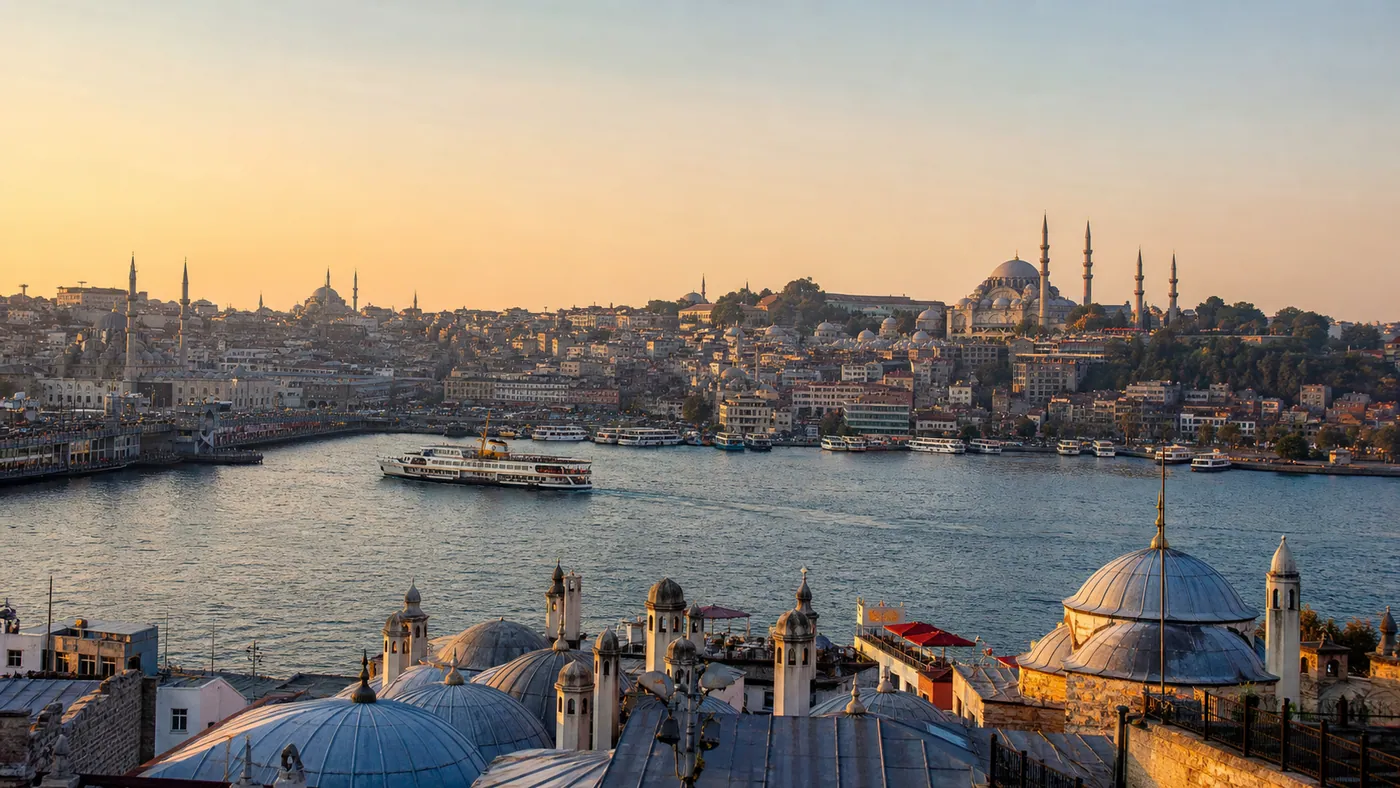
10-Day Istanbul Solo Itinerary 2026: Topkapi Palace Museum, Hagia Sophia Grand Mosque, Basilica Cistern, Grand Bazaar
Istanbul designed for independent travelers who want legible tram, ferry, Metro, funicular, walking, or taxi links, rewarding historic districts, culture, markets, waterfronts, and flexible pauses. The route moves through distinct neighborhoods without relying on reservation-heavy evenings.
Arrive at the Bab-ı Hümayun gate early to purchase your tickets, prioritizing the Harem entrance before tour groups crowd the narrow tiled corridors.
The entire route is pedestrian-friendly, connecting the palaces and cisterns via paved plazas and park paths on the Sultanahmet ridge.
09:00Cankurtaran, 34122 Fatih/Istanbul
Topkapi Palace Museum
Perched on the Seraglio Point where the Bosphorus meets the Golden Horn, this sprawling palace complex served as the administrative nerve center of the Ottoman Empire. Walking through the imperial gates, you will find a series of quiet courtyards shaded by centuries-old plane trees and lined with pavilions clad in brilliant Iznik tiles. The Harem section stands out for its complex layout and stunning gold-leaf calligraphy, revealing the private lives of the imperial court. Taking a solitary stroll through these chambers allows you to appreciate the architectural transition from defensive fortress to elegant palatial estate.
Tip: Walk directly to the third courtyard first to view the treasury relics, then loop back to the Harem when the early morning light hits the tiled walls of the Eunuchs' Courtyard.
Next move: A 5-minute flat walk through the outer palace wall leads directly to Gulhane Park.
This architectural marvel has dominated the Istanbul skyline for nearly fifteen hundred years, shifting from a Byzantine cathedral to an Ottoman mosque. As you step under the colossal dome, the vast scale of the space and the warm glow of the chandeliers create an immediate sense of wonder. The interior displays a unique historical dialogue, where golden Christian mosaics survive alongside monumental Arabic calligraphy roundels. It is a space that rewards quiet observation, allowing you to trace the architectural marks left by centuries of empires.
Tip: Wear slip-on shoes since you must remove footwear at the entrance, and bring a small tote bag to carry them so you do not have to leave them on the open shelves.
Next move: Walk south for 2 minutes across the park plaza to reach the Sultan Ahmed Mosque entrance.
Descending into this underground water reservoir reveals a dramatic engineering feat constructed during the reign of Emperor Justinian. Known locally as the Sunken Palace, the chamber is supported by over three hundred classical columns rising from the shallow, reflective water. Subtle lighting shifts slowly across the brick arches, casting long shadows and creating a mysterious atmosphere. A walk along the raised metal walkways brings you face-to-face with ancient sculptures and modern art installations that interact with the damp, cool air.
Tip: Look for the teardrop-carved Crying Column, which remains wet and is said to represent the hundreds of slaves who died during the cistern's construction.
Next move: A 1-minute walk to the Sultanahmet Tram T1 station for easy transit options.
If shopkeepers seem persistent, a polite but firm Turkish 'teşekkürler' (thank you) with a hand over your heart allows you to browse without pressure.
Connect these districts by walking downhill through the historic markets and crossing the Galata Bridge on foot, using the T1 tram line for quick returns.
Operating since the reign of Sultan Mehmed II, this massive market complex features dozens of covered streets and thousands of active merchants. The vaulted brick ceilings are painted with intricate floral motifs, sheltering shops selling everything from woven carpets to fine copperware. Exploring without a fixed itinerary allows you to stumble upon hidden courtyards, known as hans, where artisans still work. The energetic call of sellers and the warm aroma of brass polish create an immersive journey into traditional trade culture.
Tip: Search for Zincirli Han, a beautiful green-painted courtyard inside the bazaar, to find a quiet space for a cup of tea away from the main corridors.
Next move: Walk downhill northwards for 15 minutes along Mahmutpasa Hill to reach the Spice Bazaar.
This seventeenth-century covered market, also known as the Egyptian Bazaar, is a sensory hub filled with spices, dried fruits, and herbal remedies. The L-shaped corridors are packed with displays of sumac, saffron, and custom tea blends, creating a dense fragrance that defines the district. Outside, the Eminönü waterfront is alive with the movement of ferries, street vendors, and small boats. Watching the maritime traffic cross the Golden Horn offers an authentic view of the city's daily rhythm.
Tip: Walk up the small stone staircase inside the Western gate of the bazaar to find Pandeli, a historic turquoise-tiled restaurant with excellent traditional lunch options.
Next move: Walk across the lower deck of Galata Bridge to reach the Karakoy neighborhood.
This historic harbor district has transformed into a vibrant cultural hub where old maritime warehouses stand alongside modern coffee shops and art spaces. The cobblestone streets are filled with independent design studios, local galleries, and outdoor cafes. Walking here in the evening offers a relaxed contrast to the ancient peninsula. The creative energy and street art make it an inviting area for solo dining and casual wandering.
Tip: Locate the historic French Passage (Fransız Geçidi), a neoclassical arcade that houses quiet design shops and cozy cafes perfect for reading.
Next move: A 3-minute walk to Karakoy Tram Station or Karakoy Ferry Port.
Spiritual Havens and Creative Lanes along the Golden Horn
7 hr plan
Use the T5 tram line to travel between the stops along the southern shoreline of the Golden Horn, as it is efficient and accepts the Istanbulkart.
Integrate ferry crossings and tram rides with neighborhood walks to easily navigate the shorelines of this historic inlet.
09:00Eyupsultan, 34050 Eyup/Istanbul
Pierre Loti Hill and Eyupsultan Mosque
This historic pilgrimage site sits near the end of the Golden Horn, centered around a sacred mosque courtyard shaded by ancient plane trees. The atmosphere is quiet and respectful, providing a peaceful look at local spiritual life. From the plaza, a brief cable car ride goes up the hillside to a high terrace named after the French writer Pierre Loti. The viewpoint offers a panoramic look at the winding estuary and the quiet neighborhoods along its banks.
Tip: Sit at the historic Piyer Loti Kahvesi on the hill, where you can order Turkish coffee brewed over hot sand while enjoying the view.
Next move: Take the T5 tram line or ferry south along the Golden Horn to Balat.
These historic Greek and Jewish quarters feature steep cobblestone streets lined with colorful wooden houses and small vintage shops. The neighborhood retains a local feel, where laundry hangs between apartments and children play in the alleys. Wandering through Fener reveals the massive red-brick structure of the Greek Orthodox College rising above the roofs. It is an engaging place to explore, offering independent design spaces and antique shops at every turn.
Tip: Walk up the steep Merdivenli Yokuş (Staircase Slope) to see a photogenic row of restored pastel-colored historic houses.
Next move: Walk for 15 minutes east along the waterfront to reach the ferry dock or tram.
Housed in a restored Ottoman anchor foundry and a historic shipyard, this museum showcases the history of industry and transport. The collection includes vintage cars, early airplanes, and steam engines, set against exposed brick walls and iron columns. Walking along the waterfront dock, you will find historic boats and a decommissioned submarine moored in the quiet waters of the Golden Horn. It is a peaceful, fascinating spot that offers a different perspective on the city's history.
Tip: Visit the museum's vintage carriage section, which displays a collection of highly detailed royal carriages from the late Ottoman era.
Next move: Take the ferry or a short taxi back towards Galata or Karakoy.
Housed in a restored nineteenth-century hotel building, this museum offers an intimate look at Orientalist art and historical Anatolian objects. The gallery is famous for hosting 'The Tortoise Trainer' by Osman Hamdi Bey, a central piece of Turkish art history. The higher floors display rotating contemporary art exhibitions, providing a quiet space for art lovers. Walking through the galleries offers a peaceful start to the day before heading down to the waterfront.
Tip: Look for the detailed collection of Ottoman portraits on the second floor, which offers a visual history of diplomatic relations in the empire.
Next move: Walk for 15 minutes down the historic Tunnel funicular to Karakoy Ferry Port.
13:00Caferaga, Kadikoy Balik Pazari, 34710 Kadikoy/Istanbul
Kadikoy Market and Food Walk
A ferry crossing over the Bosphorus brings you to the lively streets of Kadıköy on the Asian side of the city. The neighborhood market is a vibrant hub filled with fish mongers, olive sellers, and spice displays. It is a highly walkable area where locals shop for daily meals, offering an authentic look at the city's food culture. Exploring the market streets allows you to try street foods like lahmacun and stuffed mussels at your own pace.
Tip: Visit Çiya Sofrası in the market to try regional Anatolian dishes that are rarely found in standard Istanbul restaurants.
Next move: Take the historic nostalgic tram or walk south along the shore to Moda.
Heading south from the market leads to the leafy residential neighborhood of Moda, known for its relaxed pace and green parks. The coastal promenade features walking paths along the Marmara Sea, where locals gather to read and socialize. At the end of the point, the historic tea garden sits under ancient trees, offering a view of the water. Sitting here with a simple glass of tea is a peaceful way to watch the sun set over the sea.
Tip: Walk to the historic Moda Pier (Moda İskelesi), a restored architectural landmark that now houses a quiet public library and cafe over the water.
Next move: Walk for 15 minutes back to Kadikoy Ferry Port for the return boat to Europe.
Entering this monumental waterfront palace introduces you to the grand neoclassicism that defined the final century of Ottoman imperial rule. The vast Selamlik chambers showcase enormous European crystal chandeliers, intricate hand-woven carpets, and gilded ceilings that reflect a dramatic shift toward Western aesthetics. Solo travelers can follow the guided walking route through both the administrative halls and the private Harem quarters, learning about the complex courtly life of the sultans. Outside, the manicured gardens run right up to the ornate iron gates facing the Bosphorus, where you can watch ferry boats glide past.
Tip: Walk over to the glass-walled palace painting museum located in the outer gardens to see a curated collection of late Ottoman landscapes without the crowds.
Next move: T1 Tram to Kabatas terminal followed by a flat, five-minute walk along the coastal avenue.
Just north of the palace grounds lies Besiktas, a bustling neighborhood defined by its university crowds, central fish market, and labyrinth of narrow shopping streets. Solo travelers will immediately feel the welcoming, local atmosphere of Sinanpasa, where the street layout encourages you to wander aimlessly rather than follow a strict map. You will find small design shops, secondhand bookstores, and countless coffee spots where students and residents gather. The open-air fish market sits at the center of the action, covered by a striking modern steel canopy that echoes the neighborhood's progressive vibe.
Tip: Head to the pedestrianized lanes just behind the Barbarossa monument to find local shops roasting their own coffee beans.
Next move: A scenic fifteen-minute walk north along Dolmabahce Avenue directly from the palace gates.
The historic square of Ortakoy sits directly beneath the massive suspension bridge, offering a dramatic visual pairing of a nineteenth-century baroque mosque and modern engineering. As evening approaches, the stone piers fill with locals enjoying the cool breeze and watching cargo ships navigate the narrow Bosphorus strait. The surrounding cobblestone lanes host a small night market where independent crafters sell glassware, ceramics, and handmade leather goods. The atmosphere is casual and safe for solo wanderers, with the illuminated mosque facade creating a beautiful backdrop for an evening walk.
Tip: Grab a seat on the stone steps near the mosque's outer walls to enjoy your food while watching the local fishing boats return to the harbor.
Next move: Hop on public bus 22 or 25E from Besiktas square directly to the Ortakoy stop, or take a short taxi.
Tucked into a quiet valley on the Asian shore, Kuzguncuk is a historic neighborhood that feels like a peaceful coastal village. The main street, Icadiye Avenue, is lined with towering plane trees and beautifully preserved nineteenth-century wooden houses painted in soft pastel shades. This community has long been celebrated for its religious diversity, with historic synagogues, Greek Orthodox churches, and mosques standing close together. Solo travelers will appreciate the quiet pace here, which is perfect for browsing small art galleries, reading in independent cafes, or watching neighborhood cats nap on stone doorsteps.
Tip: Walk slightly uphill to the community vegetable garden, Kuzguncuk Bostani, to sit under the fruit trees with local residents.
Next move: Take a scenic public ferry from Eminonu or Besiktas to Uskudar, then walk fifteen minutes north along the shore.
Located directly beneath the Bosphorus Bridge, this elegant mid-nineteenth-century palace was built as a summer retreat and guesthouse for visiting foreign dignitaries. The interior features a grand reception hall with a large marble basin and fountain, designed to cool the air and create a relaxing acoustic environment. The rooms are decorated with beautiful French crystal, Bohemian chandeliers, and durable Egyptian straw matting on the floors. The surrounding gardens offer quiet pathways lined with magnolia trees and stone pavilions, providing a peaceful contrast to the massive steel bridge soaring overhead.
Tip: Take the pedestrian tunnel running underneath the palace road to view the historic brickwork of the old carriage path.
Next move: Take public bus 15 or 15T from Kuzguncuk north along the coast for a fast five-minute ride.
The broad stone promenade of Salacak offers a classic view of the Maiden's Tower sitting on its tiny islet in the Bosphorus. As evening approaches, this waterfront becomes a popular gathering spot, with steps lined with cushions where you can sit and enjoy a glass of tea. The view extends across the water to the domes and minarets of the historic peninsula, creating a dramatic silhouette against the evening sky. It is a very social yet peaceful setting, perfect for solo travelers to relax and observe the city's evening routine.
Tip: Walk a short distance south along the path toward Harem to find quieter spots on the rocks away from the main tea-sellers.
Next move: Take public bus 15 or 15T south from Beylerbeyi Palace directly back to Uskudar waterfront.
Housed in the sixteenth-century palace of Ibrahim Pasha, this museum houses an extraordinary collection of carpets, calligraphy, and metalwork. The galleries are organized chronologically, showing the evolution of Islamic art from the early caliphates to the late Ottoman period. Solo travelers can enjoy a very quiet atmosphere here, away from the busier historic sites nearby. The central courtyard offers a beautiful, framing view of the Hagia Sophia domes, making it a perfect spot to sit and reflect on the morning's discoveries.
Tip: Head to the far corner of the palace's upper terrace to take photos of the Sultanahmet square without any tourist crowds in your frame.
Next move: T1 Tram to Sultanahmet station, followed by a brief walk across the historic Hippodrome square.
This fifth-century Byzantine reservoir is a beautifully restored underground chamber that offers a peaceful look at ancient water engineering. The roof is supported by thirty-two marble columns topped with Corinthian capitals, rising from a shallow floor of water that reflects the soft, colored lighting. The space is much quieter than the neighboring Basilica Cistern, allowing solo travelers to appreciate the acoustics and architecture in relative peace. The visit includes an hourly light show that uses modern projection mapping to project the history of the city's water systems onto the ancient brick vaults.
Tip: Stand near the center of the glass bridge during the light show to experience the projections wrapping completely around the columns.
Next move: A flat, five-minute walk west from the Turkish and Islamic Arts Museum along Peykhane Street.
This converted historic beer factory in the Sisli district is now a vibrant cultural hub that hosts art galleries, concert venues, and local bistros. The central brick courtyard serves as a public gathering space where you can enjoy dinner, listen to live music, or browse independent design studios. Solo travelers will find the social atmosphere very open and friendly, making it an easy place to relax at the end of the day. The complex represents the modern, creative lifestyle of Istanbul's young professionals, offering a contrast to the historic peninsula.
Tip: The Ara Güler Museum is completely free to enter and has a rotating selection of vintage prints showing historic harbor life.
Next move: Take the T1 tram from Cemberlitas to Laleli-Universite, walk to Vezneciler, take Metro M2 to Osmanbey, then walk ten minutes.
Cukurcuma's antique shops are excellent for unique souvenirs, but be prepared to bargain gently over a glass of tea. Remember that many shops close on Sundays, making weekdays ideal for this walk.
This route is entirely walkable, though it features steep cobblestone hills typical of the Beyoglu district. Comfortable walking shoes are essential, and you can easily take the historic T2 tram or the M2 metro from Sishane if your legs get tired.
09:00Cukurcuma, Beyoglu, Istanbul
Cukurcuma Antique Hunting Walk
The historic neighborhood of Cukurcuma is the center of the city's antique trade, with narrow streets lined with old apartment buildings and treasure-filled shops. Walking through these alleys introduces you to a vast collection of vintage items, ranging from Ottoman calligraphy and old maps to mid-century furniture and retro glassware. Solo travelers will find the shop owners very welcoming, often happy to explain the history of their items over a cup of tea. It is a highly sensory area that feels like an open-air museum of daily life from past generations.
Tip: Walk down the smaller side alleys near Faik Pasa Street to find the small workshops where craftsmen restore vintage wooden furniture.
Next move: M2 Metro (Sishane Station) or T1 Tram (Tophane Station)
Located on the hills overlooking the Bosphorus, Cihangir is a leafy neighborhood known for its artistic community, colorful apartments, and resident street cats. The neighborhood's streets are lined with independent coffee shops, vintage boutiques, and bakeries where local writers and artists gather. Solo travelers will find the atmosphere very relaxed and safe, making it a perfect spot to sit outside, read a book, and watch the daily life of the neighborhood unfold. The green park spaces offer sudden, beautiful views of the water between the historic buildings.
Tip: Grab a seat near the window at one of the cafes on Akarsu Street for the ultimate people-watching experience and a chance to meet the friendly neighborhood cats.
Next move: F1 Funicular (Taksim Station) or T1 Tram (Findikli Station)
As twilight falls, the area surrounding the historic Galata Tower transforms into a vibrant culinary hub. The narrow, cobblestone corridors are lined with cozy meze taverns, or meyhanes, where small plates of olive-oil-drenched seasonal vegetables, cured fish, and warm savory pastries are served alongside glasses of anise-flavored raki. For a solo traveler, the lively yet relaxed atmosphere is highly welcoming, offering a perfect opportunity to dine at a small outdoor table or right at the bar. Musicians playing traditional Turkish instruments like the kanun or oud often wander through the streets, adding a beautiful soundtrack to your evening. The focus is on slow dining and conversation, allowing you to sample a rich variety of flavors while absorbing the historic charm of one of Istanbul's oldest neighborhoods.
Tip: Ask the waiter for the seasonal meze of the day, as many taverns prepare limited-edition dishes based on the morning's market produce.
Next move: M2 Metro (Sishane Station) or Historic Tunnel Funicular
Sophisticated Valleys and Contemporary Culture of Nisantasi
7 hr plan
The Mehter military band performance at the Harbiye Military Museum typically begins at 3:00 PM, so plan your afternoon museum entry accordingly to secure a good seat in the main hall.
Use the TF1 cable car to cross the valley between Macka and Taskisla seamlessly, avoiding a long climb. The rest of the day is easily covered on foot through the flat, paved streets of Nisantasi and Harbiye.
09:00Harbiye, Sisli, Istanbul
Macka Democracy Park and Cable Car
Macka Park is a large, forested valley that serves as a quiet green sanctuary in the middle of the busy Sisli district. Winding paths lead past wooden bridges, quiet lawns, and shaded benches where locals gather to relax and exercise. The highlight of the park is the short ride on the aerial cable car, which crosses the valley from Macka to Taskisla, offering panoramic views of the green canopy, the surrounding university buildings, and the distant Bosphorus. It is a refreshing way to start your day before entering the shopping streets nearby.
Tip: Try to ride the cable car in the mid-morning when the sunlight filters through the trees, creating beautiful conditions for photos of the valley.
Next move: TF1 Cable Car (Macka Station) or M2 Metro (Osmanbey Station)
Nisantasi is the fashion and design capital of Istanbul, where historic apartment buildings house contemporary art galleries, local designer shops, and upscale cafes. Walking along the tree-lined streets of Tesvikiye and Abdi Ipekci reveals a highly sophisticated side of the city. The local galleries show works by modern Turkish and international artists, offering free entry and a quiet space to explore. It is a very pleasant area for solo travelers to walk, with wide sidewalks, elegant shop windows, and plenty of options for a light lunch.
Tip: Pick up a printed art map at one of the main galleries on Tesvikiye Street to find the smaller exhibitions located on the upper floors of historic apartments.
Located in the historic Ottoman military academy building where Ataturk once studied, this museum houses a vast collection of historic weapons, armor, and tents. The main reason to visit is the daily performance by the Mehter band, the oldest military band in the world. Dressed in colorful, elaborate traditional uniforms, the musicians perform rhythmic marches using traditional drums and wind instruments, creating a powerful acoustic experience in the grand hall. It is a highly immersive cultural experience that brings the history of the Ottoman state to life.
Tip: Enter the performance hall early to secure a seat near the center aisle, where the band marches out in full ceremonial order.
Next move: M2 Metro (Osmanbey Station) or local central buses
Rumeli Hisari features extremely steep and uneven stone steps without handrails, so watch your step carefully and wear slip-resistant shoes. The afternoon coastal walk is completely flat and paved.
Take the M6 metro line to Bogazici Universitesi and walk down the hill to Rumeli Hisari, or catch a Bosphorus-bound bus from Kabatas. Once at the fortress, the entire route south to Bebek and Arnavutkoy is a beautiful, flat coastal walk.
09:00Rumelihisari, Sariyer, Istanbul
Rumeli Hisari Fortress Walk
Built in 1452 by Mehmed II to control the Bosphorus before the siege of Constantinople, Rumeli Hisari is a massive stone fortress that sits at the narrowest point of the strait. Solo travelers can walk along the stone pathways, climb the grassy hills, and view the three large towers that dominate the shoreline. The elevated positions offer exceptional views of the Bosphorus and the suspension bridge nearby. The grounds are quiet and filled with wild plants, offering a historic space to explore.
Tip: Wear shoes with good grip, as the ancient stone steps inside the fortress are uneven, worn smooth, and do not have handrails.
Next move: M6 Metro (Bogazici Universitesi Station) or coastal buses
Heading south from the fortress, the paved Bosphorus promenade leads you to Bebek, one of the city's most affluent waterfront neighborhoods. The wide, flat path runs directly along the water, offering views of yachts, historic wooden embassy buildings, and manicured green parks. Solo travelers will find the walk very relaxing, with benches placed along the shoreline where you can sit and watch the constant shipping traffic. The path leads into the center of Bebek, which is known for its excellent cafes, bakeries, and ice cream shops.
Tip: The benches near the historic Bebek Mosque offer a quiet, shaded place to rest away from the busier sections of the main park.
Next move: M6 Metro (Bebek Station) or coastal buses
Continuing south along the coast brings you to Arnavutkoy, a historic neighborhood famous for its beautifully preserved, multi-story wooden mansions lining the water. As the evening light turns soft, these colorful houses offer a highly picturesque view of traditional Bosphorus architecture. Wandering into the narrow streets behind the main road reveals a quiet, village-like atmosphere with small seafood restaurants and local bars. It is a very friendly and safe neighborhood for a solo walk and a quiet dinner.
Tip: Walk one street back from the busy coastal highway to find the oldest and most detailed wooden facades in a quiet residential setting.
Next move: Coastal passenger ferries or local Bosphorus buses