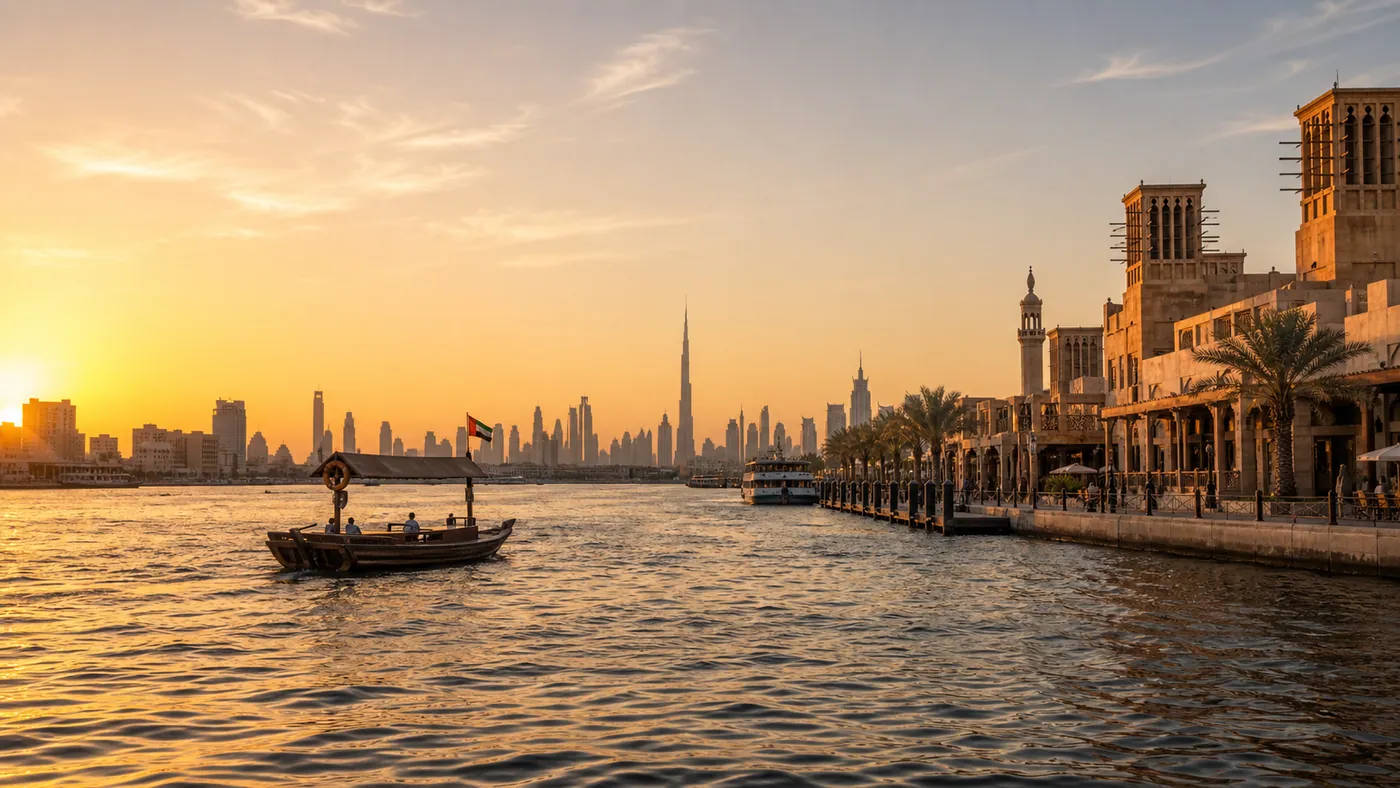
14-Day Dubai Solo Itinerary 2026: Al Fahidi Historical Neighbourhood, Al Shindagha Museum, Dubai Gold Souk & Spice Souk, Burj Park & Downtown Waterfront
Dubai designed for independent travelers who want legible Metro, abra, tram, walking, or taxi links, rewarding heritage districts, culture, waterfronts, and flexible pauses. The route moves through distinct neighborhoods without relying on reservation-heavy evenings.
Purchase a silver Nol card at the metro station ticket office to seamlessly pay for both the Green Line trains and the public wooden abras crossing the creek.
This route relies on walking through the pedestrian-only lanes of the historical quarters, taking a brief creek crossing via public wooden boat, and utilizing the Green Line Metro for longer hops.
09:00Bur Dubai, Dubai
Al Fahidi Historical Neighbourhood
Tucked away in the heart of Bur Dubai, this quiet enclave features winding gypsum and coral-stone lanes that date back to the late nineteenth century. Wandering here alone allows you to appreciate the ingenious wind towers designed to funnel cool air down into the shaded family courtyards. Small independent art spaces and quiet craft shops occupy the restored buildings, offering a peaceful look at local creative talent. It is an ideal spot to begin your journey before the midday sun warms the stone walls.
Tip: Look for the small, unmarked entrance to the courtyard coffee museum to see an extensive collection of historical brewing equipment from across the region.
Situated along the historical banks of the creek, this expansive museum complex is spread across multiple restored residential pavilions. It brings the history of early trade, maritime traditions, and perfume-making to life through high-definition presentations and archival recordings. The exhibits offer a self-guided experience that lets you understand how a small fishing village grew into a prominent merchant port. It is an engaging place to spend the warmest hours of the day in air-conditioned comfort.
Tip: Take time to sit through the surround-sound cinematic experience in the main pavilion, which depicts the formation of the creek.
Next move: Al Shindagha Metro Station (Green Line)
When the sun goes down, crossing the water to the Deira side of the creek brings you to these famous covered markets. The spice market greets you with mounds of colorful cardamom, frankincense, and dried hibiscus, while the neighboring gold market shines with intricate jewelry. Walking these lively corridors exposes you to the friendly banter of local vendors and the energetic pace of traditional trade. It is a sensory journey that connects you directly to the merchant past of the region.
Tip: For high-quality saffron, look for vendors who store their stock in sealed glass jars rather than open baskets to preserve the intense aroma.
Pre-book a timed ticket for the Burj Khalifa observation deck that aligns with the late afternoon to see the city lights turn on.
The downtown area is connected by the Red Line Metro and a network of air-conditioned walkways, making it easy to navigate on foot between the main sights.
09:00Downtown Dubai, Dubai
Burj Park & Downtown Waterfront
This green island park offers a quiet escape in the middle of the busy downtown district, surrounded by calm waters and skyscrapers. Strolling along the grassy lawns gives you a chance to admire the sheer scale of the Burj Khalifa from its base. The morning hours are peaceful, with only a few walkers sharing the wide promenades before the shops open. It is a great place to sit on a bench and watch the sun reflect off the glass buildings.
Tip: Walk toward the edge of the canal near the opera house to find the best angle to photograph the entire height of the Burj Khalifa.
Next move: Burj Khalifa / Dubai Mall Metro Station (Red Line)
Located inside the massive Dubai Mall, this attraction lets you walk through a glass tunnel beneath thousands of marine animals. You will see sharks, rays, and schools of colorful fish swimming right above you. Upstairs, the Underwater Zoo features interactive exhibits highlighting different water environments, from rainforests to rocky shores. It is a cool, relaxing place to spend the hot afternoon hours.
Tip: Check the schedule near the entrance to watch the handlers feed the rays in the main tank from the underwater tunnel.
Next move: Burj Khalifa / Dubai Mall Metro Station (Red Line)
Take a fast elevator up to the observation deck of the world's tallest tower to watch the sunset over the city. From high above, you can see the highway lanes glow and the desert meet the Gulf. After coming down, find a spot along the lake to watch the musical fountain show as water jets shoot high into the night sky. The combination of music, light, and water makes for an unforgettable evening.
Tip: Head to the outdoor viewing platform on the deck early to secure a spot along the glass panels before sunset.
Next move: Burj Khalifa / Dubai Mall Metro Station (Red Line)
Taxis are the most efficient way to travel between the coast and the industrial art district of Al Quoz.
This day is best navigated using registered taxis or rideshare apps to connect the distinct neighborhoods along the coast and inland.
09:00Jumeirah 1, Dubai
Etihad Museum
This striking museum is located in Jumeirah, on the historic spot where the nation's constitution was signed. The building's white roof is designed to look like a piece of paper, representing the document that united the emirates. Inside, the modern underground galleries house personal items, historical documents, and interactive displays. It is a quiet place to learn about the country's founding years.
Tip: Take a few minutes to explore the historic Union House next to the museum, where the treaty was officially signed.
Located in the industrial district of Al Quoz, this creative hub is made up of repurposed warehouses. It is home to contemporary art galleries, design studios, and independent cafes that highlight the city's modern art scene. Walking between the warehouses lets you discover works by regional and international artists in a relaxed setting. It is a great spot to wander and find local craft shops.
Tip: Stop by the local chocolate factory warehouse to see how craft chocolate is made from bean to bar and sample the flavors.
This modern market is designed to look like a traditional Arabian fort, with sandstone wind towers and winding canals. You can walk through the indoor passages lined with shops selling spices, lanterns, and textiles. Outside, the paths run along the water, offering views of the Burj Al Arab hotel. It is a welcoming place to spend the evening as the lights reflect on the canals.
Tip: Follow the signs to the outdoor amphitheater for a clear, unobstructed photo of the Burj Al Arab at sunset.
Use the monorail to travel along the trunk of the Palm, which connects easily to the tram network.
This day uses a mix of the Monorail, the public Tram, and the Red Line Metro to connect the coastal attractions.
09:00The Palm Tower, Palm Jumeirah
The View at The Palm
Go up to the fifty-second floor of the Palm Tower to get a clear view of the palm-shaped island and the coast. The high observation deck offers a complete view of the islands, the sea, and the skyline. An interactive exhibit at the entrance details the engineering work that went into building the artificial island. The morning light provides excellent visibility for photos.
Tip: Visit the museum gallery first to watch the short video showing the sand dredging process used to create the island.
Escape the desert heat by entering this indoor ski resort located inside the Mall of the Emirates. The facility features ski slopes, a snow park, and a chairlift, all kept at a sub-zero temperature. You can slide down the hills, walk through the snow cave, or watch the resident penguins. It is a unique place to cool off during the hot afternoon hours.
Tip: Bring a warm pair of gloves, as they are not always included in the standard gear package.
Next move: Mall of the Emirates Metro Station (Red Line)
Spend your evening walking along the paved promenade that loops around the canal of Dubai Marina. The paths are lined with tall residential towers and yachts, creating a lively coastal atmosphere. It is a safe and active place for a walk, with street performers and outdoor cafes along the way. You can enjoy views of the twisting Cayan Tower and the lights of the marina.
Tip: Walk toward the bridge near the marina mall to get a great photo of the yachts with the towers lined up behind them.
Load at least twenty-five dirhams onto a silver Nol card at your starting station. This lets you tap directly onto the Metro lines and municipal buses throughout the day, skipping the long queues at ticket machines during peak commuting hours.
Start by walking through the historic district to Sharaf DG Metro Station to catch the Green Line. You'll switch to the Red Line at Burjuman to reach the financial center, and later take a licensed taxi or ride-share vehicle back to the Al Seef waterfront promenade as the daytime heat begins to lift.
Housed in a reconstructed heritage home, this cozy space offers a fascinating look at how coffee has shaped social customs over the centuries. Solo visitors will appreciate the calm atmosphere, which provides a peaceful starting point for the morning. You can examine vintage brewing equipment, historical roasting pans, and ancient coffee grinders from various coffee-growing regions around the world.
Tip: Head to the back of the ground floor where you can observe a live preparation of traditional Arabic coffee, or go upstairs to sample a spiced brew prepared using historical methods.
This stainless-steel architectural marvel stands as a bold symbol of modern engineering, with its exterior displaying poetry written by Dubai's ruler. The interior functions as an active laboratory of ideas, encouraging solo travelers to reflect on the role of technology in solving global issues. Its expansive, futuristic layout offers a highly immersive environment that feels like stepping onto a spacecraft.
Tip: Make your way to the outdoor viewing platform on the central deck, which places you directly inside the void of the torus with a view of the surrounding skyscrapers.
Next move: Emirates Towers Metro Station (Red Line)
This waterfront development runs parallel to the historic shipping canal, offering a relaxed environment for a sunset stroll. The architecture shifts from modern steel facades to replica sand-plaster wind towers, evoking the atmosphere of a 19th-century merchant port. It provides a peaceful setting for solo travelers to wander without the busy street traffic found in other parts of the city.
Tip: Visit the Starbucks located in the heritage section; its weathered plaster exterior and rustic wooden beams make it one of the most unique coffee shop designs in the region.
Next move: Burjuman Metro Station (Red/Green Lines)
Skyline Perspectives, Sensory Cosmos, and Creekside Gardens
7 hr plan
Download the official municipal app or use the website to purchase your Dubai Frame ticket before you arrive. This lets you skip the ticketing office line and head directly to the elevator queue.
Take the Metro to Max Station to reach Zabeel Park in the morning. When heading to WAFI Mall, hail a taxi for a quick, direct trip to save time. In the evening, a short walk or taxi ride will take you to Creek Park.
09:00Zabeel Park, Al Kifaf
Dubai Frame
This impressive monument divides the city’s skyline, standing as a physical border between the historic trading ports and the contemporary glass skyscrapers. Walking along the top platform gives solo visitors a clear spatial understanding of how Dubai expanded over the decades. The structure’s design is highlighted by intricate golden patterns that reflect the bright desert sun.
Tip: Arrive right at opening time to experience the glass sky walk before the crowds gather, allowing you to walk across the transparent panels at your own pace.
Located inside the pyramid-themed WAFI Mall, this indoor attraction uses projection mapping and surround sound to create an immersive experience. Solo travelers can move through themed rooms designed to feel like alien worlds, where projections respond dynamically to touch and movement. It provides a peaceful, dark environment that offers a complete break from the bright desert sky.
Tip: Spend extra time in the room named 'Flora', where you can sit on the soft central mounds and watch the bioluminescent digital trees react to your footsteps.
Next move: Dubai Healthcare City Metro Station (Green Line)
Stretching along the historic waterway, this park is a relaxing green oasis that is popular with local residents. Solo travelers can enjoy a quiet evening walk along the paved waterfront promenade while watching traditional shipping vessels pass by. The mature trees and open lawns offer a tranquil, natural environment away from the city's high-rise architecture.
Tip: Use the entrance near Gate 2 for the quickest access to the quietest stretches of the waterfront walking paths.
Next move: Dubai Healthcare City Metro Station (Green Line)
Ancient Civilizations, Modern Avenues, and Jumeirah Sunsets
7 hr plan
Keep a small travel towel and a wet bag in your backpack, as the public beaches in Jumeirah are very clean and perfect for wading during the sunset.
Ride the Metro to Business Bay Station and take a short taxi to the ruins. For the rest of the day, using taxi services or ride-hailing apps is the most efficient way to connect to City Walk and Sunset Beach.
09:00Jumeirah 2, Jumeirah
Jumeirah Archaeological Site
Situated inside a peaceful Jumeirah neighborhood, this heritage site protects the remains of an 8th-century settlement. Independent visitors can view the stone foundations of historic buildings that once served as trading outposts. It offers a rare, quiet glance at the pre-modern history of the Arabian Peninsula, surrounded by mature trees and native birdlife.
Tip: Look closely at the stone walls of the main house to see the ancient gypsum plastering techniques that were used to insulate the rooms against the summer heat.
This design-led district features wide pedestrian streets, outdoor cafes, and creative public installations. Solo travelers can explore the tree-lined avenues and browse unique design concepts without the crowded feel of typical shopping centers. The area is highly pedestrian-friendly, with plenty of public spaces that encourage you to sit and watch the city move by.
Tip: Walk down the side alleys of the central square to view the vibrant wall art created by prominent international muralists.
Next move: City Walk taxi pickup zone on Al Wasl Road
This public beach offers a scenic spot to watch the sun go down, with the iconic sail-shaped hotel rising in the distance. Solo visitors can walk along the sand or find a spot on the boardwalk to watch the local surfers and paddleboarders. The onshore breeze provides a refreshing change from the city’s inland heat as evening approaches.
Tip: Walk to the southern end of the beach for the cleanest, most unobstructed angle of the Burj Al Arab against the sunset.
When visiting the mosque, plan for modest dress covering knees and shoulders; if needed, the entry desk provides traditional attire for you to wear during the visit.
Start with a direct taxi or local bus along the Jumeirah coast to the mosque. Use a short taxi ride south for the summer majlis, and complete the final leg with a straightforward 12-minute walk directly to the waterfront docks.
09:00Jumeirah Beach Road, Jumeirah 1
Jumeirah Mosque
Constructed with detailed stone carvings and matching twin minarets, this landmark mosque stands out on the Jumeirah coastal road. As one of the primary houses of worship welcoming non-Muslim guests, it offers an approachable entry point for understanding local religious practices. The main hall features expansive carpets and stained-glass details that filter the morning sun.
Tip: Take a moment to look directly up into the central dome once inside the main prayer hall to appreciate the complex geometric plasterwork and soft blue patterns.
This historic structure, dating to the mid-1950s, highlights the traditional building methods used before modern cooling. Made from local coral stones and gypsum plaster, the summer house features open wooden shutters designed to draw in air currents from the Gulf. The surrounding plot features a date palm garden and a working irrigation system.
Tip: Find the low stone benches near the central water channels, where the palm leaves block the sun and create a noticeably cooler microclimate.
This functional harbor provides an authentic look at the city's fishing trade, away from major malls. A wooden deck runs along the basin, where you can watch crews work on traditional vessels and unload their catch. The location feels grounded, offering a peaceful waterfront walk as the sky changes color at dusk.
Tip: Follow the concrete walkway out toward the breakwater wall for clear, uninterrupted views of the sunset over the Gulf.
Futuristic Architecture, Financial District Art, and Downtown Vistas
7 hr plan
Purchase Museum of the Future entry tickets weeks in advance if you wish to see the indoor exhibits, though visiting the public lobby and viewing the exterior facade requires no booking at all.
Ride the Red Line Metro directly to Emirates Towers Station for the morning, take a brief walk or Metro stop south to Financial Centre Station for the afternoon, and continue on the Red Line to Burj Khalifa / Dubai Mall Station for the evening.
09:00Sheikh Zayed Road, Trade Centre 2
Museum of the Future
Rising along the main highway, this stainless-steel structure is covered in Arabic calligraphy containing quotes about the future. The design features a hollow center that represents the unknown. Inside, the main lobby is open to the public and contains flying aerobes, futuristic capsules, and a coffee bar run by a robotic barista.
Tip: The bridge connecting the Emirates Towers Metro Station directly to the museum offers the best angle for capturing the building's scale without street traffic in the way.
Next move: Emirates Towers Metro Station (Red Line)
13:00The Gate District, Dubai International Financial Centre
DIFC Gate Avenue
This design-led district features a series of interconnected pathways that run through the financial hub of the city. Solo visitors can walk past high-end retail options, local galleries, and quiet indoor pocket gardens. The layout is clean and air-conditioned, offering a calm environment for an afternoon walk.
Tip: Walk up to the outdoor rooftop terrace on the upper level for a view of the nearby skyscrapers framing the historic Gate Building.
Next move: Financial Centre Metro Station (Red Line)
18:00Sheikh Mohammed bin Rashid Boulevard, Downtown Dubai
Burj Park and Downtown Promenade
This green peninsula sits within the downtown lake, offering a clear view of the Burj Khalifa. The park features wide paved walks, green lawns, and public sculptures like the giant wings of Mexico. It is a relaxing spot for solo travelers to watch the evening fountain displays as the city lights up.
Tip: Walk along the pathway toward the Dubai Opera side of the park to find the least crowded viewing spots for the fountain performance.
Next move: Burj Khalifa / Dubai Mall Metro Station (Red Line)
Contemporary Creative Avenues, Courtyard Retreats, and Canal Walks
7 hr plan
Check the Alserkal Avenue online calendar before visiting, as many galleries host free talks, indie film screenings, and community workshops in the evenings.
Take the Red Line Metro to Onpassive Metro Station, then take a short taxi to Alserkal Avenue. Walk or take a brief taxi to the nearby Courtyard, and conclude the day with a taxi ride to the Safa Park canal boarding point for a scenic walk.
09:0017th Street, Al Quoz Industrial Area 1
Alserkal Avenue
Located in the heart of an industrial district, this compound is home to the city's contemporary art scene. Solo travelers can wander between concrete warehouses that host galleries, design studios, and indie cafes. The atmosphere is casual and artistic, providing a look at a different side of the city's culture.
Tip: Stop by the Cinema Akil warehouse to check out the retro design and pick up a cup of hot chai from the indoor tea stand.
This hidden architectural space features a design inspired by traditional Mediterranean and Middle Eastern courtyards. The interior is filled with green climbing plants, fountains, and antique doors. It offers a quiet setting for solo visitors to explore home design shops, a theater, and a small cafe.
Tip: Look for the small local plant shop tucked into the corner of the courtyard, which has a variety of desert flora.
This modern waterway cuts through the city, lined with paved running tracks and architectural pedestrian bridges. As night falls, the bridges are illuminated with changing colors, and a motion-sensing water wall opens for boats. The sea breeze makes it a pleasant and safe spot for a solo walk along the waterfront.
Tip: The waterfall on the Sheikh Zayed Road bridge is motion-controlled and stops automatically when marine vessels pass through.
When taking the Palm Monorail, purchase a single-use ticket directly at the Gateway Station rather than a round-trip to give yourself the flexibility to return via a taxi or a stroll along the boardwalk.
Start the morning with a taxi or bus ride to Kite Beach, then transition to the Palm Monorail via the tram network to reach the island trunk, and conclude the day on foot or via the tram at the JBR promenade.
09:00Jumeirah Beach Road, Umm Suqeim
Kite Beach and Umm Suqeim Waterfront Paths
This breezy Jumeirah beachfront comes alive in the early hours as runners and walkers take to the custom-cushioned seaside track. The open shoreline offers unobstructed views of the Arabian Gulf, framed by the sail-like silhouette of the Burj Al Arab in the distance. Solo travelers can easily find quiet pockets along the sand or grab a fresh juice from the local wooden kiosks that line the boardwalk.
Tip: Keep an eye out for the smart reading kiosks along the path, where you can scan a QR code to download free digital reads for your beach stroll.
Located on the western trunk of Palm Jumeirah, this pedestrian promenade features a wide path lined with hundreds of palm trees. The walkway offers constant views of the Dubai Marina skyline across the water, providing a striking backdrop for an afternoon stroll. The sea breeze helps mitigate the heat, making the outdoor paths walkable even during the warmer parts of the day.
Tip: Many of the hotels along this strip allow public access to their lobby cafes, which are excellent spots to grab an iced drink and sit in air-conditioned comfort.
This lively pedestrian zone in the heart of Jumeirah Beach Residence is bordered by seaside cafes, boutiques, and a wide sandy beach. The promenade hums with energy as evening sets in, attracting street musicians and local shoppers. The stone-paved walkways are wide and well-lit, offering a very safe environment for a solo night stroll.
Tip: Walk to the southern end of the boardwalk near the Sheraton hotel to find a quieter viewing platform that offers great night views of the coastline.
Avant-Garde Design, Expo Legacies, and Island Bridges
7 hr plan
A single day pass for the Dubai Metro is the most economical option for this route, as you will be traveling across multiple transport zones.
The Red Line Metro acts as the central spine for this itinerary, connecting the northeastern design district to the southern Expo hub, followed by a coastal tram and walking route to Bluewaters Island.
09:00Dubai Design District, Ras Al Khor road
Dubai Design District Waterfront
Commonly known as d3, this urban development is the creative heart of the city's fashion and design industries. The open-air plazas are lined with bold architectural details, public art installations, and unique street furniture. Walking through this district in the morning offers a quiet, design-focused experience along the banks of the Dubai Creek.
Tip: Many design galleries in Buildings 7 and 8 have free entry and welcome independent visitors to browse their current installations.
This sprawling development preserves the architectural achievements and sustainable infrastructure of the 2020 World Expo. The pedestrian-only site allows solo visitors to wander past iconic structures like the garden-topped Terra pavilion. Its massive steel dome at Al Wasl Plaza remains a centerpiece of modern engineering.
Tip: Skip the shuttle and rent an electric scooter near the metro station entrance to explore the outer pavilions without getting tired.
This modern island district sits just off the coast of the JBR marina, connected by a dedicated pedestrian bridge. As dusk falls, the walkways light up, offering views of the marina skyscrapers reflecting on the water. The island features low-rise residential design, dining terraces, and a wooden boardwalk.
Tip: The pedestrian bridge itself has built-in viewing platforms with seating, which are less crowded than the main island boardwalk.
Suburban Botanicals, Ghaf Forests, and International Dining
7 hr plan
Taxis are the most efficient way to connect these suburban sites, so download the Careem app to easily hail licensed RTA cabs throughout the day.
This route explores the green eastern suburbs of the city. Since these destinations are outside the rail network, a combination of metro and short taxi rides is recommended.
09:00Al Khawaneej Road, Al Khawaneej
Quranic Park
Located in the quiet suburban district of Al Khawaneej, this park offers a unique educational focus on regional plant species. Paved paths wind through orchards of olive, fig, and pomegranate trees, while modern solar-powered trees provide shade and phone charging stations. The site is designed for walking and self-paced discovery.
Tip: Visit the Glass House first in the morning when the light is best for photography and the indoor temperature is coolest.
This expansive national park preserves a natural forest of ghaf trees, the national tree of the UAE. Paved walking tracks and sandy trails wind through the woodland, offering a rugged nature experience close to the city. The park's canopy provides natural shelter and is home to local birds and wildlife.
Tip: Walk near the bird-watching areas near the center of the park for a chance to spot wild owls resting in the tree branches.
This large residential development is organized into country-themed architectural clusters and is famous for its diverse, budget-friendly culinary scene. Walking through the pedestrian walkways of the China or Persia clusters reveals dozens of small, family-owned restaurants. The dining culture here is authentic and focused on traditional recipes.
Tip: Look for restaurants with busy indoor seating, as these are usually the most authentic and popular with local residents from those countries.
Secluded Beaches, Pond Parks, and Community Sunsets
7 hr plan
Al Mamzar Beach Park charges a nominal entry fee via a Nol public transit card, so ensure your card has a balance before you arrive at the gate.
This route spans from the northern coastal border to the central residential suburbs, using the Green and Red Metro Lines as the primary connection before taking short taxi rides.
09:00Al Mamzar Al Khaleej Street, Al Mamzar
Al Mamzar Beach Park
Occupying a peninsula on the border with Sharjah, this park features five separate beach coves and expansive lawns. Paved pathways are lined with coconut palms, offering a peaceful coastal escape far from the high-rise towers of the marina. It is a quiet spot favored by residents for morning walks and swimming.
Tip: Beach number 3 is typically the quietest and offers excellent views of the open gulf and the Sharjah skyline.
This neighborhood park is built around a large central pond and serves as a quiet green space for the Al Barsha community. A cushioned jogging track circles the water, popular with local walkers during the cooler parts of the day. The park is tidy, secure, and has plenty of shaded seating areas.
Tip: Step outside the eastern gate of the park to find several boutique coffee shops that are perfect for a quiet iced tea.
This modern park is located in the center of the Dubai Hills residential community and features manicured lawns and walking paths. As the sun sets, the park's wide pathways are lit up, offering views of the Burj Khalifa and the downtown skyline in the distance. It is a safe and quiet space for a final stroll.
Tip: The northern edge of the park has the most open view of the skyline, making it the best spot for night photography.