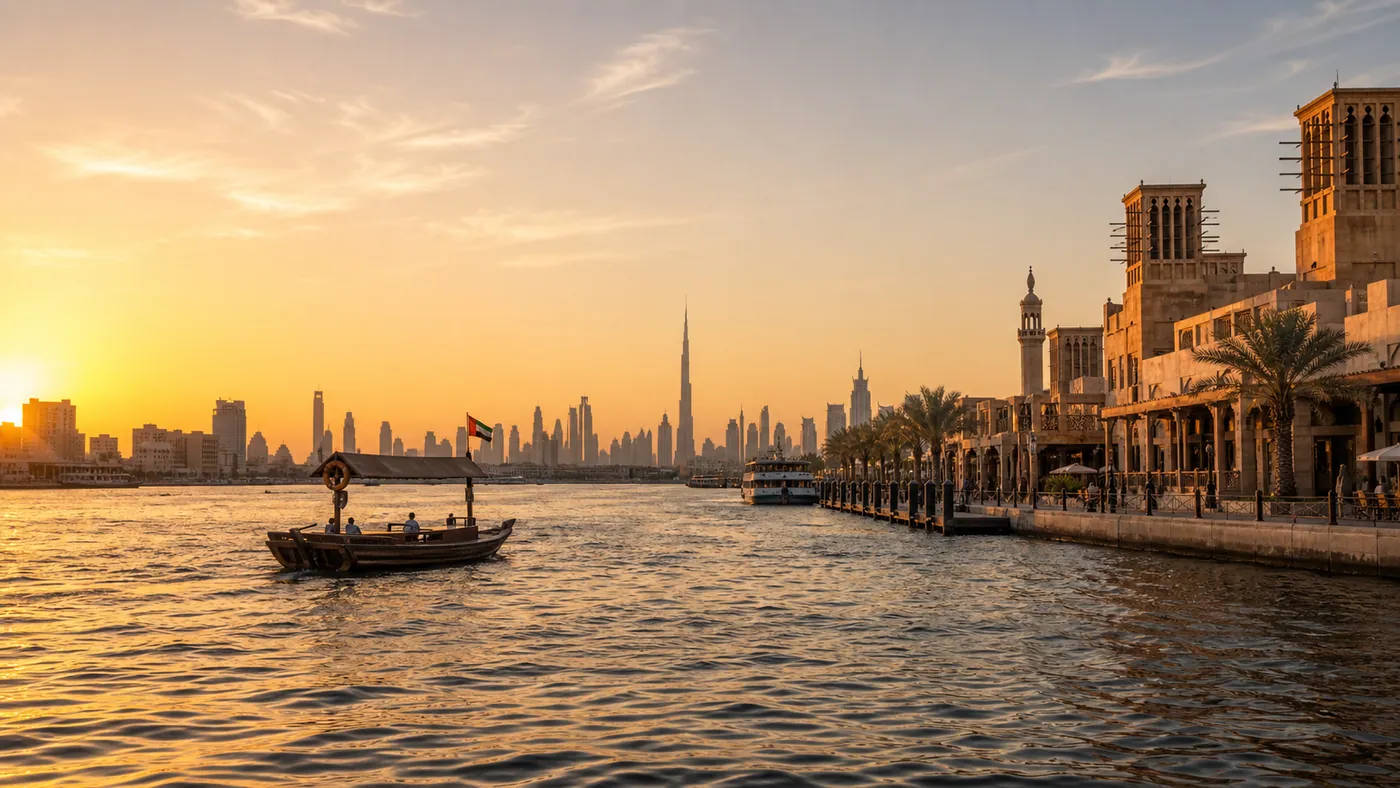
14-Day Dubai Essential Itinerary 2026: Al Fahidi Historical Neighbourhood, Al Shindagha Museum, Dubai Gold Souk, Dubai Frame
Dubai arranged for first-time visitors with Creek heritage, Downtown icons, contemporary architecture, waterfront atmosphere, and coastal context. Each day keeps practical Metro, abra, tram, walking, or short taxi choices and visible planning notes close to the route.
Get a silver Nol card at the Metro ticket kiosk to pay for Metro fares, tram journeys, and the public water buses along the creek.
Walk through the historic quarters of Bur Dubai, take the Green Line Metro for longer gaps, and cross the creek on a wooden abra to reach Deira.
09:00Al Hamriya, Bur Dubai, Dubai, UAE
Al Fahidi Historical Neighbourhood
The historic gypsum and coral wind-tower buildings of Al Fahidi offer a quiet look at the pre-oil trading era of the creek. Walking along these narrow, car-free pedestrian lanes reveals hidden courtyard cafes, calligraphy houses, and heritage museums. The high wind towers, designed by early Persian merchants to channel breezes downwards, stand as brilliant examples of sustainable desert architecture.
Tip: The local Coffee Museum near the main entrance offers a cozy, low-profile exhibition of regional brewing tools alongside fresh Arabic coffee samples.
Situated on the historic banks of the creek, this multi-pavilion museum houses state-of-the-art multimedia displays mapping the city's rise. Visitors can explore the ruling family's former residence, listen to oral histories of old pearling fleets, and learn the science behind perfume creation. The interactive exhibitions tell a compelling story of survival and growth in the desert.
Tip: Spend extra time in the Perfume House to discover how local plants like oud, musk, and rose water are combined to create traditional Emirati scents.
As night falls, cross the historic creek on a wooden ferry to explore the glittering alleys of the Gold Souk. The traditional wooden canopy paths of Deira are filled with hundreds of shops displaying necklaces, earrings, and gold bars. The bustling market showcases the trading heritage that earned the city its nickname as the City of Gold.
Tip: The secondary alleys off the main thoroughfare house smaller, historic shops where jewelry designs are often more traditional and unique.
Next move: Al Ghubaiba Marine Transport Station (Abra crossing) to Deira Old Souk Station
Buy tickets for the Burj Khalifa observation deck in advance to avoid waiting in long queues at the lower level entrance.
Ride the Red Line Metro from Zabeel Park to the central mall station, using air-conditioned sky bridges to navigate the city.
09:00Zabeel Park, Al Kifaf, Dubai, UAE
Dubai Frame
Standing high above Zabeel Park, the massive golden structure of the Dubai Frame provides a visual link between past and present. The top bridge features a glass walkway that turns transparent as you step on it, offering a view of the ground below. From this height, looking north reveals the low-rise historic districts, while looking south presents the skyscrapers of Sheikh Zayed Road.
Tip: The ground-floor exit gallery displays a futuristic, virtual-reality vision of the city in 2050 that is worth exploring.
Escape the midday heat inside the massive, air-conditioned corridors of The Dubai Mall to explore a vast aquatic environment. The main tank is home to over thirty-three thousand marine animals, including sand tiger sharks and rays. Visitors can walk through a curved glass tunnel for a view of sharks swimming overhead.
Tip: The public corridor in the mall allows you to view the massive tank wall for free, but entering the glass tunnel requires a ticket.
Next move: Burj Khalifa / Dubai Mall Metro Station (Red Line)
18:001 Sheikh Mohammed bin Rashid Boulevard, Downtown Dubai, Dubai, UAE
Burj Khalifa & The Dubai Fountain
End your day by ascending the world's tallest skyscraper to watch the city lights illuminate the desert night. The outdoor observation terrace offers views that stretch across the gulf to the sandy horizon. After descending, walk out onto the waterfront promenade to see the choreographed fountains dance to music.
Tip: The outdoor boardwalk near Burj Park is much less crowded than the main mall promenade and offers a cleaner view of the fountains.
Next move: Burj Khalifa / Dubai Mall Metro Station (Red Line)
Buy a monorail ticket at the Palm Gateway station, as this elevated transit line is separate from the standard Nol card network.
Ride the Dubai Tram to the Monorail gateway, using the elevated trains to explore the engineered palm island.
09:00The Beach JBR, Dubai Marina, Dubai, UAE
JBR Beach
The soft white sand and blue waters of the gulf provide a beautiful contrast to the nearby Marina towers. A morning walk along the cushioned track of JBR is a relaxing way to start the day. The beachfront promenade is lined with shops, cafes, and outdoor play areas that create a welcoming environment.
Tip: The pedestrian bridge connecting JBR to Bluewaters Island offers an incredible angle to photograph the Marina towers rising from the water.
Next move: Jumeirah Beach Residence 2 Tram Station
Ascend to the fifty-second floor of the Palm Tower to appreciate the scale of this engineered island. The viewing deck provides an unobstructed, three-hundred-and-sixty-degree panorama of the palm-shaped island and the distant city skyline. Inside, a interactive museum details how the island was planned and constructed.
Tip: The interactive floor projections in the exhibition hall react to your steps, simulating the water currents of the Arabian Gulf.
Next move: Palm Gateway Monorail Station to Nakheel Mall Station
18:00King Salman Bin Abdulaziz Al Saud Street, Al Sufouh 1, Dubai, UAE
Madinat Jumeirah
Spend your evening wandering through the canals and wind towers of Madinat Jumeirah, designed to look like a historic citadel. The indoor souk features boutique stalls selling spices, perfumes, and local crafts under warm lanterns. Outside, wooden water taxis cruise the canals, offering views of the sail-shaped Burj Al Arab nearby.
Tip: The public bridge near the resort entrance offers a classic angle to frame the Burj Al Arab rising above the palm trees.
Next move: Short taxi link from Palm Gateway Monorail Station
Reserve your entry slot for the Museum of the Future weeks in advance, as tickets sell out rapidly.
Ride the Red Line Metro to Emirates Towers, using quick taxi rides to connect to the surrounding art hubs.
09:00Sheikh Zayed Road, Trade Centre 2, Dubai, UAE
The Museum of the Future
The torus-shaped structure, covered in Arabic calligraphy, stands as a symbol of architectural innovation on Sheikh Zayed Road. Inside, the exhibition floors are designed as interactive environments exploring life in the future. The displays focus on space travel, bioengineering, and ecological conservation.
Tip: The viewing platform in the center of the torus offers a unique angle to photograph the inner curves of the steel calligraphy panels.
Next move: Emirates Towers Metro Station (Red Line)
This indoor rainforest biodome is built around a massive, life-supporting artificial tree in the center of City Walk. As you walk down the winding canopy path, you will encounter free-flying birds, sloths, and reptiles in their natural habitats. The educational exhibits emphasize the importance of biodiversity and forest conservation.
Tip: The daily tropical thunderstorm simulation occurs in the afternoon, creating a realistic rain experience in the canopy.
Next move: Burj Khalifa / Dubai Mall Metro Station (Red Line) + Short Taxi
18:0017th Street, Al Quoz Industrial Area 1, Dubai, UAE
Alserkal Avenue
Conclude your day in this industrial district, where repurposed warehouses house leading contemporary art galleries. The avenue is the creative heart of the city, attracting local artists, designers, and curators to its exhibition spaces. Walking between the warehouses reveals custom design concepts, indie cinemas, and printmaking studios.
Tip: Cinema Akil, located inside one of the central warehouses, is the region's first independent cinema, screening global arthouse movies.
Next move: Onpassive Metro Station (Red Line) + Short Taxi
When visiting Jumeirah Mosque, dress respectfully by covering shoulders and knees; women should also bring a headscarf, though traditional attire can be borrowed on-site.
This day utilizes a mix of scenic coastal walks and short taxi connections, keeping travel times minimal along the Jumeirah Beach Road corridor.
09:002nd December Street, Jumeirah 1, Dubai
Etihad Museum
The museum's striking, curved white roof symbolizes the paper on which the nation's constitution was signed in 1971. Stepping inside, visitors explore a beautifully curated subterranean complex dedicated to the history of the seven emirates. High-definition interactive exhibits, historical films, and personal belongings of the founding fathers bring the story of unification to life in an engaging way.
Tip: Make sure to locate the section displaying the personal belongings of the rulers, including early passports and handwritten letters.
Next move: Al Jafiliya Metro Station followed by a short bus ride or taxi.
Constructed from fine white stone in the medieval Fatimid style, this mosque is one of the few in the country open to non-Muslim visitors. The guided tours here are hosted by the Sheikh Mohammed bin Rashid Al Maktoum Centre for Cultural Understanding to foster cross-cultural dialogue. Inside, the cool prayer hall is adorned with intricate geometric patterns, stained glass, and large carpets.
Tip: Women need to cover their heads; if you do not have a scarf, the staff will lend you traditional attire free of charge.
Next move: Short walk from the Etihad Museum along Jumeirah Beach Road.
Also known as Umm Suqeim Beach, this sandy stretch provides a postcard-perfect view of the Burj Al Arab's sail-shaped structure. Travelers flock here in the late afternoon to swim in the warm gulf waters or stroll along the shoreline. As dusk approaches, the sky displays beautiful orange and pink tones against the sea.
Tip: The smart light towers allow for safe night swimming under lifeguard supervision until midnight.
Next move: Brief taxi ride south along the Jumeirah coastline.
Keep loose one-dirham coins handy for the traditional wooden abra ride across the water, which remains the city's most charming and affordable commute.
This route seamlessly connects Deira and Bur Dubai using a combination of a traditional wooden ferry, scenic harbor walks, and short taxi rides.
09:00Al Khaleej Road, Hamriya, Deira, Dubai
Waterfront Market
Replacing the old Deira Fish Souk, this state-of-the-art facility brings traditional trade into a comfortable, modern setting. Visitors can watch the lively auction of fresh catches, ranging from local hammour to kingfish. The adjacent halls are filled with colorful rows of dried fruits, dates, honey, and aromatic spices from across the Middle East.
Tip: Head to the back of the fish hall where seaside restaurants will cook your raw purchase for a small preparation fee.
Next move: Gold Souq Metro Station followed by a short five-minute taxi ride.
Stretching along the Dubai Creek, Al Seef features recreated wind towers, mud-brick facades, and narrow alleys that evoke the city's maritime past. The district is divided into a heritage zone and a contemporary area, offering a scenic walk past traditional sailing vessels. Boutiques here sell local handicrafts, perfumes, and textiles in a relaxed setting.
Tip: Be sure to seek out the unique Starbucks cafe here, which features a rustic mud-plastered facade and vintage interior decor.
Next move: Short traditional abra ride across the Dubai Creek from Deira.
Nestled along the shores of the creek, this expansive park features manicured lawns, botanical gardens, and paved walking paths. As the evening cools down, the park becomes a favorite gathering spot for local families enjoying outdoor activities. The scenic location offers wonderful views of the creek and the distant city skyline.
Tip: The cable car ride takes about 30 minutes and offers beautiful skyline views as the city lights turn on at dusk.
Next move: Brief taxi ride from the Al Seef waterfront promenade.
Floral Landscapes, Winged Wonders, and Global Celebrations
7 hr plan
Purchase combo tickets online for the garden attractions to save time, and arrive at Global Village just before gates open at 4 PM to secure parking.
This day utilizes a short walking connection between the adjacent garden attractions, followed by a direct highway taxi link to the evening festival site.
09:00Al Barsha South 3, Dubailand, Dubai
Dubai Miracle Garden
Spanning over 72,000 square meters, this garden is home to over 150 million blooming flowers arranged in colorful structures. The structures include a life-sized floral replica of an Emirates Airbus A380 covered in petunias and marigolds. Walking through the paved paths under floral arches provides a unique visual experience in the middle of the desert.
Tip: The garden layout changes slightly every season, so check the official website for current themes before you plan your visit.
Next move: Mall of the Emirates Metro Station followed by a direct tourist bus.
Located right next to the Miracle Garden, this indoor sanctuary features ten custom-built domes that maintain a perfect tropical temperature. Over 15,000 butterflies from dozens of species fly freely among lush plants, feeding on plates of fresh fruit. The quiet, relaxing environment is perfect for escaping the afternoon sun.
Tip: Wearing bright clothing, especially solid yellow or orange colors, makes it more likely that butterflies will land on you.
Next move: Short walking path directly from the adjacent Dubai Miracle Garden.
As the sun goes down, this massive open-air venue comes alive with lights and music from over 90 different cultures. Pavilions representing countries from Europe, Asia, and the Americas sell authentic handicrafts, clothing, and spices. Street performers, musicians, and large-scale stage shows provide entertainment throughout the night.
Tip: Tuesdays are designated for families and ladies only, so plan your visit on other days if you are traveling in a mixed group.
Next move: Direct taxi ride from the Dubai Butterfly Garden entrance.
Visit the archaeological ruins early in the morning when the temperature is cool and the light is softest for photography.
This route relies on short, direct taxi trips or coastal bus line 8 along Jumeirah Beach Road, minimizing travel time and keeping all stops geographically clustered.
09:00Jumeirah 2, Dubai
Jumeirah Archaeological Site
Located in a quiet corner of Jumeirah, this archaeological enclave features the stone foundations of an ancient trading settlement. Visitors can walk past the remains of a mosque, an old marketplace, and dwellings built from local coral and beach rock. The ruins offer a rare look at the region's early connections to global trade routes.
Tip: Look closely at the decorative plaster motifs on the reconstructed walls, which show the artistic styles of the Abbasid period.
Next move: Bus line 8 or 9 to Jumeirah Centra Clinic, followed by a short walk.
Built in 1955, this two-story building was used as a summer retreat by Sheikh Rashid bin Saeed Al Maktoum. Constructed from gypsum, coral stone, and palm fronds, it was designed to capture cooling sea breezes from the gulf. The surrounding date palm gardens feature a restored falaj irrigation system.
Tip: Pay attention to the wooden screen shutters on the windows, which were designed to let air flow through while blocking the desert heat.
Next move: Jumeirah Beach Road buses or a short taxi ride from the archaeological site.
This harbor offers a look at the city's active fishing trade, where wooden boats dock alongside a modern boardwalk. Local fishermen can be seen unloading their catches and repairing nets under the evening lights. The harbor is also home to a collection of casual restaurants serving fresh seafood.
Tip: Arrive just before sunset to watch the local fishing crews return and unload their catches at the rear docks.
Next move: Short taxi ride from Majlis Ghorfat Umm-Al Sheif or bus line 8 to Jumeirah 2.
Book your free library entry ticket online the day before to secure immediate access past the main gates.
Use the Green Line Metro to reach the library, followed by a short taxi or marine transit link to cross over to the Creek Harbour development.
09:00Al Jaddaf, Dubai
Mohammed Bin Rashid Library
Built to resemble a rehl (a traditional wooden lectern used for holy books), this massive library overlooks the historic creek. The multi-story facility features nine specialized library spaces dedicated to maps, rare books, and modern literature. The quiet, academic atmosphere is a refreshing change from the city's busy shopping centers.
Tip: Don't miss the exhibition on the seventh floor, which contains historical maps and travelogues dating back to the sixteenth century.
Next move: Metro Green Line to Al Jadaf Station, followed by a short walk.
This new waterfront development features a wide, paved promenade that wraps around a marina. The walkway is lined with desert plants, modern art installations, and viewing platforms extending over the creek. The location is relatively quiet, offering a peaceful place for a walk away from the crowds.
Tip: The viewing decks near the marina offer the best angles for taking photos of the skyline without obstructions.
Next move: Short taxi ride from the Mohammed Bin Rashid Library or ferry connection when operating.
As the evening cools, the promenade becomes a popular dining area with outdoor tables facing the water. The restaurants here offer a variety of cuisines, from Middle Eastern grills to Italian food. Watching the sun set behind the skyline is a highlight of the dining experience.
Tip: Request a table on the western side of the restaurant terraces to watch the sun set directly behind the Burj Khalifa.
Next move: Direct walking access from the afternoon promenade stop.
Many of the design galleries in d3 are free to enter; feel free to step inside and ask the gallery coordinators about current local artists.
This route links the creative design district to the Festival City waterfront using quick, direct taxi connections along Al Khail Road.
09:00Al Khail Road, Dubai
Dubai Design District
Known as d3, this district features minimalist, industrial-style buildings with wide pedestrian plazas. The area is home to independent galleries, design showrooms, and fashion boutiques showcasing regional designers. It offers a look at the contemporary creative scene in the Middle East.
Tip: Check the building directories for smaller galleries on the upper floors, which often hold free contemporary art exhibitions.
Next move: Bus line F34 or a short taxi ride from the Oud Metha Metro Station.
This quiet waterfront path runs along the canal bordering the design district, offering a peaceful place for a walk. The simple design features concrete benches, desert plants, and geometric shade structures. It is a quiet spot that is mostly visited by local office workers.
Tip: The walkway offers great angles for taking photographs of the geometric facades of the d3 buildings.
Next move: Direct walking access from the central d3 plazas.
This waterfront area wraps around a busy marina lined with outdoor restaurants and cafes. As the sun sets, the harbor lights turn on, reflecting on the water where traditional boats are docked. The bay is famous for its evening show, which combines laser lights, fountains, and fire effects.
Tip: Secure a terrace table at one of the waterfront restaurants slightly early to watch the evening show comfortably.
Next move: Short taxi ride from Dubai Design District or a water taxi across the creek.
Purchase or top up a Nol card beforehand, as Safa Park's entry gate relies on public transport smart cards or contactless digital payments instead of cash.
Travel from the coast to Safa Park via a short taxi ride, then directly access the adjoining canal walkways on foot.
09:00Jumeirah 3, Dubai
Kite Beach Waterfront Path
Stretching along the sands of Jumeirah, this dedicated running and walking track provides a refreshing outdoor escape. The soft, rubberized surface is highly popular among active residents, offering a low-impact path bordered by the blue Gulf waters on one side and casual beachside setups on the other. In the morning, you can watch kite surfers harness the coastal winds while enjoying a clean perspective of the distant skyline.
Tip: Look for the public library kiosks installed along the boardwalk, which allow you to borrow a book to read on the beach benches.
Next move: Taxi to Kite Beach or bus line 8 along Jumeirah Beach Road.
First opened in 1975, Safa Park is a cherished green lung nestled between Jumeirah and Sheikh Zayed Road. Its vast lawns are dotted with mature ghaf and eucalyptus trees, providing deep natural shade that feels worlds away from the nearby highway. Winding pathways lead visitors past family picnic areas, tranquil waterways, and viewpoints looking up at the towering skyscrapers of Business Bay.
Tip: The elevated grassy hill on the park's eastern perimeter offers a spectacular, unobstructed view of the Dubai Water Canal and the Tolerance Bridge.
Next move: Short taxi ride from Kite Beach or walk from the Business Bay Metro Station.
Tracing the curves of the city's modern waterway, this wide pedestrian path offers a spectacular evening walk. The canal is spanned by several architecturally striking bridges that illuminate as dusk falls, creating shimmering reflections on the water. It represents a bold feat of modern urban infrastructure, offering a pleasant breeze and scenic viewpoints of downtown.
Tip: Time your walk to cross the Tolerance Bridge at twilight, when the sunset colors align perfectly with the neon lighting of the bridge's arch.
Next move: Direct walking access from Al Safa Park.
Purchase your AYA Universe ticket online in advance to secure your preferred entry time slot and avoid waiting at the venue counter.
Use the Red Metro Line to connect between the central plazas of City Walk and the dining corridors of DIFC, using a short taxi for the Wafi City segment.
09:00Al Wasl, Dubai
City Walk and Al Wasl Cafe Lanes
Designed with a distinct European flair, this pedestrian-friendly neighborhood features wide streets, low-rise architecture, and vibrant street art. The leafy avenues are home to an eclectic mix of international boutiques and innovative cafes that serve specialty coffee. It is a quiet place for a morning stroll, where you can watch the city wake up while enjoying a pastry outdoors.
Tip: Explore the back alleyways of Al Wasl near the edge of City Walk to discover independent, local-owned micro-roasteries hidden behind minimalist facades.
Next move: Short walk from Burj Khalifa/Dubai Mall Metro Station or a brief taxi ride.
AYA Universe is an innovative entertainment park that transports visitors into vibrant, virtual worlds. Located within Wafi City, this indoor experience uses reactive technology, mirrors, and projections to create dreamlike chambers of light and sound. It is a sensory escape from the outside desert heat, offering a playful environment to explore.
Tip: Spend extra time in the 'Harmonia' room, where a mirrored infinity space displays a mesmerizing three-minute light choreograph.
Next move: Metro Green Line to Dubai Healthcare City Station, followed by a short walk.
The Dubai International Financial Centre is not just a business district; it is the culinary heart of the modern city. Its sleek glass towers are connected by covered walkways and plazas that host award-winning restaurants and modern art galleries. In the evening, the area buzzes with a stylish crowd enjoying sophisticated dinners and dessert lounges.
Tip: The contemporary art galleries in Gate Village are free to enter and often host evening openings featuring works by regional artists.
Next move: Metro Red Line to Financial Centre Station, followed by a direct indoor walkway.
Carry local currency notes when visiting International City, as many of the smaller, family-run dining spots do not accept credit cards.
Ride the Red Line Metro to its eastern terminus, then rely on local taxis to navigate the suburban routes between the parks and dining clusters.
09:00Al Khawaneej, Dubai
Quranic Park
Located in the quiet residential district of Al Khawaneej, this specialized park offers a serene setting for cultural discovery. The gardens are designed to cultivate plant species referenced in historical Islamic texts, including pomegranate, fig, and olive trees. Winding pathways lead visitors through manicured lawns, past modern water features, and toward interactive education centers.
Tip: Visit the Cave of Miracles first thing in the morning to enjoy the multimedia show before the park gets busy with visiting groups.
Next move: Short taxi ride from the Centerpoint Metro Station.
Mushrif Park is one of the city's oldest and largest wilderness preserves, covering over five square kilometers of desert landscape. The park is famous for its dense forest of native ghaf trees, which provides a natural habitat for wild birds like owls and hoopoes. It offers a genuine escape into nature, complete with walking tracks, cycling paths, and quiet picnic areas.
Tip: Bring binoculars to the ghaf groves near the center of the park to spot the resident Pallid Scops Owls nesting in the tree hollows.
Next move: Short taxi ride from Quranic Park or Centerpoint Metro Station.
Divided into country-themed clusters, International City is a favorite destination for local food lovers. The neighborhood's busy streets are lined with modest, independent restaurants serving authentic dishes from China, the Levant, India, and Central Asia. The atmosphere is casual and community-focused, offering a unique window into the daily life of the city's diverse residents.
Tip: Head to the China Cluster's narrow alleys to sample authentic Shaanxi flatbreads and hand-pulled cumin beef noodles from family-run stalls.
Next move: Short taxi ride from Mushrif National Park.
Walk across the pedestrian bridge from JBR to Bluewaters Island just before sunset to capture the Marina skyline as the towers begin to illuminate.
Take the Red Line Metro from Expo City directly to the Marina district, then navigate the waterfront walkways and pedestrian bridges on foot.
09:00Al Yalayis Street, Dubai
Expo City Dubai
Built on the site of the historic World Expo, this modern district serves as a model for future cities. The wide, car-free avenues link architectural masterpieces like the massive Al Wasl Dome and the gravity-defying Surreal water feature. It is an inspiring destination where interactive pavilions focus on environmental protection, clean energy, and technological innovation.
Tip: Visit the Surreal water feature early in the day to walk down its stone slope and experience the water rushing past your feet without the crowds.
Next move: Metro Red Line directly to Expo City Dubai Station.
Framed by soaring skyscrapers, this man-made marina canal is a spectacular hub of coastal activity. The paved promenade wraps around the water, offering views of luxury yachts, traditional wooden dhows, and modern water taxis. Walking along the path lets you experience the cosmopolitan energy of one of the city's most iconic districts.
Tip: The pedestrian bridge near the Marina Mall offers the best angle for photographing the dramatic curve of the marina canal against the skyscrapers.
Next move: Metro Red Line from Expo City to Sobha Realty or DMCC Station, then walk.
Situated just off the coast of Dubai Marina, this modern island offers a refined escape by the sea. Connected to the mainland by a scenic pedestrian bridge, the district features clean-lined architecture, elegant retail avenues, and the massive Ain Dubai wheel. It is a memorable spot to watch the sunset over the Arabian Gulf before enjoying dinner.
Tip: Walk to the far western side of the island's promenade to find quiet public viewing decks that look out onto the open Gulf waters.
Next move: Pedestrian bridge from JBR or a short taxi ride.